The province is planning to transfer all the land in two provincial parks in treaty negotiations nearing their final stages with five Vancouver Island bands.
Land claims by each of these five bands have already been resolved via existing treaties. With Vancouver Island being one of the only parts of BC covered by historic agreements, the province’s decision to negotiate additional transfers is entirely voluntary.
So while the province assures the public that treaties and reconciliation agreements will provide certainty moving forward, it is simultaneously choosing to compensate claims which have already been settled for nearly two hundred years. Putting aside the question of why such claims have been re-opened, the agreements are especially concerning because they include land from provincial parks.
The province is taking parks that have been deliberately protected for the public to enjoy, and turning them into private fee simple holdings for bands.
In this instance, all 185 hectares of Discovery Island Marine Park will be transferred to the Songhees band, which has about 400 members on reserve, while the T’souke band with just 130 members on reserve will receive all 446 hectares of Sooke Mountain Provincial Park. Two additional portions within East Sooke Regional Park have also been pre-approved for transfer to the T’souke band.
The province has chosen to keep the details of the treaty in question hidden from the public, though band members have had access for over a year. While the precise terms of the agreement regarding public access to what are currently provincial parks are therefore unknown, the government’s own report identifies that “once those lands become treaty lands, there may be limited access or even no access for public use”, as highlighted by Rob Shaw in his reporting on the topic.
The same report states that the “T’Sou-ke and Songhees Nations are committed to maintaining public access and continued recreational opportunities in the parks, and are also committed to protecting their cultural, ecological and conservation values”, which Rob correctly identifies as language that mirrors justifications used by other bands to demand provincial parks be closed to the public for extended periods. It is absurd that the public now has to wonder whether they will be able to visit these provincial parks in the future.
In reconciliation agreements, treaty or otherwise, parks should be completely off the table. The public’s stance on transferring land from provincial parks has been known for decades. In the 2002 referendum on treaty negotiations, 94.5% of respondents said parks and protected areas should be maintained for the use and benefit of all British Columbians, the highest level of support of all eight questions. It is hard to imagine the public’s appetite for transferring parks away from the province’s jurisdiction has shifted very much, as we have seen strong pushback over temporary closures at areas like Joffre Lakes.
Provincial parks have been designated and protected for public enjoyment precisely because they are some of the most accessible, well loved and highly frequented areas by the public. As I have written most recently, camping and adventuring in our provincial parks is a fixture of summer for many British Columbians, and the province ought to be improving access to nature as demand increases. Instead, it is negotiating public access away.
It is obvious that revoking or impeding public access to provincial parks is likely to cause fervent backlash to reconciliation and stoke further division within BC. Aside from granting title to private property, it is difficult to imagine an action that could harm public support for reconciliation more than ripping away Provincial Parks in its name. Parks make up an integral part of Canadians’ identity, and we rightfully take great pride in them.
Dismembering our parks system piece by piece will spark fierce opposition from Canadians who feel a strong sense of identity and attachment to these outstanding natural areas. Furthermore, significant taxpayer funds have been invested to provide access and amenities in provincial parks. Yet, there seems to be no accounting for this value by the government.
How much public revenues have been spent protecting and ameliorating park land that the province is now choosing to relinquish to bands? What would be the “replacement cost” to establish public access and amenities in comparable alternative areas? How long before such alternative areas could be operational? Will the bands be allowed to charge the public to access park land that taxpayers already paid to protect and establish?
Bands who wish to manage their own protected areas receive ample funding and opportunity through federal and provincial programs exclusively earmarked for Indigenous Protected and Conserved Areas. It is therefore difficult to understand why there would be a need for bands to privatize what is currently a public asset, in order to further supposed goals of ecological or cultural preservation.
If reconciliation is a process that is meant to bring us together, revoking public ownership of our most beloved natural areas cannot be part of it. Love of nature and a culture rooted in outdoor adventure is something that can truly unite all British Columbians. Let's not turn it into something that divides us instead.
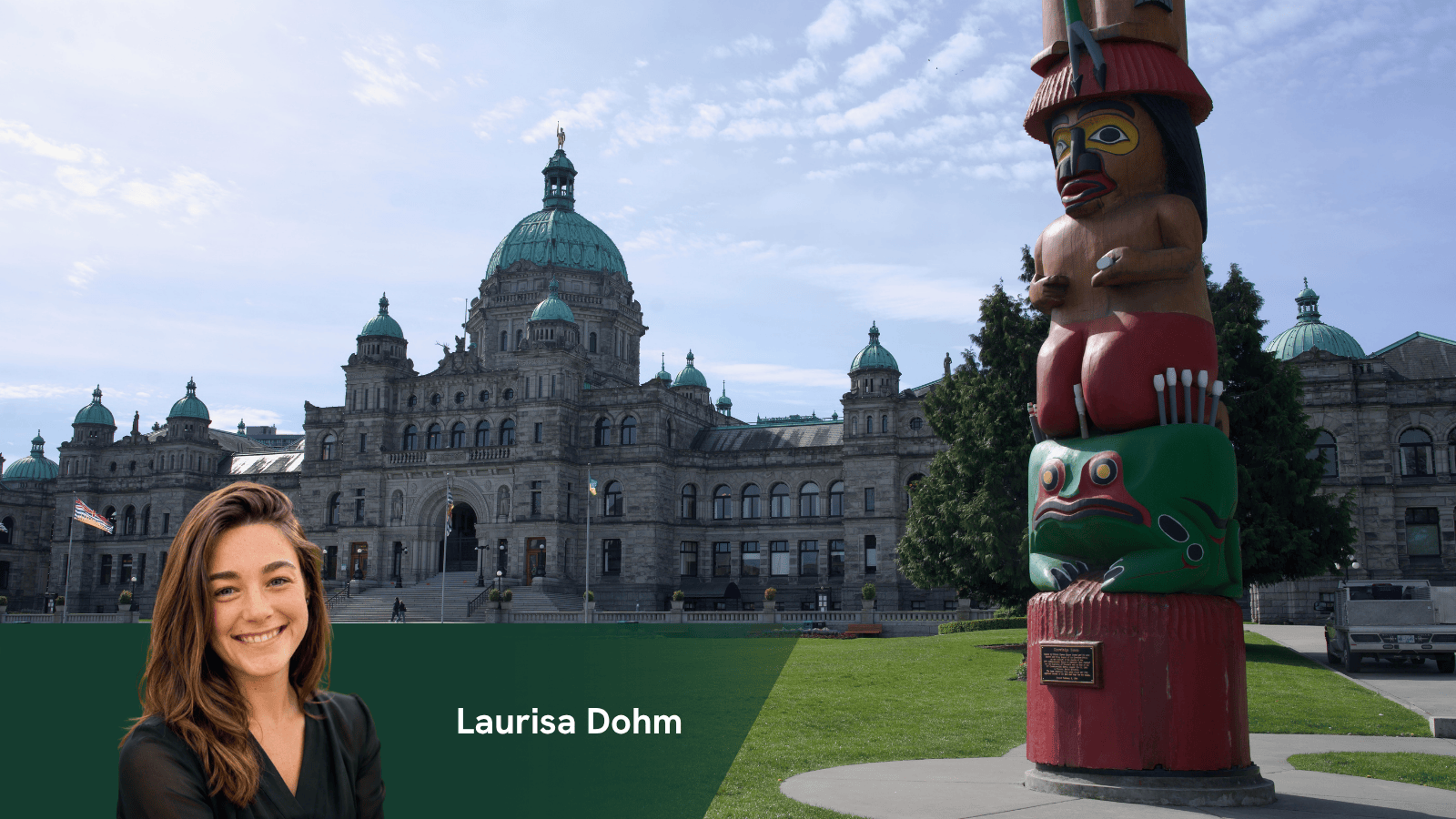
Laurisa Dohm is a BC-based consultant and policy advisor. She holds an M.Sc from Gothenburg University.