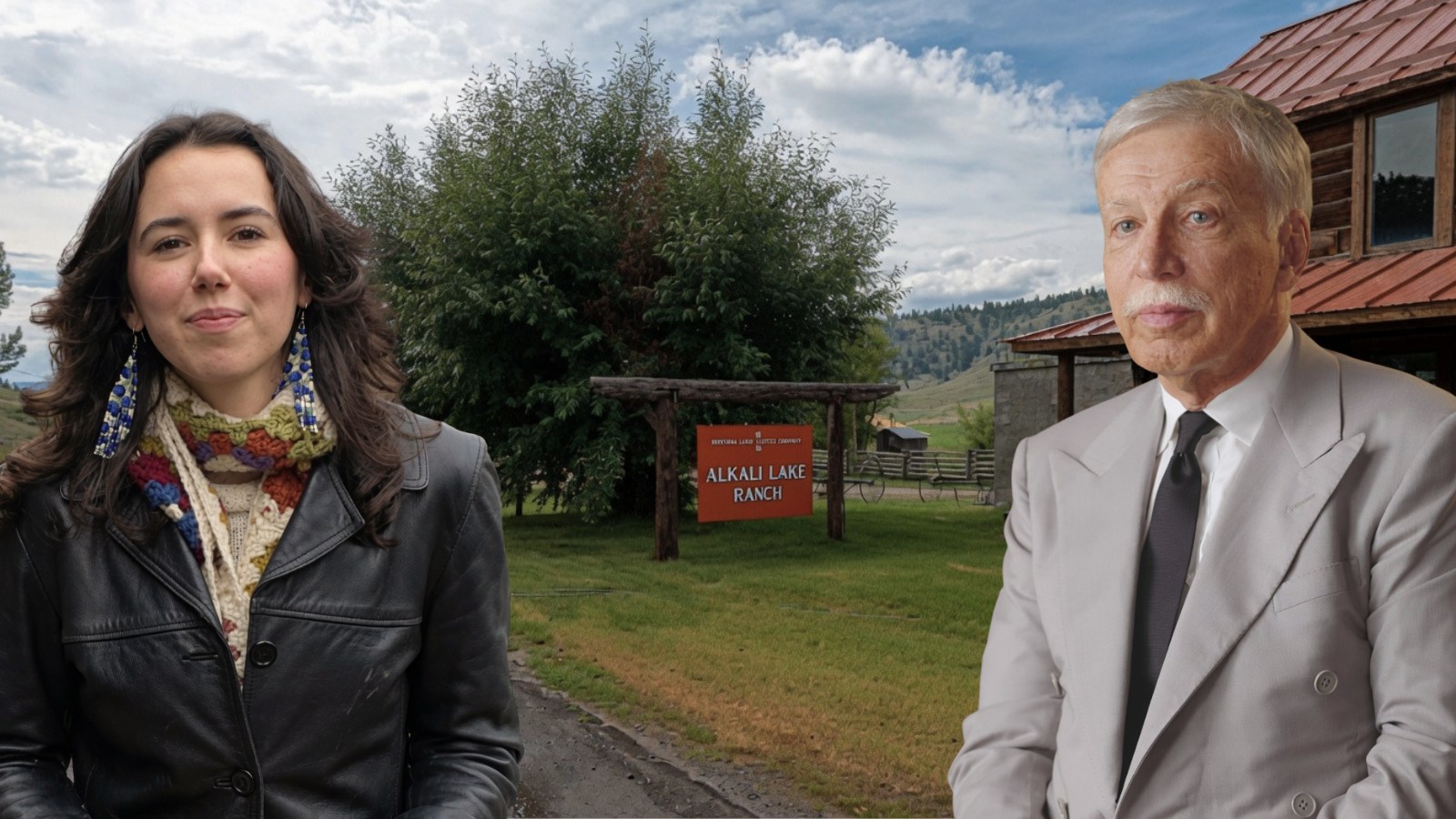

Land use has been a hot topic in British Columbia as of late, but while Aboriginal title claims have dominated the news cycle, little attention has been paid to foreign billionaires buying up local farmland.
Under leader Emily Lowan, the BC Greens have shone a spotlight the issue, and called on government to ensure that the province's arable land serves the interests of British Columbians first.
"Across the board, I just have real concerns about non-residents buying up and having a monopoly on our farmland," Lowan told Sitka Media. "We have brought in similar restrictions on housing, for instance. It feels like this is sort of flown under the radar to the detriment of our farmland and food security."
Among those who have swooped in to purchase property in rural BC is Stan Kroenke, founder of Kroenke Sports & Entertainment, owner of the Los Angeles Rams, Denver Nuggets, and Arsenal Football Club — and husband of the heir to the Walmart fortune.
He now owns the Douglas Lake Ranch, Gang Ranch, Alkali Lake Ranch, Riske Creek Ranch, James Cattle Company, and Quilchena Cattle Company. That adds up to 1.2 million acres of land worth $37 billion.
Agriculture Minister Lana Popham recently suggested that only 1% of the Agricultural Land Reserve is owned by foreigners, citing data from BC Assessment. The Greens have countered that claim, noting that of BC's 11.4 million acres of agricultural land, Kroenke alone controls over 13% of it.
Lowan argued he is effectively using BC as a "tax haven."
"We don't have additional taxation or restrictions on non-residents and investment firms, and we're actually advertised for by investment associations as a good place to buy up farmland because we don't have any guardrails," she said. "I use the word tax haven because Stan Kroenke is the largest private land owner across the United States and now the largest private landowner in all of British Columbia. Maybe he puts cattle on some of his property, but he is a private landowner; this is a way for him to grow his wealth and to treat them as investment properties, as effective tax havens in regions with with lower tax rates."
The actions of two other billionaires, Mark Walter and Bobby Paton Jr., have had far-reaching impacts on the small town of Dunster, located two-and-a-half hours southeast of Prince George near the BC-Alberta border.
The pair have bought large swaths of land — but instead of farming they use it once in a while for sport hunting. As a result, much of Dunster's farming population has left, and potential newcomers are dissuaded by the uncertainty.
"In Dunster, it adds insult to injury that they're taking arable farmland and using it maybe a few times a year as a luxury hunting ground," Lowan lamented. "I don't have any issues with subsistence hunting, for instance, but pushing off farmers and in such a arable region is a great concern."
American billionaires are buying up BC farmland and ranches — and sometimes not even doing any farming.
— Sitka Media (@sitkamedia) June 5, 2026
Sitka Media’s @JarrydJaeger asked Premier Eby what his government is doing to ensure BC farmland benefits British Columbians.
Here’s his response 👇 pic.twitter.com/DsQiGm3qgN
When asked by Sitka Media what his government is doing to ensure farmland benefits British Columbians, Premier David Eby claimed the Agricultural Land Reserve ensures that farmable land is used to grow food.
"It's not just encouraged, it is mandatory that that land stays in food production," he said.
Eby went on to note that he's "happy to take feedback and advice from anybody about issues that they've identified."
Lowan said restrictions and taxation or an outright ban on foreign ownership of farmland should be considered, adding that she'd "like to see the ministry do greater in depth research comparing the costs and benefits of different approaches."
"In Quebec, they're restricting it to 10 acres for non-residents and investment firms, and also empowering local governments to tax those owners," she explained, "so I think that kind of model is interesting; I think it could work in BC."
Lowan then turned her attention to the lack of coverage.
"I think it shows the hypocrisy," she said, questioning why politicians, pundits, and influencers had spent months spreading "false information" about DRIPA and the Cowichan Decision's impact on private property while staying silent on this issue. "We need to be zooming out and looking at the real the real villains in the picture, and in the case of BC's farmland, it's American billionaires that are that are the the external threat."
Lowan argued that, "if we're if we're serious about protecting our land and our communities, we need to join together across farmers, homeowners, nations and point point the finger at the billionaire class."