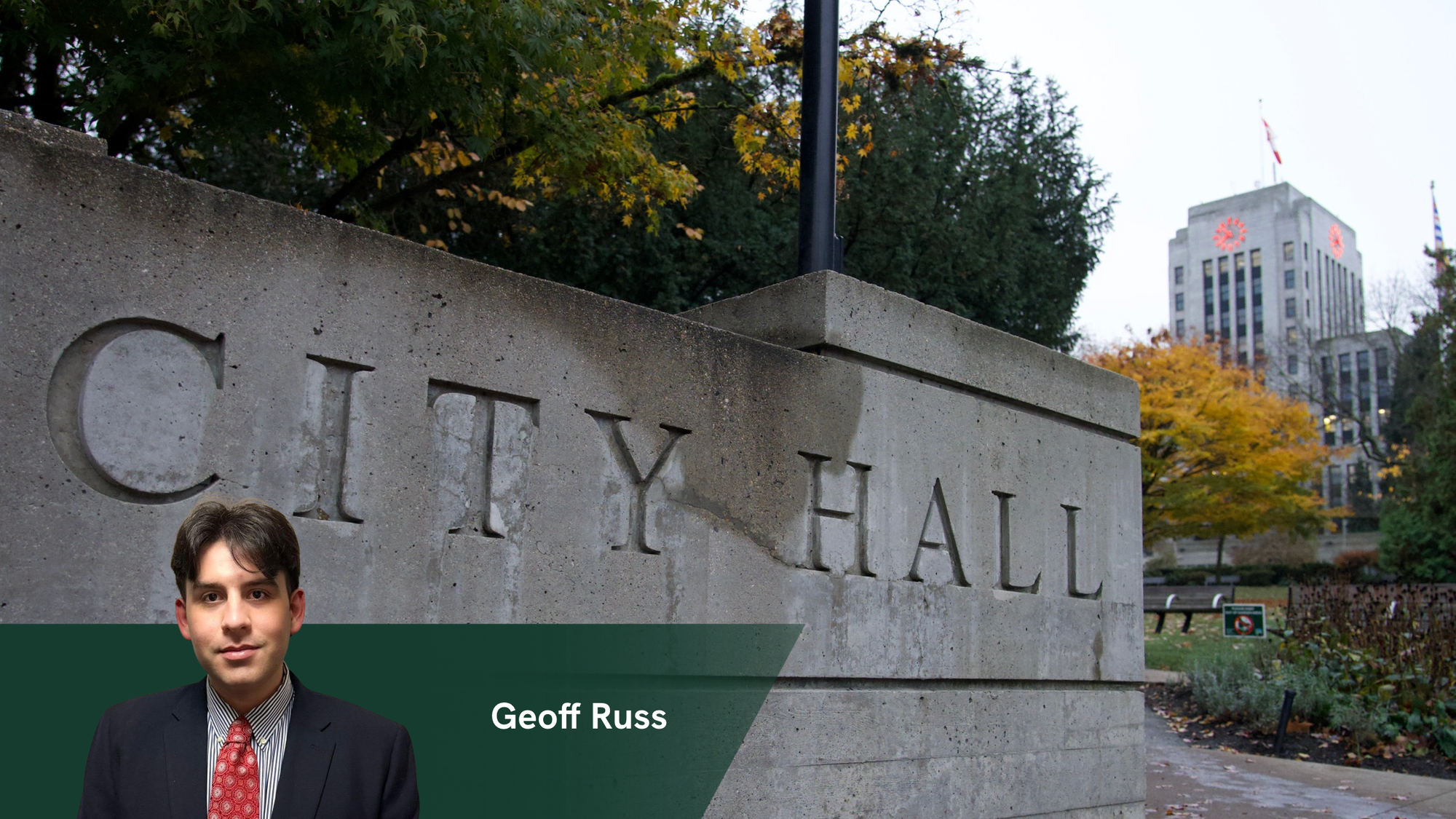

Private property rights should be a gladiatorial arena of municipal politics. After all, raising or lowering property taxes is one of the most sensitive parts of policy for a sitting mayor and council.
Yet the issue of property rights is oddly subdued as campaigns for this year’s local municipal elections in BC start to heat up. It is not that property rights are entirely absent, but the chatter surrounding the issue is much quieter than one might expect, given how DRIPA, the Cowichan decision, and Aboriginal title have upended provincial politics.
At the legislature in Victoria, provincial politicians, including those in the recently concluded BC Conservative leadership race, have been tearing at property rights like a raccoon in a green bin.
The question of property rights is certainly real, not imagined. The BC Declaration on the Rights of Indigenous Peoples Act, passed in 2019, commits the province to aligning provincial laws with UNDRIP and to entering into key decision-making agreements with Indigenous governments.
Then the BC Supreme Court handed down its Cowichan decision last August, declaring that the Cowichan Tribes of Vancouver Island hold title to a large swath of Richmond. With confusion over who actually owns the land in that part of Richmond, business deals and commercial property values have taken a significant hit.
Outgoing Richmond mayor Malcolm Brodie and the city council have demanded written clarity from the provincial legislature, declaring that Victoria’s spoken assurances did not go far enough for private owners.
Provincially, the issue has been nothing short of electrifying.
Premier David Eby pledged that his government would “go to the wall” for private-property owners, while critiquing the Cowichan and Gitxaala decisions as overreaching court rulings. The latter, in particular, elevated DRIPA into a quasi-veto on development by First Nations governments.
In March, Angus Reid found that half of British Columbians thought the provincial government was giving “too much” attention to Indigenous issues, up sharply from August 2025. Federally, the Conservatives have taken up the cause, and even Liberal Prime Minister Mark Carney has declared that private-property rights are fundamental.
Ottawa has appealed the Cowichan decision alongside Richmond, BC, and others. Conservative leader Pierre Poilievre also used a tour stop in North Vancouver to push a property-rights motion.
However, most municipal politicians in Greater Vancouver who are up for re-election have stayed silent. Richmond Mayor Malcolm Brodie, who has been a vocal champion of property owners, is not running for another term. The elections are happening on October 17, so it is still early in the campaign, but Vancouver seems set for another election centred on affordability, basic competence at city hall, taxes, and service delivery.
The incumbent ABC Vancouver is running on a platform of a safer, more affordable, and well-run city after four years in office. The upstart Vancouver Liberals are pledging more transparency and better front-line services, while the gamut of left-wing parties predictably want a city that is more “green,” “inclusive,” and whatever other adjectives they can test in focus groups.
Property rights and title have not been mentioned and have barely factored in so far, despite the federal government signing an agreement in March with the Musqueam Nation that "acknowledged" its Aboriginal title in Metro Vancouver. Given the fallout over Cowichan the previous August, it was like Ottawa throwing a potential political hand grenade into the Lower Mainland.
On the other hand, Richmond has seen a few councillors, like Alexa Loo, speak very openly about “fighting hard for fee-simple (privately held) land.” Still, the issue is far from predominant. Candidate nominations are still forthcoming, and it remains to be seen whether the Richmond election evolves into a contest over property rights, or rather, who will be their loudest defender.
Apart from that, Metro Vancouver’s local governments have been mostly silent on the issue. There may be reasonable explanations for this, one of them being that the cities are almost all mere spectators on issues being decided by the provincial government and the courts. Local governments are only as powerful as provincial legislatures make them, and provincial law prevails when levels of government come into conflict.
The land title system is provincial, and Aboriginal title itself is constitutional law, settled by the courts and Crown governments. Mayors can pass motions and make demands, and even partake in legal suits, but they cannot rewrite Section 35 of the Constitution, which governs Aboriginal title, nor can they amend DRIPA, which is a provincial law.
Nonetheless, being helpless does not make municipal governments useless. A mayoral or council candidate does not have to promise the moon, or even modest reform. They can still pledge to make noise and badger the higher levels of government to take action, whether by demanding explicit, and possibly even constitutional, protections for private property or by promising to legally intervene for property owners.
None of this will resolve the disputes over DRIPA or Aboriginal title, but it will be strange if the local elections play out while pretending these issues do not exist.
Geoff Russ is Editor-at-Large of Without Diminishment and contributor to the National Post.