


The Canadian Taxpayers Federation has pushed back on Prime Minister Mark Carney's labelling of the recently-announced Canada Strong fund as a "sovereign wealth fund."
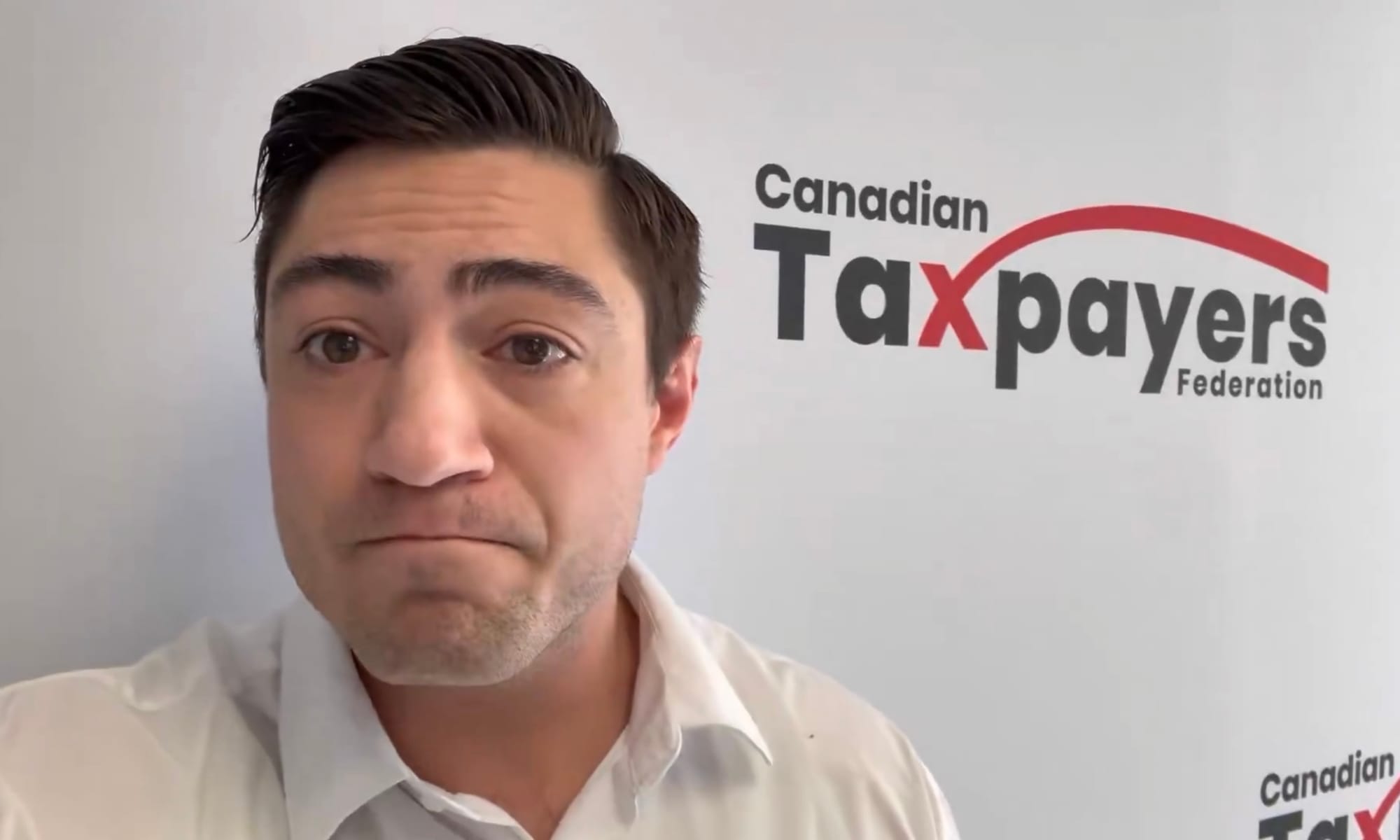
CTF National Director Franco Terrazzano argued it should be seen as a "debt-fuelled corporate slush fund."
Carney did NOT create a sovereign wealth fund.
— Franco Terrazzano (@franco_nomics) April 27, 2026
Carney announced a debt-fuelled corporate slush fund.
The government is more than $1 trillion in debt.
Carney will borrow $25 billion more. Dump it into a fund. Then gamble your money on risky corporate handouts. pic.twitter.com/4CTS3XaWK0
"Here's what's going on," Terrazzano said. "The government is already more than $1 trillion in debt, and Carney just announced he's gonna borrow another $25 billion to dump into this new fund, and then the fund is going to subsidize Canadian companies."
He claimed that far from a sovereign wealth fund, this is a "debt-fuelled corporate slush fund that gambles taxpayers' money — your money — on corporate welfare."
"The whole point of a gold-standard sovereign wealth fund like Norway's is to save money," Terrazzano continued. "Norway saves its oil revenue into its sovereign wealth fund, then invests the interest — and only invests the interest in projects abroad to help with diversification, guard against politicians wasting money on corporate welfare or their own pet projects."
He went on to note that "in stark contrast," the Canadian government's fund is "built on borrowed money ... and then is gonna subsidize Canadian companies, picking winners and losers in the Canadian marketplace."
"The debt is out of control; interest charges on the debt are already costing taxpayers more than $1 billion every single week," Terrazzano concluded. "Carney should not be dreaming up new ways to borrow billions more and risk your money on corporate welfare."
While announcing the fund, Carney explained that it would "invest alongside the private sector in nation-building projects to create wealth for Canadians today, and our kids tomorrow."
He rejected the idea that asking Canadians to pitch in on major projects was "an admission that we don't have a good enough business climate for the private sector to step up," arguing that foreign direct investment has actually increased as of late.
"The capital is there, the interest is there," Carney said. "The question we ask ourselves as the government of Canada is, 'as all that capital comes in from abroad or is invested domestically, why shouldn't Canadians invest alongside ... so that Canadians themselves, our kids and our grandkids, benefit from this transformation of the economy?'"
The details of the fund will be formally outlined in the government's Spring Economic Update 2026, set to drop on April 28.