

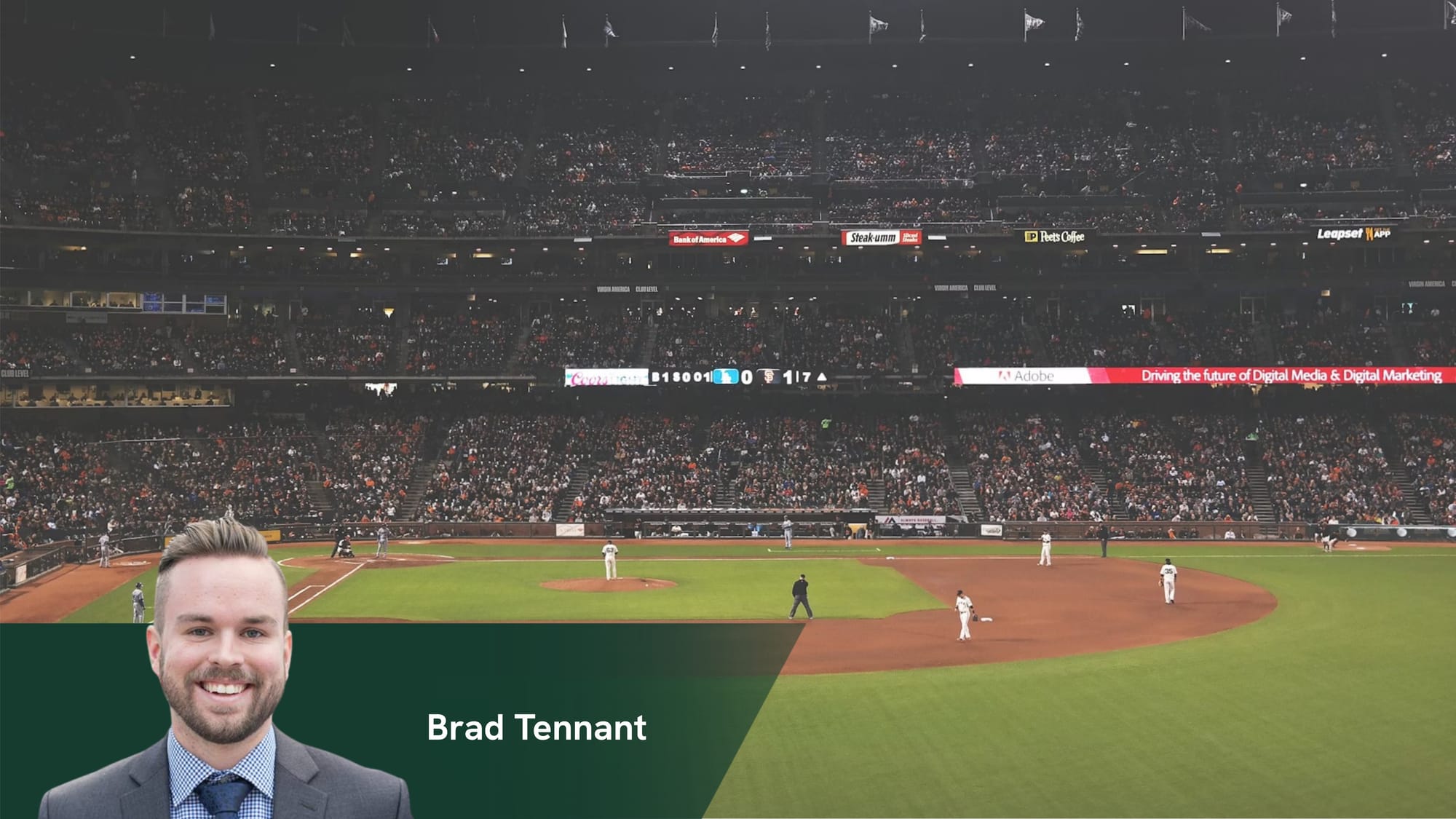

The idea of Vancouver landing a Major League Baseball team is, on its face, both exciting and entirely plausible.
The region has a strong sports culture, deep corporate base, and a population that continues to grow. Canadians love their baseball.
Anyone who has watched a Toronto Blue Jays series at Seattle’s T-Mobile Park knows exactly what that looks like: thousands of Canadians making the trip south, turning Mariners home games into something closer to a Blue Jays home game. That kind of visible, cross-border enthusiasm is hard to ignore.
There is also a compelling broadcast argument. Baseball consistently performs well on Canadian television, particularly when the Blue Jays are involved. World Series ratings in Canada often punch above their weight relative to market size, and regular-season Jays games draw national audiences in a way few other teams can replicate. A Vancouver franchise would not be starting from scratch in terms of fan awareness or baseline interest. The appetite is already there.
But interest alone does not guarantee a team, and recent history across Major League Baseball suggests that market size and enthusiasm are only part of the equation. The league has shown repeatedly that simply placing a team in a large or desirable market is not enough to ensure long-term success.
A clear example is the Miami Marlins. Despite playing in a major metropolitan area, with a modern ballpark and periods of on-field excitement, the Marlins routinely struggle with attendance. Crowds can dip into the 6,000–7,000 range for weekday games, even when the product on the field is competitive.
Another major market in Florida being Tampa Bay has long struggled with attendance. This is a reminder that baseball success depends on more than population. It requires deep, consistent community integration and a compelling game-day experience.
There is a case that Vancouver would do just fine supporting a team for 81 home games. One does not need to be reminded that the Vancouver Grizzlies had better attendance before leaving than they did in Memphis for years after the team left. But lower attendance in Memphis didn’t make the Grizzlies turn around and go home to Vancouver where crowds were bigger and grizzily bears actually existed. The challenge for Vancouver will be more than if the team could potentially sell tickets.
There is the question of competition. MLB expansion, when it comes, will be limited—likely two teams, perhaps four at most in the longer term. Vancouver is not alone in making its pitch. Nashville has emerged as a frontrunner, with an organized ownership group, strong political backing, and a clear stadium vision.
Salt Lake City has made an aggressive push as well, leveraging rapid population growth and a track record of successfully supporting major sports franchises. Austin, Texas, continues to surface in conversations as a dynamic, fast-growing market with strong corporate support.
Other cities linger on the periphery: Portland, Charlotte, and even a return to Montreal, where baseball history and nostalgia still carry weight. Vancouver is not just competing on passion - it is competing against cities that are already well down the road in terms of financing, land acquisition, and political alignment.
That leads to perhaps the biggest hurdle of all: the stadium. MLB is not awarding a franchise without a clear, credible, and fully funded ballpark plan. Vancouver does not currently have one. While BC Place is a versatile facility, it is not a long-term baseball solution, and retrofitting it would not meet modern MLB expectations. A new, purpose-built stadium would be required.
And that is no small task. Land in Vancouver is scarce and expensive. Any realistic proposal would likely involve a complex real estate partnership, blending residential or commercial development with a ballpark. Even then, public support, zoning approvals, and infrastructure considerations would all come into play.
The city’s ongoing challenges around venues highlighted by the uncertainty surrounding the Whitecaps’ long-term stadium situation underscore just how difficult these projects can be to execute. One of the better things Vancouver could do to prove they can be a major North American sports city is fix the issue with the Whitecaps stadium, and there is likely real estate around the old PNE grounds that could also facilitate a ball diamond. But as of now Vancouver is not proving they can fix the Whitecaps issue and that will be noticed by Major League Baseball as they look to expand.
There are also national considerations. Rogers Communications currently owns the Toronto Blue Jays and, in many ways, controls baseball’s footprint in Canada. The Blue Jays benefit from being the country’s lone franchise, drawing fans from coast to coast.
A second Canadian team, particularly in Western Canada, would almost certainly fragment that national market. While Vancouver is geographically closer to several US teams than to Toronto, the Blue Jays’ brand remains strong across British Columbia and the Prairies. It is not clear that Rogers would enthusiastically support a move that dilutes that reach.
And yet, none of this makes Vancouver an impossible case. It simply makes it a difficult one.
Sports history is full of examples where smaller or unconventional markets succeed by building deep, authentic connections with their communities. The Green Bay Packers are the most famous example: a small-market team that has become one of the most stable and iconic franchises in North American sports. Baseball, too, has markets that outperform expectations when the right ownership, venue, and community engagement come together.
That is ultimately the path Vancouver would need to follow. The interest is real. The market is viable. But success will depend on far more than a press conference or an expansion bid. It will require a committed ownership group, a clear and fundable stadium plan, alignment with government and corporate partners, and a strategy to turn regional enthusiasm into nightly attendance.
There are likely dozens of cities across North America that could support a Major League Baseball team under the right conditions. Vancouver may well be one of them. But finding — and executing — that “right way” is the hard part.
Brad Tennant is a longtime strategist in Western Canada and has been involved in federal, provincial, and municipal campaigns. He previously served as Executive Director of the United Conservative Party, where he played a key role in party-building and campaign operations. He also serves on the board of the Calgary Saddledome Foundation.