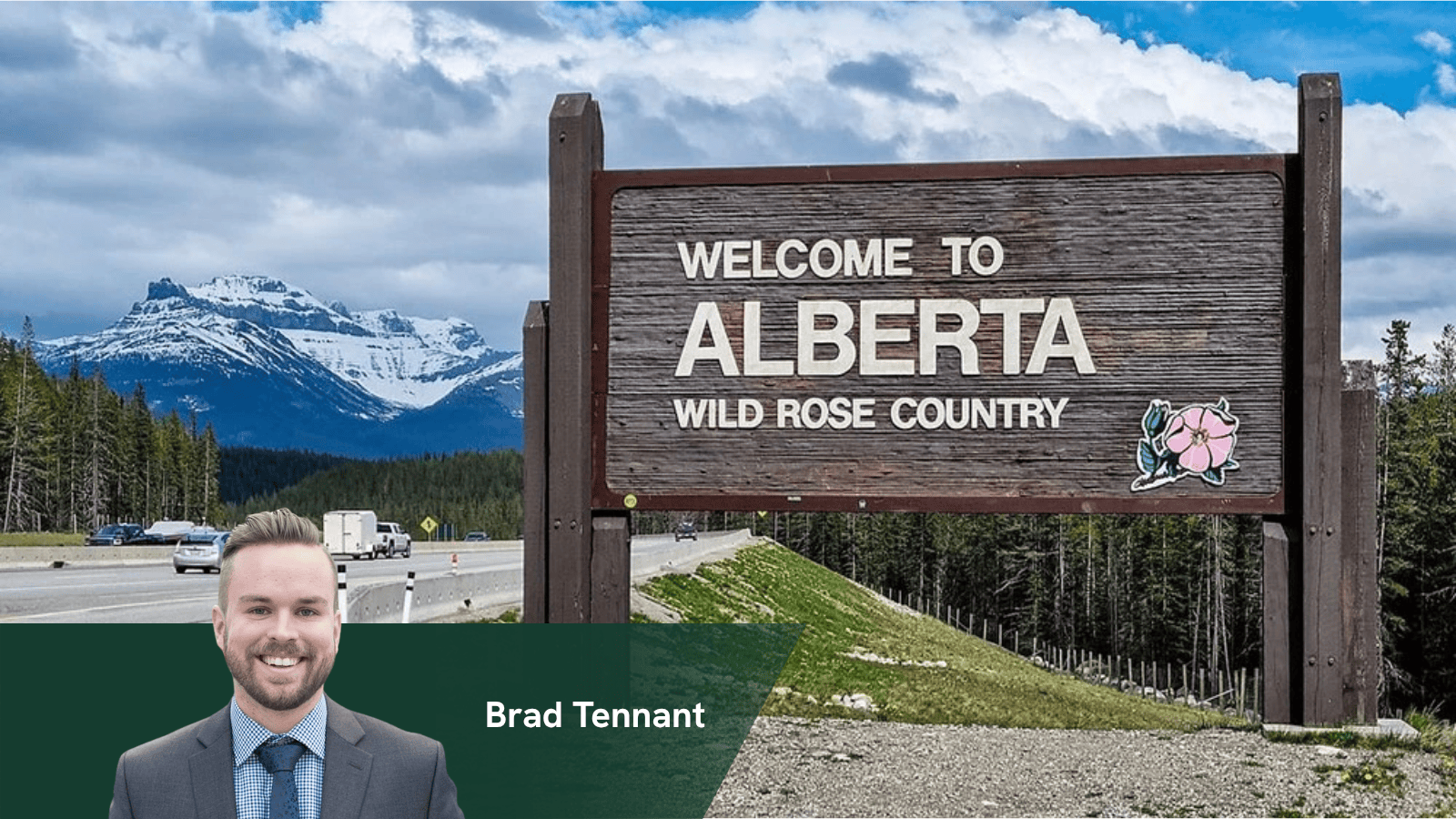

This year, Albertans are expected to vote on whether to begin the process that could eventually lead to a referendum on Alberta's future within Canada.
Whatever the outcome, the vote will inevitably become a barometer of the province's frustration with confederation.
It also falls exactly eleven years after the election of Justin Trudeau's Liberal government.
That coincidence matters.
It's difficult to understand the depth of Alberta's political discontent without returning to October 19, 2015. While Alberta has long had disagreements with Ottawa, it was during the Trudeau years that many Albertans concluded the federal government was no longer simply indifferent to the province's economic interests, but actively hostile toward them.
The perception did not arise from a single policy. It came from the accumulation of many.
Federal environmental assessments became lengthier and more uncertain. New regulations increased the cost and complexity of developing major projects. Pipeline proposals repeatedly stalled or died. While governments spoke of supporting workers through the energy transition, many workers simply saw jobs disappear.
For thousands of Albertans employed directly or indirectly in the resource sector, the experience was deeply personal. Friends moved away. Families left the province. Investment flowed elsewhere. Office towers emptied. Communities that had grown rapidly during Canada's energy boom suddenly found themselves struggling through years of uncertainty.
Not every economic challenge facing Alberta can fairly be attributed to Ottawa. Global commodity prices, technological change, and corporate decisions all played significant roles. But governments shape investment climates, and many investors concluded that Canada had become a more difficult place to build major projects than many competing jurisdictions.
That perception has had lasting consequences.
Even with a more cooperative tone emerging under Prime Minister Mark Carney, governments cannot simply erase a decade of accumulated uncertainty. Capital is patient, but it also has a long memory. Businesses considering billion-dollar investments continue to ask whether Canada has fundamentally changed or whether today's political climate could simply reverse with the next election.
Ironically, recent trade disputes with the United States have only reinforced the importance of Canada's natural resource economy. Today we wish we had a pipeline like Northern Gateway or Energy East. We, and the rest of the free world, wish we had the $670 Billion in LNG and oil sands projects that were cancelled shortly after the Liberals were elected. These projects would have made Canada all the more powerful and able to survive the current energy crisis with safe, dependable and dare one say ethical energy Canada could be providing the world.
But alas we are not, and one consequential October 19th is leading to another.
Energy security, critical minerals, LNG, agriculture, and infrastructure have become strategic assets rather than simply economic ones. In many respects, the world has moved back toward recognizing the value of precisely the industries that many Albertans felt had been unfairly marginalized over the past decade.
That broader context helps explain why Alberta's constitutional debate exists at all.
Yet understanding the frustration does not necessarily mean endorsing separation.
Despite the attention it receives, the evidence simply does not suggest Alberta is on the verge of voting to leave Canada.
Some supporters compare today's movement to Brexit, arguing that conventional polling is underestimating support. Others warn against making the same mistake Britain's political establishment made in 2016.
The comparison is tempting, but it is also incomplete.
In the months leading up to the Brexit referendum, numerous reputable polls showed both Leave and Remain within striking distance of one another. The possibility of Brexit was real long before voting day. What many observers underestimated was not whether Leave could win, but whether enough undecided voters would ultimately break in its favour.
Alberta's situation looks very different. A recent poll by Ipsos shows that just two in ten Albertans favour separation.
Even polling viewed as favourable to the separation movement still falls well short of demonstrating majority support. The proposed October vote is itself unlikely to be a direct vote on separation, but rather part of a process that could eventually lead to one. That distinction may influence some voters, but it is difficult to see it transforming public opinion overnight.
October 19 is therefore likely to produce something less dramatic than either side predicts.
If the proposal fails, Alberta will still wake up the next morning facing many of the same questions it confronts today. How does the province ensure its resources reach global markets? How does Canada restore investor confidence? How can Ottawa and the provinces rebuild trust after a decade in which many Albertans felt their concerns were dismissed?
Encouragingly, there are signs that rebuilding is possible.
Premier Danielle Smith spent much of this year's Calgary Stampede promoting Alberta as an investment destination, meeting with international companies and emphasizing that the province remains one of North America's best places to build, innovate, and create jobs. That is ultimately the work governments should be doing: attracting investment, creating opportunity, and giving Canadians confidence that the next generation will enjoy greater prosperity than the last.
Danielle and the Government of Alberta have been successful in this. A recent report showed that 80% of the net new jobs created in Canada come from one province: Alberta. The Business Council of Alberta recently put out a report showing that 65% of Alberta business leaders expect the economy to improve more versus just 8% who believe it will get worse, and 55% of business leaders expect to hire more.
Some have blamed the potential referendum in October for hurting the Alberta economy, but initial indicators are that the province is growing faster than anywhere else. Alberta is growing, and those efforts deserve support regardless of where one stands on constitutional questions.
The deeper lesson of October 19 should not be about division. It should be about understanding how we arrived at this moment in the first place.
A country cannot repeatedly undermine confidence in its largest export industry without expecting political consequences. Nor can it build lasting national unity while convincing one region that its economic strengths are liabilities rather than advantages.
Canada's future prosperity will depend on learning from the past eleven years, not reliving them.
Brad Tennant is a long-time political activist in Alberta and the former Executive Director of the UCP. He is the Co-Founder and CEO of Frontier Strategy based in Calgary.