


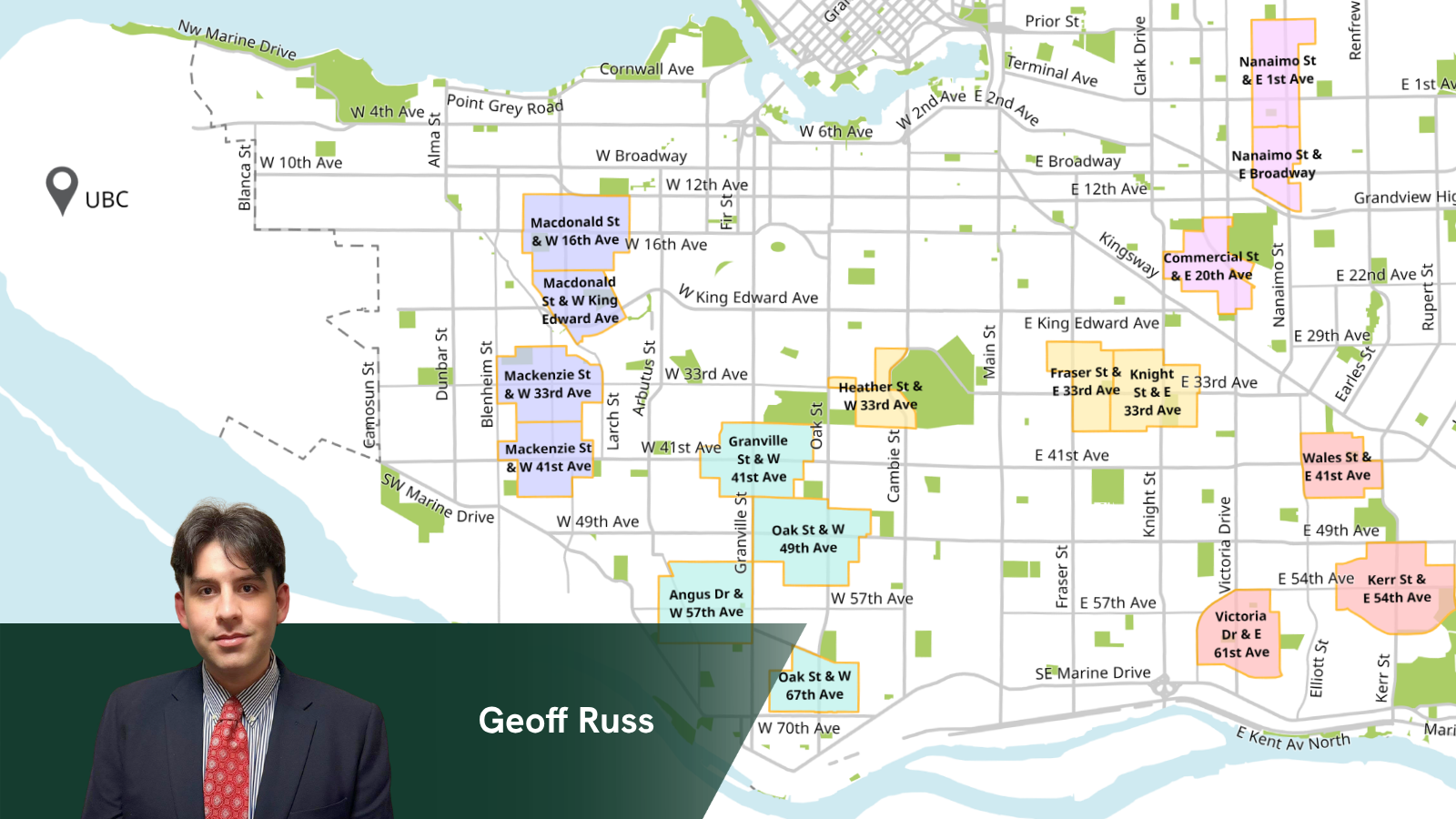

Vancouver City Council will be considering the so-called “Villages Plan” at a public hearing on July 14.
If passed, the scheme would designate 17 areas of the city as planned neighbourhood hubs, complete with denser housing, services, and ground-floor shops and commercial space.
It is hard to see how this would, by itself, make Vancouver any worse; anything that adds to the city’s vibrancy is welcome. Who would not want a more convenient place to buy groceries, sip a coffee with friends, or get a haircut?
At present, Vancouverites are largely dependent on commercial strips along major arterial roads, while vast blocks between them are dedicated almost entirely to housing. The city’s plan would guide growth in those 17 areas in line with the Vancouver Official Development Plan and allow mixed-use buildings with commercial spaces at street level.
But why should a village be bestowed by council only in specifically selected zones?
For most of human history, villages did not become villages, and towns did not become towns, because a modern planning department said they should. Many of the great cities of the world developed when neighbours simply began doing business with each other.
A widow could open a shop, or a family might sell dry goods or books from the front rooms of their home. Commerce naturally follows the course of human life, and exiling it to government-dictated corridors is alien to that history.
Vancouver was no exception in its early life. We can still walk by the “buried houses” that survived the onslaught of modernity and the postwar drive to regulate urban life. Today, the café or grocery store built onto the front of an old Victorian or Edwardian house in the West End is a relic of an era in which people were freer to use their property as they saw fit.
These entrepreneurs helped shape the neighbourhoods we have today, such as Strathcona and parts of South Cambie.
At their peak in the 1920s, Vancouver’s corner stores numbered about 260. However, zoning bylaws treated these businesses as undesirable for residential areas, and the City made them far more difficult to build. Today, the number of these shops has declined to about 90, despite Vancouver growing dramatically since then.
These survivors are lauded as part of the city’s “neighbourhood character,” even though that term often now means the legal suppression of new establishments on the same streets. City Hall is catching on with its proposal to authorize new villages, but small commerce is still treated with suspicion by many.
Current rules dictate that a home-based business may occupy no more than 33.3% of a home’s gross floor area, or 46 square metres, whichever is less. Furthermore, the business must operate inside the home, may have no more than three customers present at any one time, may see customers only by appointment, and may have only two non-resident employees present at one time.
Aside from limited signage, the outside of the home business must still look like a residence. These rules are the worst sort of draconian bureaucracy, aborting human flourishing by fiat.
Obviously, there is still a great need for some rules and restrictions; nobody wants a strip club across from a preschool, an auto shop by the community garden, or one of those dreadful 24-hour vape, candy and bong shops in the middle of a street in Kensington-Cedar Cottage. We have enough of those on the authorized commercial strips.
Nuisances such as odours and waste can be limited, and business hours can perhaps be restricted so quiet family time is not disrupted. However, no family is going to have their evening ruined by a responsibly run bistro next door. A daytime hair salon, bookshop, or pottery studio is not going to hurt anyone, and those claiming otherwise are delusional, dishonest, or both.
Furthermore, the planned-village model treats local commerce as a rare privilege that must be doled out like wartime rations. Entrepreneurs will still have to compete for limited conventional commercial space, meaning higher rents and fewer opportunities for risk-takers. It shuts out the talented if they have limited capital.
If Vancouver is truly committed to affordability, it should not turn commercial leases into exorbitant prizes to be bid on.
Let us be real: apart from the most miserable sort of NIMBYs, Vancouverites love the little exceptions that have survived the planning purges of the 20th century. These tucked-away, charming little neighbourhood treasures are some of the best parts of the city, but our current regime makes them almost impossible to replicate.
Until living memory, urban centres in the West rarely worked this way. For a continent that praises itself for upholding liberty, North America’s urban planning is often far more rigid than that of many European cities, where mixed-use property is often the default.
Rather than stopping at the current Villages Plan, Vancouver should loosen the handcuffs and make life easier for entrepreneurs. These people are not big, bad, dirty capitalists; often, they are creative residents who want to add something to their neighbourhood.
These 17 planned villages should be only the start, to be followed by more wherever Vancouverites allow them to spring up.
That is normal, human, and better.
Geoff Russ is Editor-at-Large of Without Diminishment and contributor to the National Post.