
Erin O'Toole and Lisa Raitt have agreed to serve on Prime Minister Mark Carney's new Advisory Committee on Canada-US Economic Relations.
The move comes as trade tensions with Washington drags on and the CUSMA review approaches.
Two seasoned Conservatives, a Liberal prime minister, and a file that will shape the country for a generation. Predictably, some in partisan circles are calling it a betrayal.
It isn't — it's the opposite.
O'Toole served twelve years in the Royal Canadian Air Force as an air navigator on Sea King helicopters; he flew in Atlantic naval operations; he earned the Canadian Forces Decoration; he went on to serve as Minister of Veterans Affairs under Stephen Harper, and later as Leader of the Opposition.
He has described himself as having "Team Canada in my blood," and his record backs it up.
Raitt's record is just as substantive. Former president and CEO of the Toronto Port Authority, three cabinet portfolios under Harper: Natural Resources, Labour, and Transport, deputy leader of the opposition. Today, she is Vice-Chair of Global Investment Banking at CIBC Capital Markets and Co-Chair of the Coalition for a Better Future. She has spent her career moving between business, labour, and government, and delivering results in each.
These are not people who need a Liberal government to validate them. They are people a serious Liberal government should want in the room. Critics who see only the party labels are missing the point — and forgetting our own history.
Canada has been here before.
In 1917, Robert Borden's Conservative government passed the Military Service Act. The country split hard. Quebec was overwhelmingly opposed. Most of English Canada backed it, though not Western farmers, organized labour, or the Laurier Liberals. Borden asked Laurier to join him in a coalition, and Laurier refused.
Borden went across the aisle anyway.
On October 12, 1917, he was sworn in at the head of a Union Government. The coalition brought in English-speaking Liberals, including Newton Rowell, Thomas Crerar, and Arthur Sifton, along with Senator Gideon Robertson as a labour representative. The Unionists won the December election decisively. They enforced conscription through the final year of the war. Borden held power until his retirement in 1920.
Borden didn't abandon conservatism. He practised it in its most responsible form: put the country first, then argue about the rest.
That instinct is deeply Canadian; we are a practical country. We built a railway across a continent, fought two world wars, punched well above our weight, and negotiated trade arrangements that reshaped our economy. None of it happened through partisan purity. It happened because capable people set the jersey aside when the stakes got big enough.
The stakes are big enough now.
I saw a smaller version of this dynamic during my time as a school trustee. School boards are supposed to be non-partisan. In practice, politics finds its way in. The most useful lessons I took from that table didn't come from the colleagues who agreed with me. They came from the ones who didn't. Their different experiences and priorities forced me to sharpen my thinking and test my assumptions. The decisions got better. The students got better outcomes.
Disagreement handled in good faith doesn't weaken you. It sharpens you.
That is what O'Toole and Raitt are offering. Experience, judgment, seriousness — on a file where Canada cannot afford to get it wrong.
The alternative is corrosive. If every cross-party gesture is treated as treason, we tell capable Canadians that once they put on one jersey, they can never again just wear the maple leaf. That isn't the Canada that built this country. It isn't the Canada that will hold its own against Washington in a hard round of trade talks either.
So let's be clear about what this is.
O'Toole and Raitt are not selling out their party. They are doing what serious people do in serious moments. They are reminding the rest of us that patriotism isn't a brand — it's a duty.
The harder question is the one pointed at the rest of us.
Canada is facing a trade negotiation that will shape our economy for a generation, regional tensions that test the federation, and a world that rewards unity and punishes division. We do not need more hot takes from the sidelines; we need more citizens willing to put down their phones and actually serve — on a school board, a community association, a provincial panel, or a national committee.
O'Toole and Raitt have shown what that looks like. The rest of us should follow.
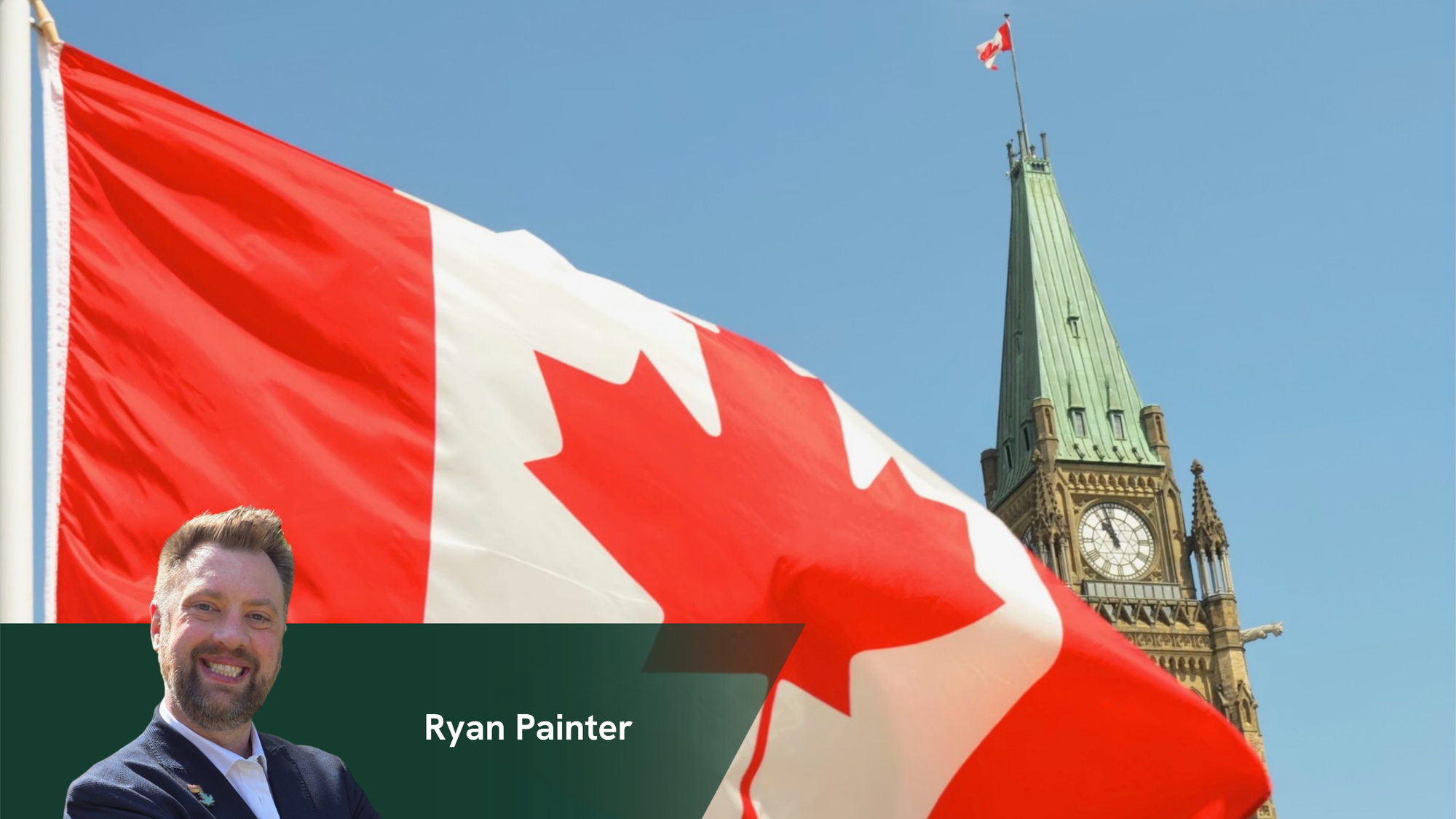
Ryan Painter is the founder of Rhino Public Relations and Strategy, former Director of Communications for the Conservative Party of BC Caucus, and a former school trustee and board chair (2018–2022).