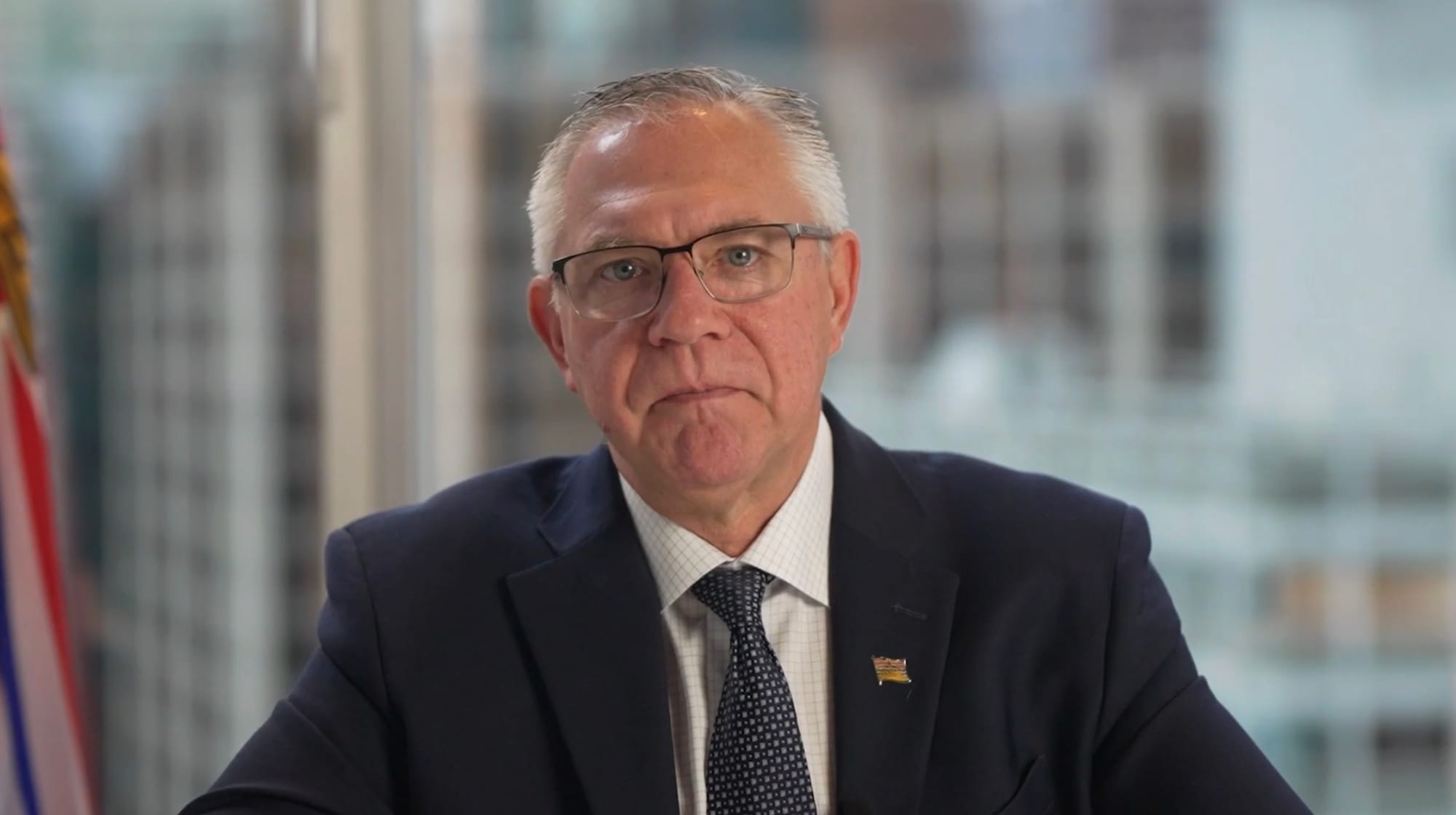



Vancouver Mayor Ken Sim has formally stepped up to the plate, positioning the city as a candidate for Major League Baseball expansion.
On April 22, city council almost approved a motion to launch the bidding process. The decision formally green-lit the competitive Expression of Interest process, with staff now tasked with soliciting proposals from serious ownership groups.
Mayor Sim noted after the vote that his office had already been approached by credible proponents, calling the move a chance to pursue a privately funded, generational opportunity.
Sim pointed to MLB Commissioner Rob Manfred’s October 2025 comments on the Blair and Barker Sportsnet show that “another city in Canada clearly could work” for expansion. MLB has indicated it wants to reach 32 teams before Manfred’s term ends in January of 2029. Vancouver last hosted MLB exhibition games at BC Place and is home to the Toronto Blue Jays’ High-A affiliate, the Vancouver Canadians, who play at Nat Bailey Stadium.
Vancouver should become the next home of a Major League Baseball team.
— Mayor Ken Sim (@KenSimCity) April 14, 2026
With the MLB publicly expressing interest in expansion in the near future, we see an opportunity to position our city as the next home for a franchise.
This could be an opportunity to bring something truly… pic.twitter.com/wB35VrX8Cb
On April 14, 2026, Sim posted on X that “Vancouver should become the next home of a Major League Baseball team,” citing MLB’s public interest in adding franchises. He announced he will introduce a motion at the April 22 city council meeting directing staff to launch an open, competitive “expression-of-interest” process to attract qualified ownership groups.
The motion would require prospective bidders to demonstrate financial capacity, expertise, a feasible governance structure and a credible proposal. It would also ask them to outline proposed terms of a relationship with the City of Vancouver. Staff would report back within 60 days with a draft memorandum of understanding.
Sim made clear the city is not offering public subsidies or tax breaks. “Any party that puts in an expression of interest—show us where they want the location and show us how they’re going to fund it, and show us why it’s gonna be great to not only win the bid, but also why it would be great for the residents of Vancouver and the region and Western Canada,” he told Sportsnet.
He described the city’s role as strictly facilitative. “Vancouver’s right, and we want to make that when this opportunity comes up, we’re not flat-footed,” Sim said. “We’re being proactive as a city council to make sure that … we have our ducks in a row. That we’re not the bottleneck that stops a team from coming to Vancouver.”
Sim added that the process is intended to show MLB that Vancouver is serious. “I truly believe in being proactive,” he said. “These are short windows, and at the end of the day, one of the big reasons why we have to wrap this up as a city is we have to show Major League Baseball that Vancouver is a credible location and the city’s on board.”
Any realistic bid would face steep obstacles. Vancouver has no dedicated MLB-ready ballpark. BC Place has hosted exhibitions but is a multi-purpose dome shared with the BC Lions, Whitecaps, concerts and other events; it lacks the intimate baseball feel many clubs prefer. While BC Place was designed with baseball in mind, lacks many features that holds itself back from being an MLB-ready ballpark.
Field dimensions are awkward, the stands are improperly positioned and the stadium's current roof configuration would need a major overhaul as the centre-hung video board would become a hazard. Additionally, the new facility, should one be built, would almost certainly need a retractable roof to handle Vancouver’s rainy climate incurring eye-watering costs. Sim has said he can envision three or four potential sites but has left specifics to prospective owners.
A modern MLB stadium typically costs well over $1 billion. Even without direct city subsidies, any project would require zoning changes, provincial permits and likely some form of public-private partnership for surrounding infrastructure.
The most politically sensitive complication is the Vancouver Whitecaps’ ongoing stadium crisis–a major curveball that critics say must resolve before chasing another big-league dream. The MLS club has been playing at BC Place under short-term leases after its long-term deal expired at the end of 2025.
MLS Commissioner Don Garber has repeatedly called the arrangement “unsustainable” and “untenable,” citing poor revenue sharing, scheduling conflicts and limited concessions and suites income. When speaking to reporters in July of 2025, Garber said, “we have no plans to move the Vancouver Whitecaps. But right now, they don’t have a viable stadium situation.”
In December 2025 the Whitecaps signed a one-year memorandum of understanding with the city to explore a new stadium and entertainment district at Hastings Racecourse Park on city-owned land. Progress has been slow, the club remains officially for sale, and relocation remains a real risk if no long-term solution is in place by the end of 2026.
Reaction has been sharply divided. Supporters call the pitch visionary, arguing an MLB team would create jobs, boost tourism and offer more affordable family entertainment than other pro sports. Critics, however, have focused on the timing and priorities.
Green Party councillor and mayoral candidate Pete Fry was blunt. “For me to hear it from you, it’s not setting up for a collaborative approach,” he told the Georgia Straight. “It smells like an election-year stunt—it’s all hat, no cattle.”
Mainstream coverage has been measured but sceptical. Outlets including CBC, The Province, Sportsnet and Daily Hive have framed the announcement as bold but long-odds, noting the absence of provincial support and the practical barriers of money and land. Sim has pushed back in interviews, insisting the Whitecaps situation is unrelated and that the MLB opportunity is simply too timely to ignore.
Whether the motion passes — widely expected given Sim’s ABC Vancouver majority on council — and whether any credible ownership group steps forward will determine if this becomes a genuine bid or remains an aspirational headline. For now, Sim has succeeded in putting Vancouver on the MLB map. Turning that positioning into an actual franchise, however, will require far more than a council motion to cover all of its bases.