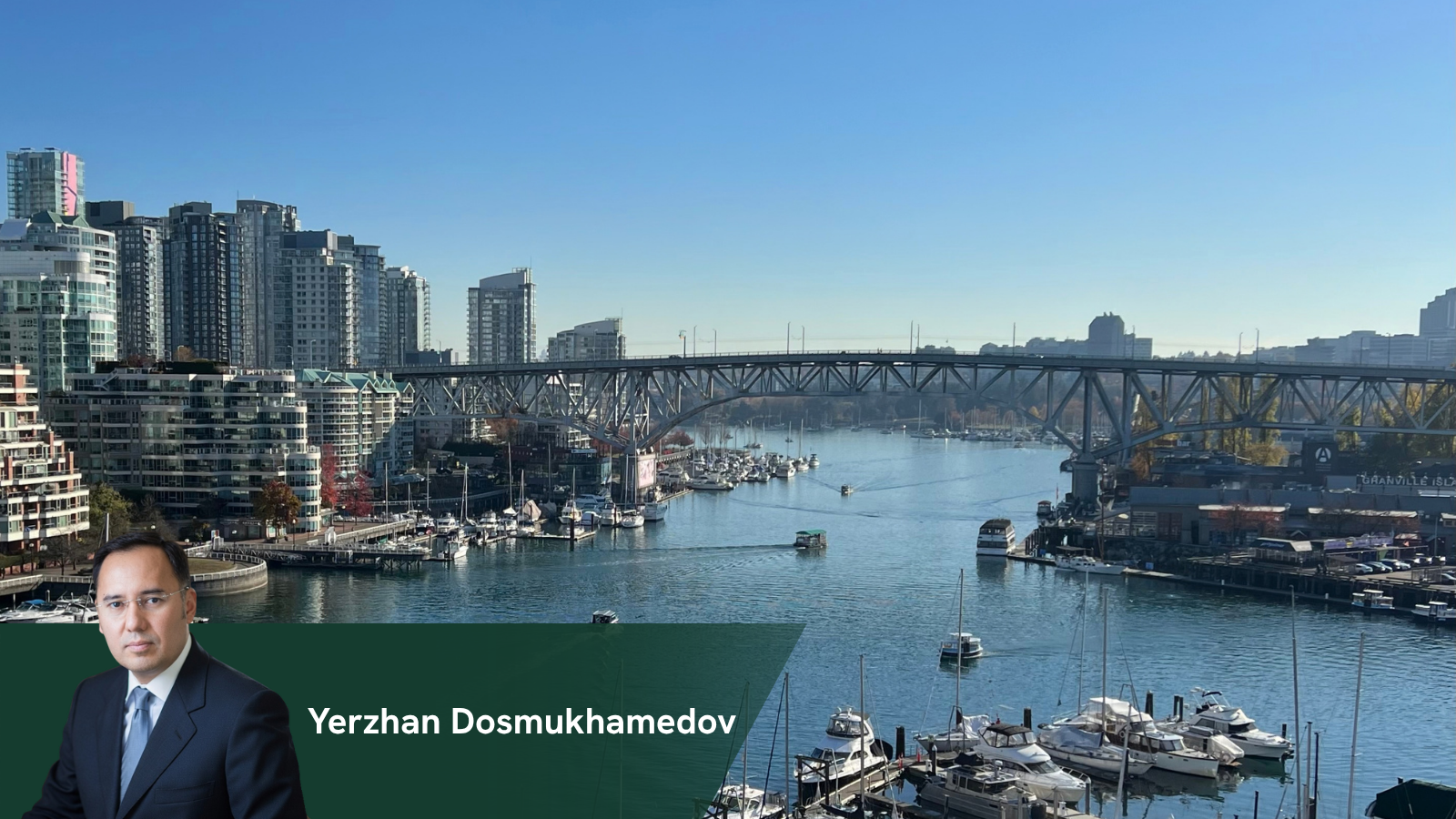
In May, another person died after falling from Vancouver’s Granville Street Bridge.
Public health officials and suicide-prevention advocates have urged the city for years to install barriers. Families, advocates and frontline workers have pressed for action.
Yet Vancouver’s approved 2027–30 capital plan contains no construction funding for those barriers. Staff were directed to complete conceptual design and return with a cost estimate, while the city seeks provincial and federal funding that has not yet been secured.
The city is not ignoring the Granville Bridge. Its $3.5-billion capital plan includes substantial rehabilitation of the Granville and Cambie bridges. That distinction matters. But rehabilitation funding is not suicide-prevention funding.
Council has also acted. In June, it reaffirmed its commitment to installing the barriers and directed staff to expedite design and costing work. That deserves acknowledgment. The central question remains: when will political support become funded construction?
Meanwhile, Vancouver initially set aside a reported $13.4 million for FIFA-related tickets, suites and hospitality; subsequent reporting put the value of purchased assets at approximately $14.4 million. The city has said those assets were intended partly for resale and revenue generation.
Perhaps the city’s commercial strategy will pay off. But whether it does is separate from whether it was the right financial commitment to make while another recognized public-safety intervention remained without construction funding.
This is not an argument that $13.4 million caused a death. It did not. Nor are FIFA hospitality packages and bridge barriers technically interchangeable budget items. It is an argument about priorities.
Capital budgets involve engineering requirements, senior-government cost-sharing, competing infrastructure needs and multi-year trade-offs. Within those constraints, however, a capital plan still tells residents which projects received financial commitments and which were asked to wait.
And the Granville barriers are still waiting for a construction commitment.
These decisions raise broader questions about how City Hall has used public money — and how transparently it has accounted for those choices.
Vancouver spent approximately $6 million on 79 non-union severance agreements in 2025, according to reporting based on freedom-of-information records — more than the approximately $4.3 million spent over the preceding four years combined.
Severance is a legitimate and sometimes unavoidable cost of restructuring. The administration can reasonably argue that departures accompanied its effort to reduce staffing and control spending.
But the more revealing issue is transparency. The city had voluntarily disclosed annual severance totals in previous years. For 2025, according to the reporting that uncovered the figure, it did not. Taxpayers learned the scale of the restructuring costs because a journalist pursued the information through freedom-of-information law.
Fiscal discipline is not only about reducing expenditure. It is also about allowing the public to see what restructuring costs.
Residents who wanted a mayor “tough on crime” have also received increased police spending and, in the October 17 municipal election, two non-binding plebiscite questions concerning public hard-drug use and a proposed mental-health and addictions treatment facility with involuntary-care capacity.
Those questions may generate political pressure, but the vote will not itself create treatment beds or compel the provincial government to act. Public safety deserves political attention; the question is whether highly visible initiatives are producing equally tangible results.
The political alliance around Sim has also become less unified. He now faces an electoral challenge from his former chief of staff and 2022 campaign manager, Kareem Allam, as well as several other candidates seeking to replace him.
That does not prove administrative failure, and opposition to Sim does not by itself qualify any challenger to replace him. But it gives voters another reason to examine the administration’s record rather than its slogans.
Polling reinforces the uncertainty rather than resolving it. A July Pallas Data survey commissioned by the Conservative Electors Association found 28% approving of Sim’s performance and 48% disapproving; in a separate voting-intention question, roughly 34% remained undecided about their choice for mayor. The sample was relatively small, and other polling has produced a more favourable picture for Sim.
Polls are snapshots, not election results. Vancouver’s fragmented field leaves much of the electorate still to be persuaded.
That makes scrutiny of the record more important: voters do not have to accept anyone’s campaign promises; they can examine decisions already made.
A city’s budget shows what it protects and what it postpones. Vancouver is committing hundreds of millions of dollars to transportation and bridge infrastructure. It committed millions to a FIFA ticket and hospitality program intended partly to generate revenue. It spent approximately $6 million on severance agreements in a single year.
Meanwhile, suicide-prevention barriers on the Granville Bridge — supported by advocates for years and now the subject of further design and costing work — still await construction funding.
None of this proves that every decision made by the Sim administration was wrong. Taken together, however, these decisions raise a legitimate question about priorities, transparency and the distance between endorsing an objective and financing it.
That question cannot be answered by another slogan about being “tough,” “business-like” or committed to “common sense.”
The record is there. On October 17, Vancouver voters will decide what weight to give it.
Dr. Yerzhan Dosmukhamedov, LLB (Hons), LLM, DPhil (Oxon), is a Former Senior Associate Member and Research Fellow of the University of Oxford.