
A little over a year ago I visited Egypt. I expected to see a place frozen in time, filtered through the kind of outdated lens that still treats Egypt as a developing country. What I found was something else entirely.
Two days in, driving past the World War II city of El-Alamein, I saw a sign announcing the future home of a nuclear power plant (though I'll note that's one thing I wouldn't bring to Vancouver or BC).
A few days later I saw 2,000 kilometres of high speed rail go into the ground, hundreds of kilometres of subway, monorail, and LRT, a doubled Suez Canal, the largest civilization museum ever built, and a brand new capital city rising out of the desert for eight million people. I filed it all away without fully understanding what I was seeing. It clicked on the flight home.
As my plane circled UBC while approaching YVR, I looked down at Western Canada's largest research hub and realized how disconnected it is from downtown Vancouver, Western Canada’s largest employment centre. The province first committed to building a SkyTrain line to UBC in 2008.
Eighteen years later, there is still no approved funding and no build date for the extension beyond Arbutus. In that time, the conversation about an innovation corridor linking downtown through Broadway to UBC has been studied, debated, and deferred while every other major city on the Pacific Rim kept building.
Connecting downtown to UBC is not just a transit project. The Port of Vancouver is Canada's largest and most diversified port, moving as much cargo as Canada's next five largest ports combined. Rapid transit from downtown to UBC creates a housing corridor along one of the most land-constrained routes in the country, providing people with more walkable neighbourhoods while also taking cars off the roads that we need to move goods through.
If we invest in connecting these two crucial landmarks, it will position Vancouver to compete for the private capital and talent that is currently choosing between us and a dozen other cities that are actively building. The innovation corridor is a transit strategy, a housing strategy, a climate strategy, a livable city strategy, and an economic strategy all in one.
While we’ve avoided investments and innovation, the city’s infrastructure is also fraying. Large stretches of Vancouver's water system are well past a century old, a liability that grows every year. Our community centres, pools, and rinks are aging out of usefulness to the point that children's sports tournaments now travel to Surrey or Burnaby for better, more modern facilities.
Vancouver has become one of the fastest-aging cities in Canada by average age, which is not a demographic curiosity but a long-term threat to the tax base that funds every social program we value. Young families are not leaving Vancouver because they don't love it – they are leaving because we stopped investing in the things that make a city worth raising children in.
The conditions for private investment are no better. Development approval timelines in Vancouver have grown to over fifteen months on average, and that figure does not include the additional year or more that a rezoning application can add. Restaurant and small business permits routinely stretch past two years.
Meanwhile, industrial land across Vancouver has been squeezed down to just four percent of the land base, so when a business succeeds and wants to grow, it moves to Burnaby or Surrey because there is nowhere left to go. The uncertainty created by slow and unpredictable approvals is quietly pushing investment decisions elsewhere, and other cities are benefiting from it while Vancouver misses out.
We need to approve the Broadway-to-UBC SkyTrain and build it on a timeline that matches the urgency of the problem. We need to scrap the Vancouver building code that adds time and cost to every project without adding value, and adopt the BC Building Code like every other city in the province.
We need to get small business permits processed in no more than three months and reinvest in community infrastructure that makes Vancouver a city people choose to stay in. These are not radical ideas. They are the basics that every competitive city has long since treated as non-negotiable.
I saw Egypt building because it wants what Vancouver already has. We have the institutions, the talent, the location, and the quality of life that cities around the world are spending decades trying to create, but we won't be able to hold onto that without quick action and true investment.
I know that what the city needs now is leadership and the courage to match that potential. Vancouver needs to connect important hubs. We need to invest in parks, pools, and recreation. We need to support small businesses, industry, and everything that will keep young people and families in the city they love. That is what we are offering, and that is what we will build.
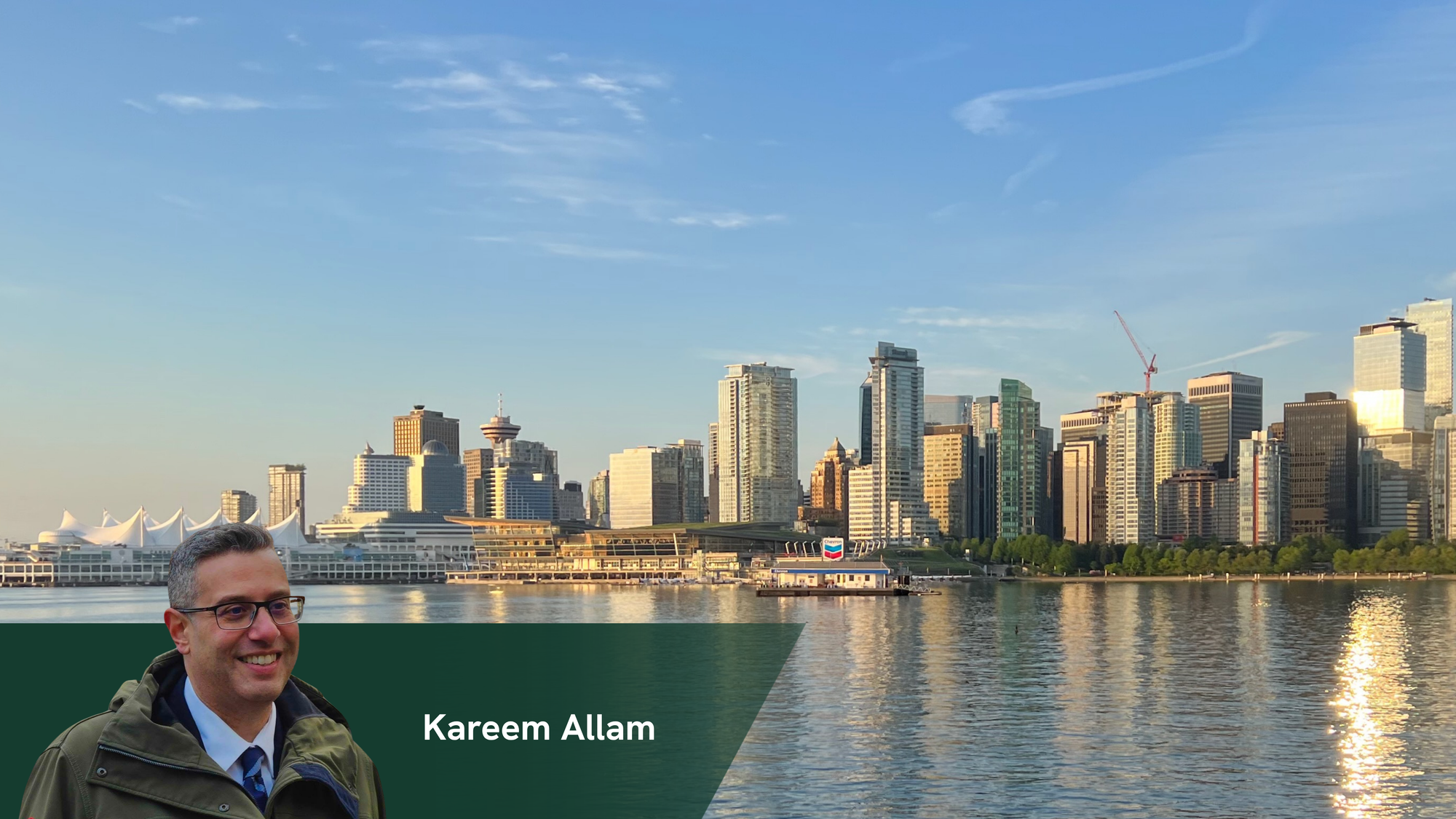
Kareem Allam is the Vancouver Liberal candidate for Mayor of Vancouver in the 2026 civic election. A lifelong Vancouverite, Kareem has spent more than 25 years engaged in municipal, provincial, and federal governance.