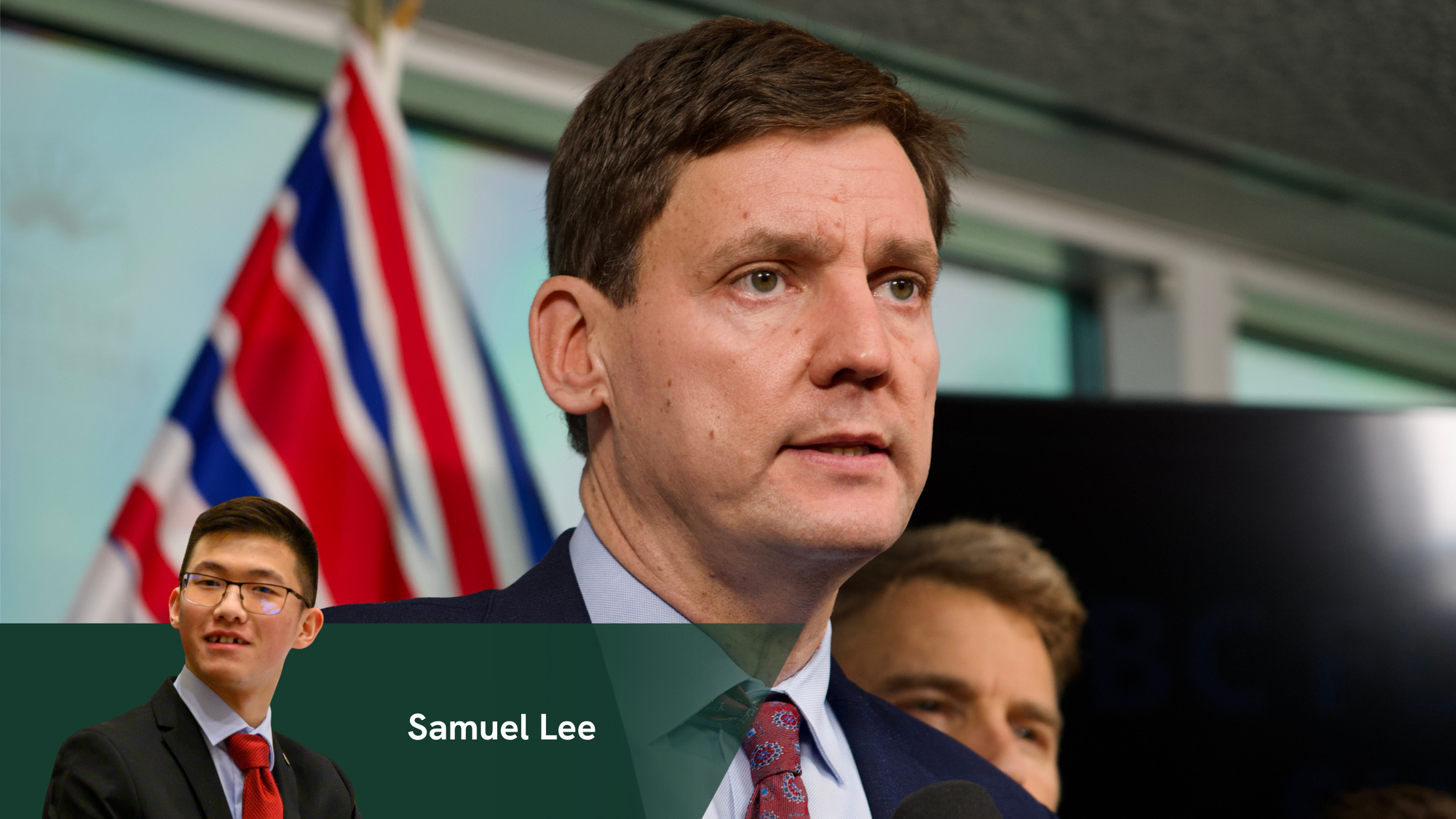

If anyone has truly misread the political headwinds these past few days, it's Premier David Eby.
To count the number of times he has u-turned on the Declaration on the Rights of Indigenous Peoples Act (DRIPA), I'd need more than one hand.
Let's start with why the u-turns even took place to begin with: the BC NDP caucus. Publicly, we know that MLA Joan Phillip opposed the proposal to suspend DRIPA, but it gets worse; according to sources present at their emergency caucus meeting Saturday, more than ten MLAs sided with her. Even after he declared the proposal a matter of confidence, MLA Phillip and the rest of the dissenters did not waver.
This is the first blunder: a misread of caucus' stance on DRIPA.
Without caucus support, the premier will need to either seek votes from across the aisle, presumably from the BC Conservatives, or find an alternative solution that his own caucus finds acceptable. It is clear that consultation within the NDP caucus was inadequate.
Prior efforts to resolve the uncertainty generated by DRIPA have all been to either weaken the act or suspend portions of it, but it is important to remember that the NDP government was the one to introduce DRIPA and lead the way to pass it into law in 2019.
A key indicator that could explain Eby’s positional shift is the erosion in public support for DRIPA. A poll conducted by the Angus Reid Institute in March found that a majority of BC residents now believe the act goes too far.
What I'm implying is that Eby may be looking for a quick fix for a complex issue, and that is not good enough. It is not good policy to offer a band-aid solution with no substantive policy alterations on an issue that has been consistently problematic for months.
This is the second blunder: trivializing the issue.
As it stands, Eby is stuck between a rock and a hard place. His caucus is sufficiently divided; any changes to DRIPA are unlikely. The premier could attempt to navigate the situation with DRIPA untouched and pursue some meaningful and certainty-providing relationships with First Nations.
However, if we examine his recent comments and activities on the Indigenous file, what started as a relationship as partners evolved into distrust and hostility from the Indigenous perspective. Where Indigenous leaders once saw in Eby as someone they could collaborate with in good faith, they now see a turncoat, and these matters have been made more precarious as a result.
This is the third blunder: the Indigenous relationship has been damaged.
Eby could try to remedy this aspect of the situation by keeping DRIPA as is. While it would have caucus support, electorally this position is risky. A majority of BC residents believe DRIPA goes too far, thus continuing to uphold DRIPA in its current form while neck-and-neck with the BC Conservatives in voter intention means that another policy failure could put the BC NDP under water.
To make matters worse for the premier, his own caucus, having already revolted in the latest efforts to suspend sections of DRIPA, could revolt against him anyways. His approval ratings have declined since last year, and with the latest budget being the most unpopular since 2010 and the current DRIPA dilemma, a caucus coup would not be unexpected.
The premier is at war on all fronts: with his own caucus, with First Nations, and with public opinion. No matter what happens now, a question we should soon start asking is: Who will be the ones to oust him?
Samuel Lee is a research analyst at Black Ink Advisory and an Environmental Science and Political Science student at Simon Fraser University, where he serves as president of the SFU Conservatives.