
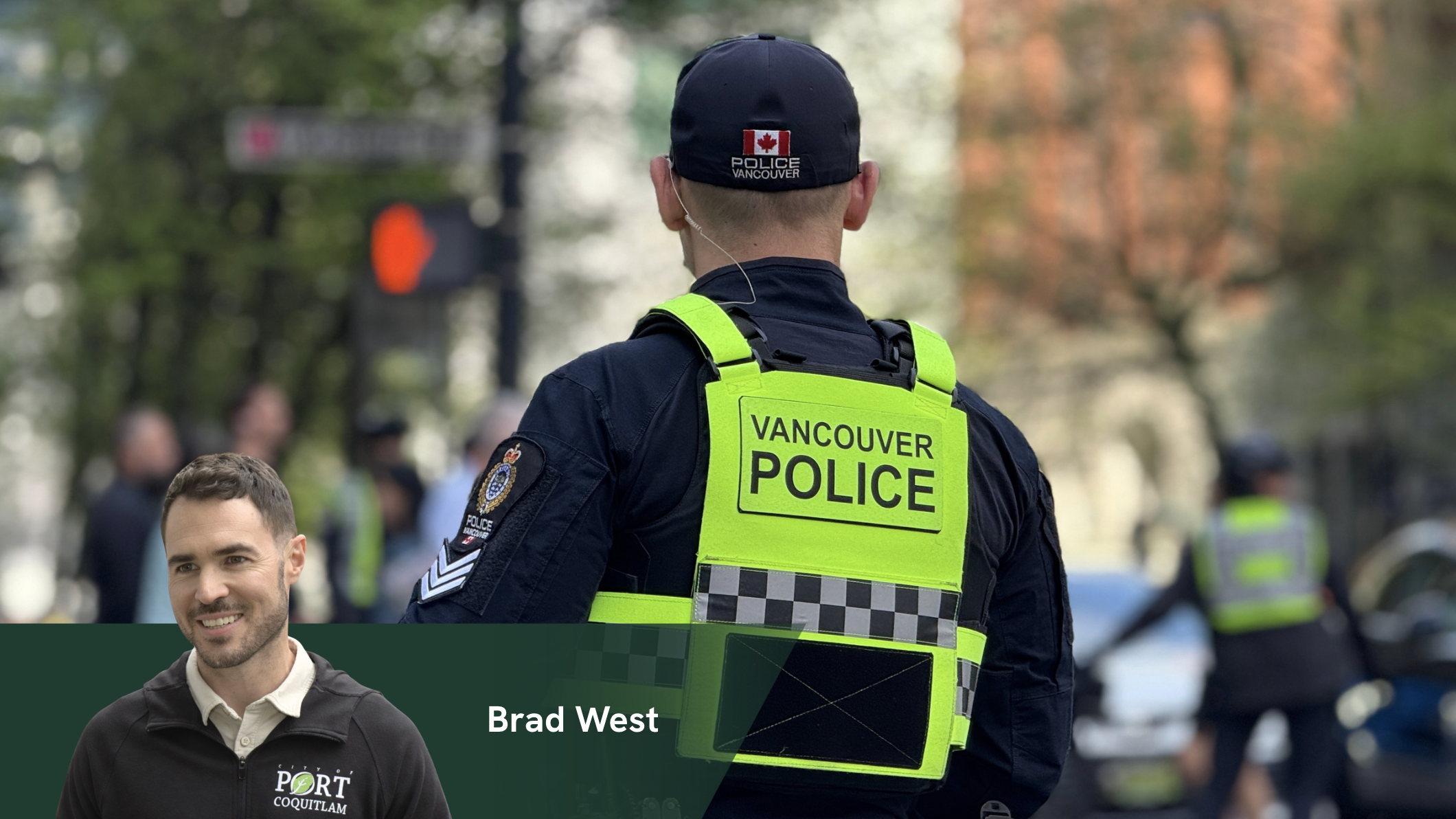

National Police Week runs May 10–16, 2026, with the theme “Committed to Serve Together.” It began in 1970 to help police connect with communities and build awareness of the services they provide.
Here’s my contribution to that effort: thank you.
Thank you to the men and women who put on the uniform, kiss their families goodbye, and go to work not knowing what waits on the other side of the next call.
Thank you for walking into homes at their worst moments. Thank you for standing between the public and violence. Thank you for dealing with the angry, the desperate, the dangerous, the mentally unwell, the grieving, the dishonest, and the broken - often in one day - and then being expected to absorb it, process it, and carry on.
That is not normal work, but it is necessary work, and in a healthy society, necessary work is respected.
For too long, policing has been treated by some as an easy target. There is a kind of fashionable cynicism that reduces police officers to a stereotype and policing itself to a problem. It is loud online, popular in certain circles, and sometimes indulged by people in positions of authority who should know better. It has manifested itself into calls to “Defund the Police”.
But most people know the truth.
When something goes wrong, they don’t call a slogan. They call 911. They call the police. They call because when the pontificating stops and reality begins, we all understand something very basic: order matters. Safety matters. Consequences matter. The law matters.
And the people asked to uphold those things matter too.
That does not mean every officer is perfect. No profession is. Police officers carry significant power, and with that comes the need for high standards, accountability, training, judgment, and public trust. Good officers know this better than anyone. They do not fear accountability; they live it every day.
But accountability is not the same as contempt.
Criticism aimed at improving policing is one thing. Attacks designed to demoralize police, delegitimize law enforcement, and excuse criminal behaviour are something else entirely.
We have seen too much of that. Too much sympathy for the offender and not enough concern for the victim. Too much theory from people who never have to answer the call. Too much second-guessing from comfortable distance and not enough recognition of split-second decisions made in dangerous conditions.
Too much talk about "systems" and not enough talk about the senior who was assaulted, the shop owner who was robbed, the woman terrified by domestic violence, the child caught in chaos, or the officer who had to step into the middle of it.
The public is tired of this imbalance. They are tired of seeing repeat offenders cycled through the system while police are forced to do the job the justice system keeps handing back to them. They are tired of being told that disorder is compassion. They are tired of being told their concerns about crime are somehow unsophisticated or unfair.
Frankly, police officers are tired, too.
They are tired of being asked to be social worker, mental health specialist, addictions counsellor, mediator, negotiator, human shield, and catch all response to every complex societal challenge we face. And then being lectured by people who would never trade places with them for one shift.
We need to say plainly: police are not the problem with our communities. Police are the people we call when problems become emergencies.
They did not create the addictions crisis. They did not create the mental health crisis. They did not create the housing crisis. They did not create the broken bail system, the revolving door, or the collapse of consequences.
But they are left to manage the fallout, night after night, call after call. And still, they show up. That deserves more than a thank you when it’s convenient. It deserves respect.
Respect means funding police properly with the necessary tools, training and resources. Respect means appropriate staffing so that members are not stretched beyond reason. Respect means backing officers when they do the right thing, even when the right thing is politically inconvenient. Respect means building a justice system that supports the work police do instead of undoing it by the next morning.
Respect means remembering that the person in uniform is also someone’s spouse, parent, child, friend, neighbour, and coach.
In Port Coquitlam, I see this every day. I see officers at community events, in schools, on the roads, responding to calls, helping families, and doing the quiet work that never makes the news. They are part of the fabric of our community. Not apart from it. Part of it.
The best police officers are not looking for praise. Most would probably be uncomfortable with it. They just want to do their job, keep people safe, go home to their families, and know that the community has their back.
So during National Police Week, let’s make that clear. We see what you do. We value you. We know the job is hard. We know the criticism is often unfair and unfounded. We know that when others run away from danger, you run toward it. And we know that a society that turns its back on police will soon find itself asking why no one is left willing to answer the call.
We should expect professionalism from police. We should demand integrity. We should insist on accountability. But we should also offer something that has become far too rare: gratitude.
Safe communities do not happen by accident. They are built by people willing to serve. They are protected by people willing to sacrifice. And they endure because some people still believe that duty matters more than applause.
To every police officer serving: thank you for standing where others will not. We are safer because you do.
Brad West is the Mayor of Port Coquitlam, BC.