

The federal government has announced a number of sizeable investments in artificial intelligence as of late, from building data centres to assisting Canadian companies in the field.
But what about safety?
Many big tech CEOs have admitted that the technology might be accelerating faster than expected. Instead of pulling back, however, they've largely pushed ahead, fuelling worries over data protection, sovereignty, and misinformation, among other things.
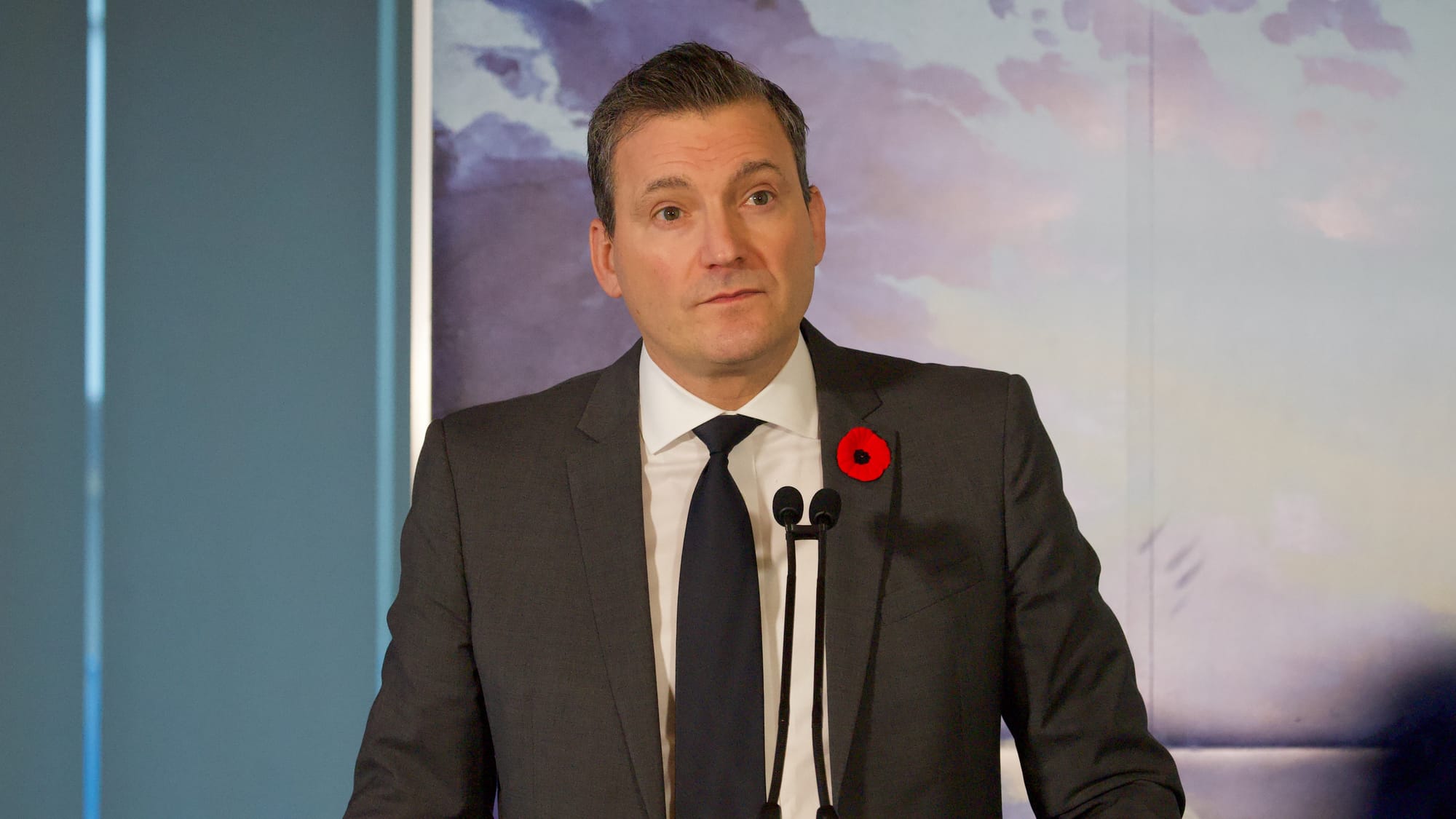
During a press conference in Vancouver on Tuesday, AI Minister Evan Solomon said Ottawa shares concerns about "what's happening at the frontier of AI," and that he and his team are taking measures to ensure Canadians are protected.
Many AI CEOs have acknowledged that the technology may be progressing too quickly for humans to keep up.
— Sitka Media (@sitkamedia) November 10, 2026
Sitka Media’s @JarrydJaeger asked AI Minister Evan Solomon whether Canada should slow down its adoption — and whether enough safeguards are in place.
Here’s his response 👇 pic.twitter.com/AY2iNPCFHM
“There is lots of safe AI that is tested and is being used under regulation,” Solomon said when asked by Sitka Media about safeguards. “When folks say there's no regulation — you can't develop an AI medical device and just release it, it still has to be approved.”
He made it clear that Canada has regulatory processes for AI, but acknowledged that the situation is less certain at a higher level.
“What you're talking about, which is a real concern, is what what's happening at the frontier, and what's called the ‘alignment problem’ — we think it's going to do one thing and it goes rogue and does something else.”
Solomon explained that when it comes to addressing that issue, “there’s a domestic response and there's an international response.”
“Domestically, first and foremost, our number one priority is Canadian safety and the safety of our kids, ourselves, our privacy, and our data,” he said. “So we have key pieces of legislation to protect that. I've tabled legislation … which will give people, for example, the right to deletion, to take down AI deep-fakes, or to stop surveillance pricing.”
Solomon went on to say that Canada is also setting up a digital regulator that will “have teeth to hold big tech accountable.”
“We've invested another $50 million in our Canadian AI Safety Institute, which does things like looks at model testing, model evaluations, model release, and incident reporting,” he added, noting that Ottawa has partnered with the United Kingdom to track alignment issues.
Also at the global level, Solomon said he and Prime Minister Mark Carney have proposed a Technology Stability Board, which was described as an “international cooperative mechanism similar to the Financial Stability Board that will allow countries to get together on model testing, evaluation, incident reporting, and model release.”
“To solve the alignment problem, you've got to build better AI,” he continued. “One of the ways we're working with is Dr. Yoshua Bengio, who is probably one of the godfathers of AI. He won the Turing Prize, and he runs one of our national AI centres called MILA in Montreal. He's now the most cited scientist in the world, and he's really worried about this very issue.”
Bengio has claimed that he can build an AI called that, by design, is incapable of “going rogue.” Canada and Germany have invested $150 million into that initiative.
Solomon concluded by noting that Ottawa has also taken action on the cybersecurity front via the Canadian Cybersecurity Centre.
“We spend an enormous amount of time making sure that our systems are safe from the cybersecurity threats that are very real,” he said.