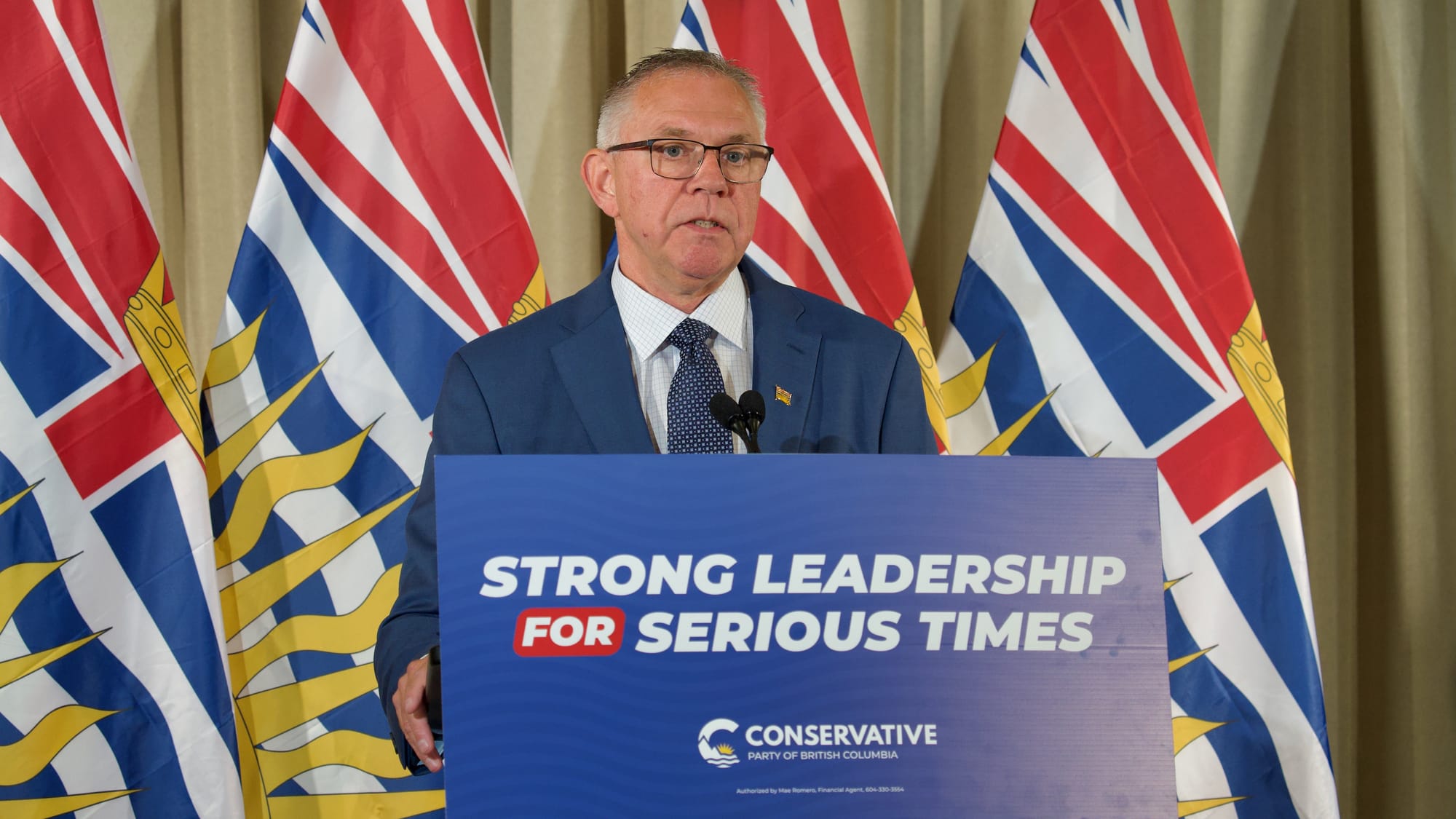

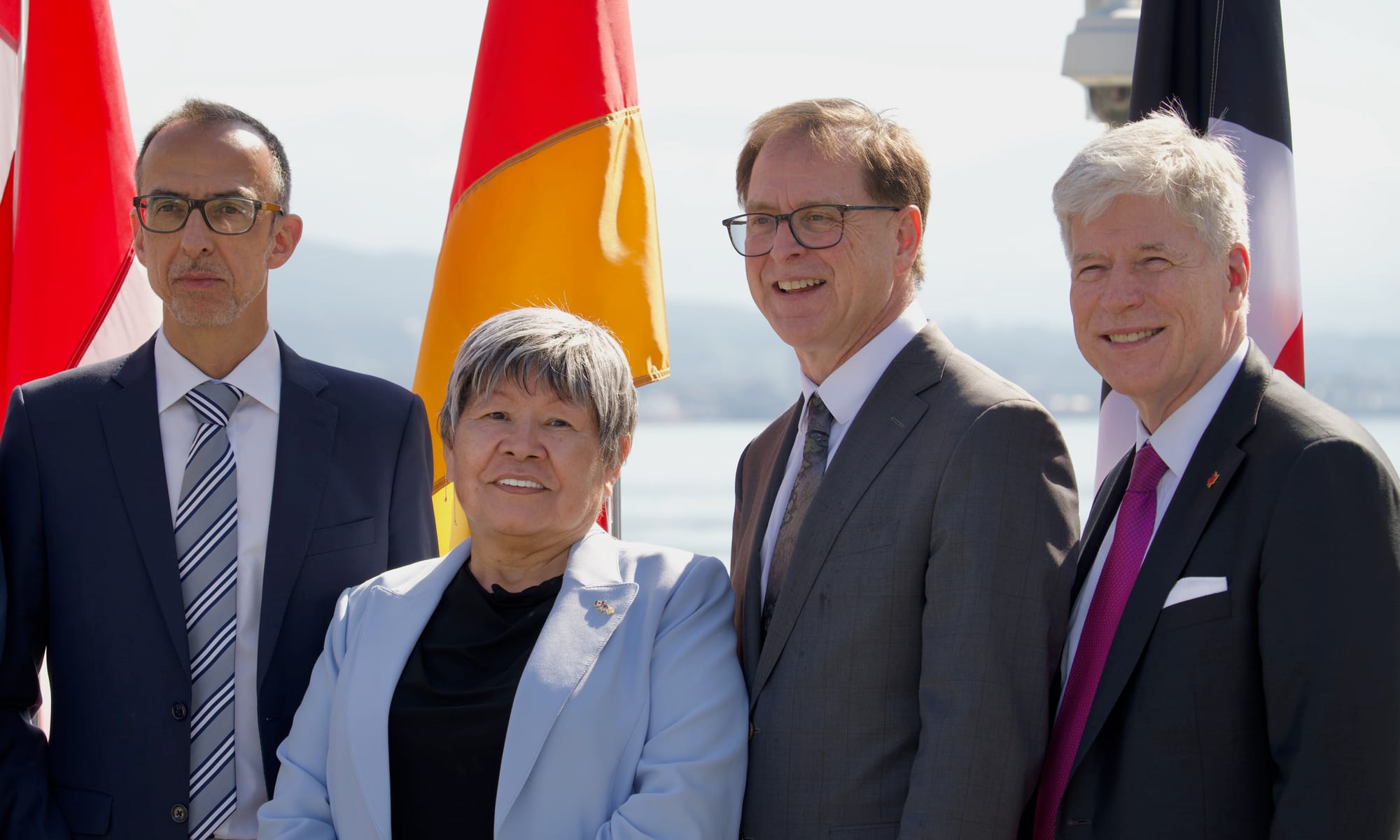

VANCOUVER — Federal Energy and Natural Resources Minister Tim Hodgson has announced that German firm Securing Energy for Europe has signed an agreement to purchase liquefied natural gas from British Columbia.
When the Ksi Lisims export facility is completed, SEFE will ship one million tonnes of LNG to Europe every year, for up to 20 years, beginning in the early 2030s.
Energy Minister @timhodgsonmt announces a new agreement that will see German firm SEFE purchase 1 million tonnes of LNG from BC’s Ksi Lisims export facility every year, for up to 20 years:
— Sitka Media (@sitkamedia) May 27, 2026
“Ksi Lisims represents … responsible, sustainable, low-carbon resource development.” pic.twitter.com/CoL83cQ0M1
During a press conference in Vancouver on Wednesday, Hodgson said the Ksi Lisims project — and the agreement — "serves as an example of how governments and Indigenous partners can and should work together as equals, guided by Indigenous knowledge and leadership, to build big things in a responsible way."
The facility, which will become the second-largest in Canada and attract around $30 billion in private-sector investment, is located on a site owned by the Nisga'a Nation.
"Ksi Lisims represents an extraordinary example of responsible, sustainable, low-carbon resource development," Hodgson continued. "It has been designed to be connected to BC's world-leading clean electricity grid, meaning it has the potential to be a net-zero emissions facility."
He explained that by utilizing clean energy for the liquefaction process, it is "expected to operate at an emissions intensity approximately 94% below the current global average once fully electrified."
Nisga'a Nation President Eva Clayton reacts to an agreement that will see German firm SEFE purchase 1 million tonnes of LNG from BC’s Ksi Lisims export facility every year:
— Sitka Media (@sitkamedia) May 27, 2026
“In this time of global instability, the world is looking to Canada for reliable, responsible energy.” pic.twitter.com/opGf2LucfK
Nisga'a Nation President Eva Clayton said the agreement "marks a very important milestone" for Ksi Lisims, her people, Canada, and foreign partners.
"It signals something very clear," she declared. "In this time of global instability, the world is looking to Canada for reliable, responsible energy."
She noted that the goal is for buyers to not have to "choose between energy security and climate responsibility," arguing that, "Ksi Lisims LNG is designed to deliver both."
The multi-billion-dollar project has been approved by both the provincial and federal governments, however it is still awaiting a final investment decision. Once that is made, construction can commence.
Under a new agreement, 1 million tonnes of LNG will soon be shipped from BC across the world to Germany every year:
— Sitka Media (@sitkamedia) May 27, 2026
Sitka Media’s @JarrydJaeger asked Energy Minister Hodgson why we don’t just pipe it through Canada and ship it over the Atlantic instead:
Here’s his response 👇 pic.twitter.com/Dy1AsbZcsS
There are two potential shipping routes from BC to Germany, one to the north via the Arctic Ocean, and another to the south via the Panama Canal. When asked by Sitka Media why Canada doesn't pipe LNG across the country and ship it to Europe from the east coast, Hodgson argued it boiled down to economics.
"It's much cheaper to move LNG over water in a tanker than it is to pay tolls to ship it all across the country," he said. "When Germany looked at where it can find sources of LNG, it looked at the relative economic and saw BC as an attractive place to have new sources of LNG."
Hodgson pointed out that Germany currently gets most of its LNG from Russia and the Middle East, and that given the situation in both regions, diversification was necessary.
Energy Minister @timhodgsonmt cited uncertainty in Eastern Europe and the Middle East as reasons why German firm SEFE agreed to buy LNG from BC.
— Sitka Media (@sitkamedia) May 27, 2026
Sitka Media’s @JarrydJaeger asked him, will the deal be at risk if those regions stabilize by the 2030s?
Here’s his response 👇 pic.twitter.com/IDiUGGnEOe
When asked by Sitka Media whether the agreement could be put at risk if tensions in Eastern Europe and the Middle East subside, Hodgson noted that it's a "long-term contract."
"Typically you build LNG with long-terms contracts in place," he said, "so once the contract is signed, there's a commitment to fill it."