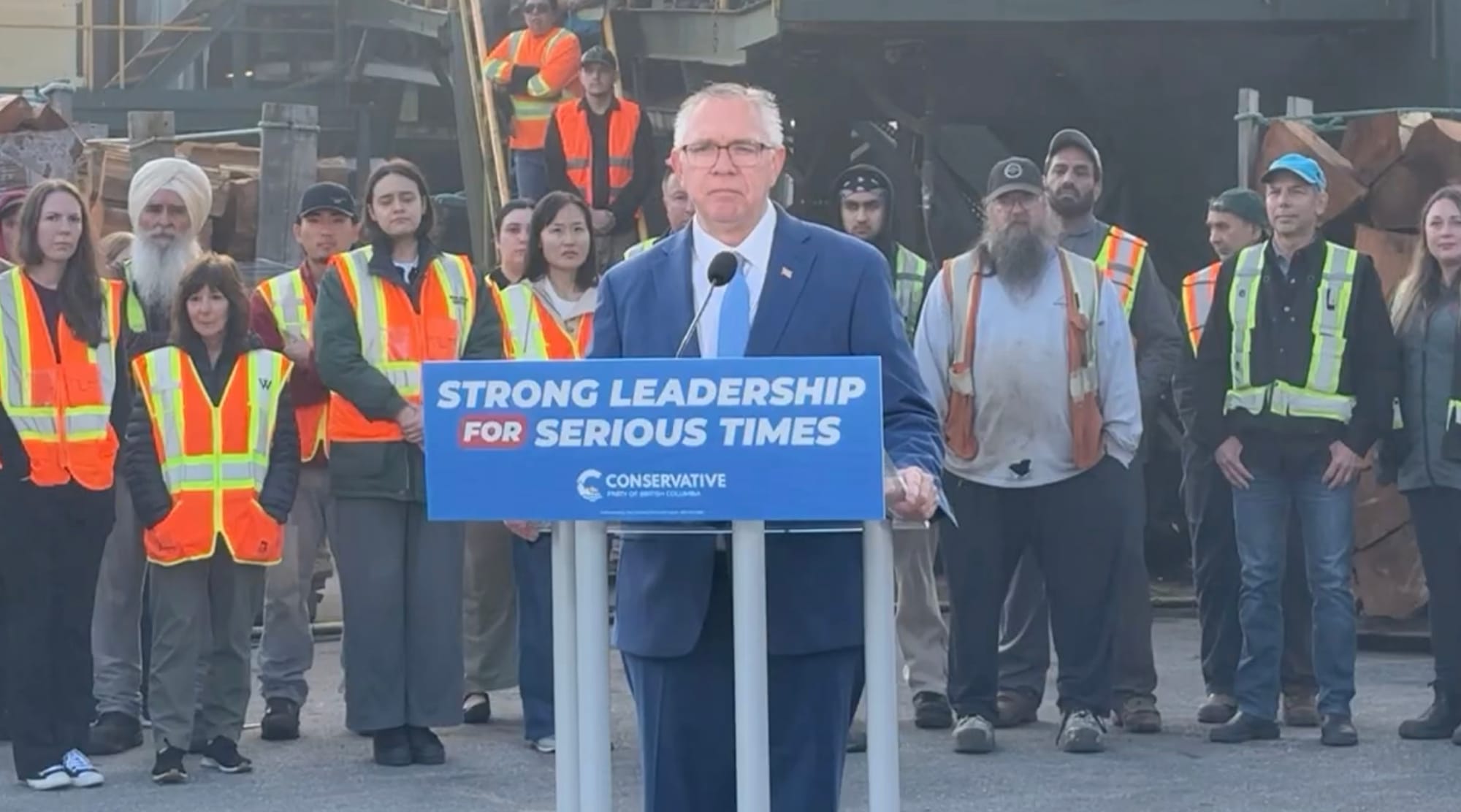

BC Conservative leader Lorne Doerkson unveiled his party's forestry plan Monday, promising to increase timber supply, accelerate permitting, and reduce operating costs in an effort to protect jobs and strengthen the industry.
Speaking in Maple Ridge on October 19, Doerkson said a BC Conservative government would establish a minimum annual timber harvest target of 45 million cubic metres, alongside measures aimed at making it easier for forestry companies to operate in the province.
BC Conservative leader Lorne Doerkson announces a five-point plan for BC's forestry sector:
— Sitka Media (@sitkamedia) October 19, 2026
- Increase timber harvests to at least 45 million cubic metres annually
- Speed up permitting and approvals
- Reduce unnecessary permitting costs
- Expand Indigenous participation
-… pic.twitter.com/eCSKDyAKDp
“Forestry built this province, and it still puts food on the table for families right across BC,” Doerkson said. “My Conservative government will fight for every forestry job and make sure BC forestry is here to stay for our children and our children's children.”
The party says BC's forestry industry has shrunk by 50% under the NDP government, with more than 15,000 jobs lost since 2022.
A key component of the plan would introduce a streamlined permitting process modelled after major-project approvals, with the goal of reducing approval timelines from years to months.
The Conservatives are also proposing a single-window system for First Nations referrals and project applications, while eliminating what the party describes as unnecessary permitting costs.
The plan includes extending the BC Manufacturing Jobs Fund and providing fair and timely compensation to licence holders and Bill 13 contractors when forestry tenure is reallocated.
Other commitments include expanding skills training to increase Indigenous participation in forestry, creating more competitive tax conditions for value-added wood manufacturers, and developing a biomass and bioenergy strategy, beginning with Clean Fuels Hubs in Prince George and Kamloops.
The Conservatives also pledged to address existing old-growth logging deferrals, protect the rarest ecosystems and return other areas to the working forest.
Additional measures would prioritize BC lumber in government-funded housing and infrastructure projects, strengthen forest management to reduce wildfire risks and make softwood lumber a priority in trade negotiations with the United States.
The announcement comes as BC's forestry sector continues to face challenges related to timber availability, operating costs, and trade pressures from the United States.
British Columbians head to the polls on October 24.