


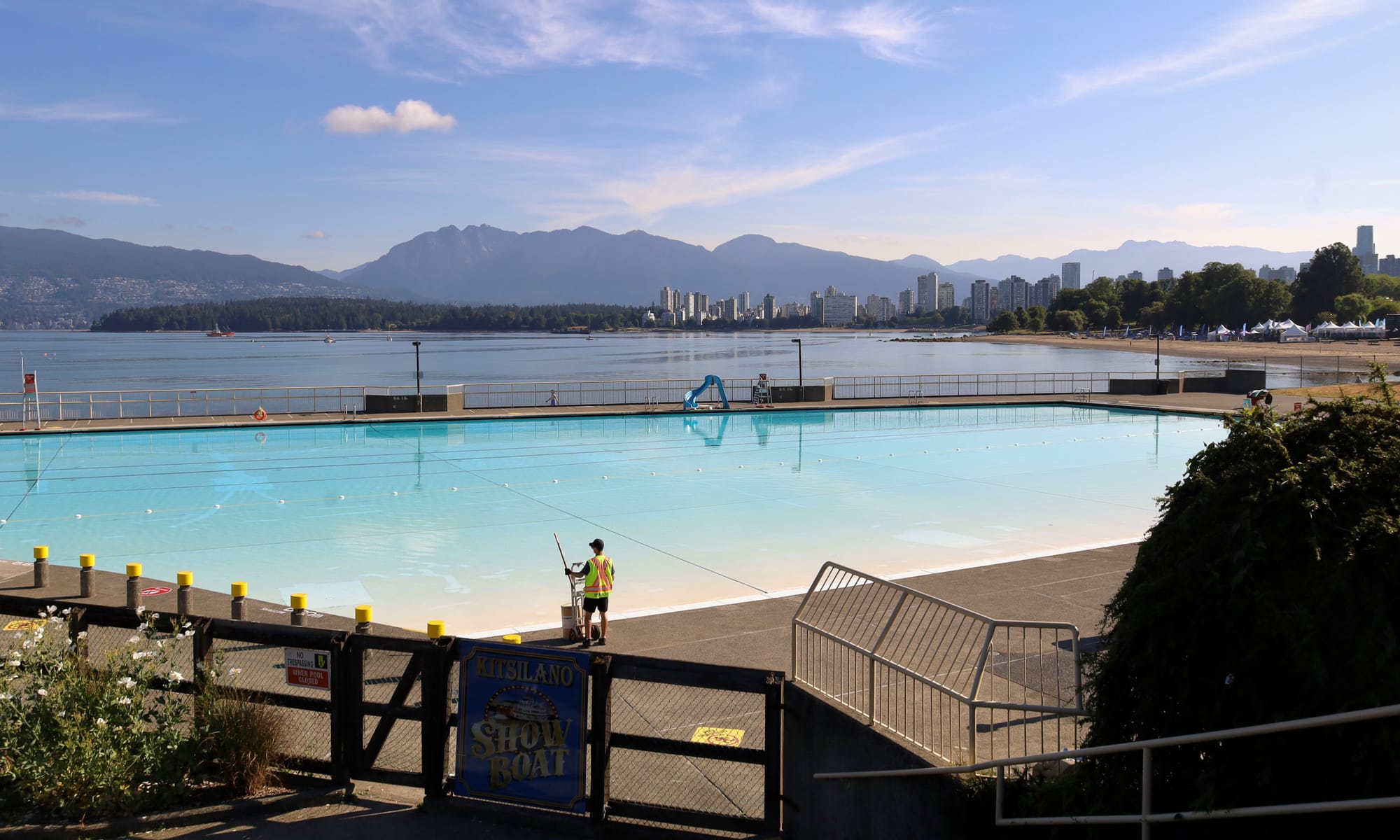

As rising temperatures lure Vancouverites out of hibernation, many are asking the same question — when will Kits Pool open for the season?
On Monday, the city announced that while other pools will be ready to go by late May, Kitsilano's aquatic landmark will likely welcome the first swimmers in mid-June.
The reason? Aging infrastructure.
"Kitsilano Pool has reached the end of its functional life with several deteriorating components and a history of storm-related damage, which adds complexity to its opening each season," the city wrote in a press release, explaining that compared to other facilities, the process is more complex.
"Pre-season work includes assessing the pool’s condition and completing necessary repairs to its pipes and basin," officials noted. "Once repairs are complete, the pool will be filled, water treated and heated, followed by an annual inspection by the health authority prior to opening."
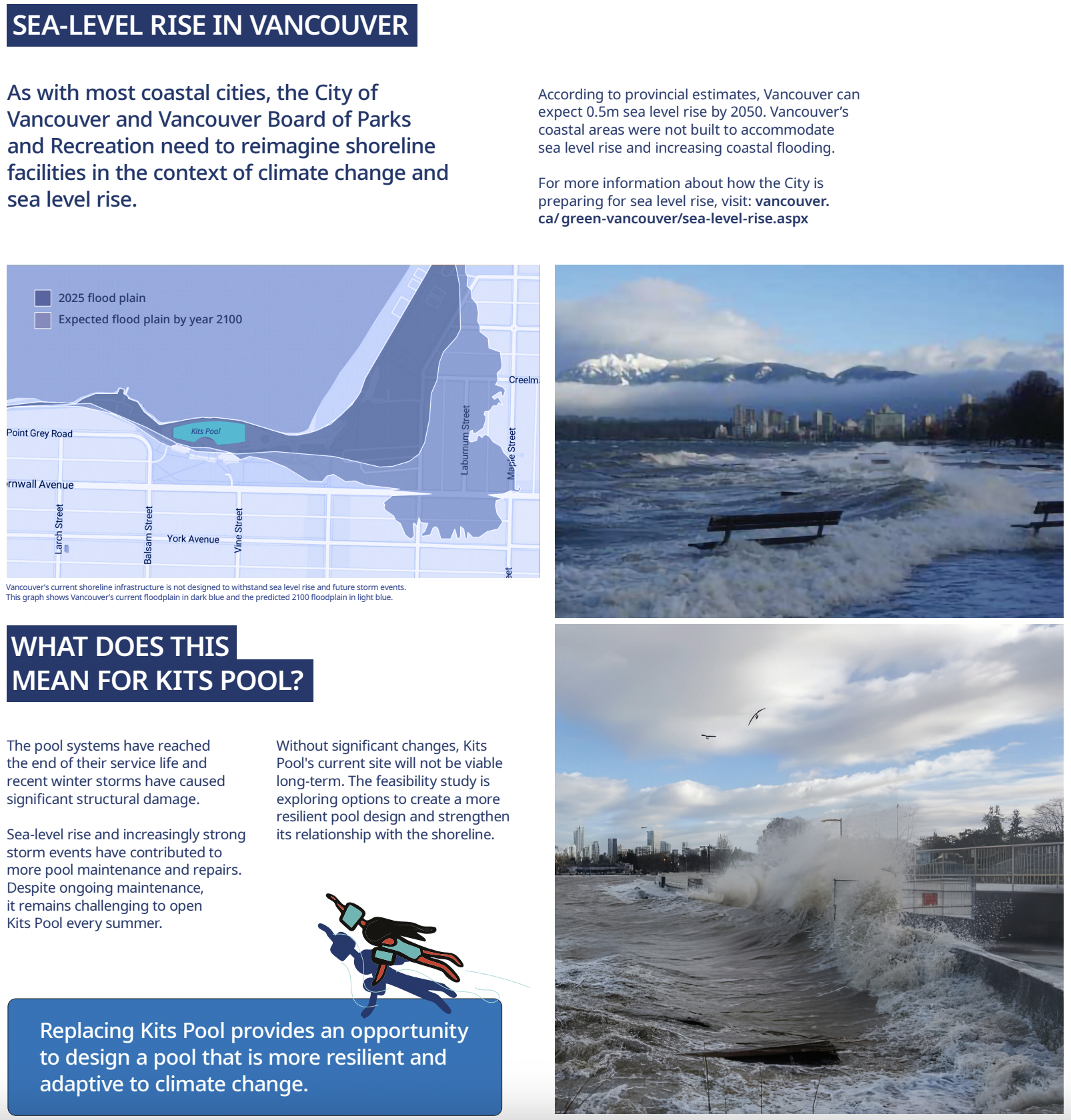
At the heart of the issue is the fact that Kits Pool is located on a flood plain right next to the ocean, and is routinely battered by waves and debris.
Projections show that by 2100, the flood plain will advance past the pool, making it an unsustainable location.
For years now, those in charge have gone back and forth on whether to continue maintaining the existing pool or simply replace it altogether. A feasibility study was conducted alongside public engagement, and in the end, three options were shared with city council and the Park Board.
If they decide to "protect the existing facility," it would cost around $40 million and extend the pool's lifespan by 15 years. "Renovat[ing] the existing facility" would more than double the price tag to $90 million, but also double the lifespan.
The third option is to "replace" the pool with "a new facility outside the floodplain" in Kistilano. This would ensure it serves residents for the next 75 years — at a cost of $230 million to $300 million, "depending on potential enhancements."
The Park Board and city council will decide on "priority setting" and funding, respectively, as part of the 2027-2030 Capital Plan approval process, which will take place later this spring.