


There is a tired trope out there that is pushed by both activists, who see any human activity as detrimental, and also fed by those who would keep our industry in the doldrums, while their sawmills hum through wood in other places, particularly the south east US.
As a province we have entered a new phase of forestry and it will require new tools and investment, but we are literally drowning in wood. A quick drive around any interior community rapidly betrays the truth that clearcuts have sprung up into thrifty pine stands that look very similar to the stands killed by the pine beetle.
How did this happen?
The gulf between the so-called experts and those on the ground with sweat in their high vis vests has never been greater. Many people in the big urban centres believe it's all been logged — and it has! The difference of course is that forests are not static.
Forests logged when Kurt Cobain was writing songs are now ready to make excellent lumber. As loggers moved out from sawmills to get timber, they practised the time honoured method that is part of human nature: Take the best wood first. That has left us with a legacy of young trees growing on the best sites, with roads, infrastructure and extremely great potential.
Why aren't we getting this wood yet? There is no good answer other than incompetence. The good news is that it is easier to fix incompetence than it is to create the world's best conditions for timber production.
In some areas we have recognized the potential in accessing younger wood, but a broader awakening is upon us. Part of the problem is that BC is light years behind in our models that show where the wood is. Vestigial data systems chronically underestimate the growth of our old clear cuts, often by factors of infinity. In the days of cheap and accurate drones we are using a matrix of dated aerial photographs that have fed a model created by people who died before the acronym AI was on the tip of everyone's tongues.
In many ways our Ministry of Forest is stuck using pay phones when the rest of the world is texting pictures. In other ways we have scared investment and inertia from our bread and butter by creating a false image of a denuded landscape. A prime example is the world famous Bowron clearcut, a spruce beetle harvest from the 1980s. It was visible from the moon. Today the volume of mid 40 year old wood has regained the volume initially logged. Shockingly, trees do grow back.
Our critics will say that BC runs on "old growth" wood and needs the large diameter that these "old growth" forests produce. Under the microscope of reality this claim falls apart instantly. Houses use 2x6s and 2x4s which means that 9” wood is plenty big enough. And these smaller trees can be removed in a process called thinning, similar to growing carrots, where some of the trees are removed to allow the remaining trees to get much bigger than they would get otherwise.
In fact, small countries like Sweden are cutting three times more wood than BC is currently and are getting more than half of their volume from thinning. Young trees have similar diameters to the vast majority of material that was harvested in the pine beetle salvage, as interior forests when unthinned remain as small diameter wood for many decades after the trees crowd out available resources.
Vast amounts of logs with diameters below 10 inches have been the bread and butter of BC's mills for decades. Pine beetle salvaging prioritized dead wood for the last 2 decades and each year that past brought decay, cracking and quality decline to the dead trees.Our new regrown "clear cut" wood from thinnings is green, rot free, and gives much higher lumber yields than the tighter grained but heavily cracked and checked logs that had died decades ago.
The cherry on BC's forest industry cake is our advanced secondary mills that utilize the bark, chips and non lumber portions of the forest resource. This gives us room to do so much more with our logs than in the days of beehive burners. Pellets, pulp, and clean energy are just a few of the brilliant ideas that have been rolled out to great success across our province.
In short, BC is on the verge of a new and exciting chapter for forestry. Our "clearcuts" are filled to the brim with bright young trees, and the best part is that we can access these trees using proven methods such as thinning that increase the biodiversity of the stand, while reducing the fire hazard, and creating the fiber security we require to amp up investment that has been squandered in a pyrrhic march of doom.
The future is very bright if we would get our heads up from our navels and actually look at our forests instead of decades old models. We must start listening to those whose boots are dirty, instead of those pale skinned office jockeys who haven't ground truthed their models since Donald Trump was a reality TV star in order to realize this joyous rapture of timber abundance.
And on the topic of our southern chaos agent, one must understand that BC has plenty of high quality young conifer, and while eating a Tuesday taco it's important to understand that bluster and bluffing aside the US needs our wood as much as we need them to buy it. People, after all, need homes. And the backlog of housing demand across our continent is about to undergo a labor cost reduction using new technologies that would make the railroad blush.
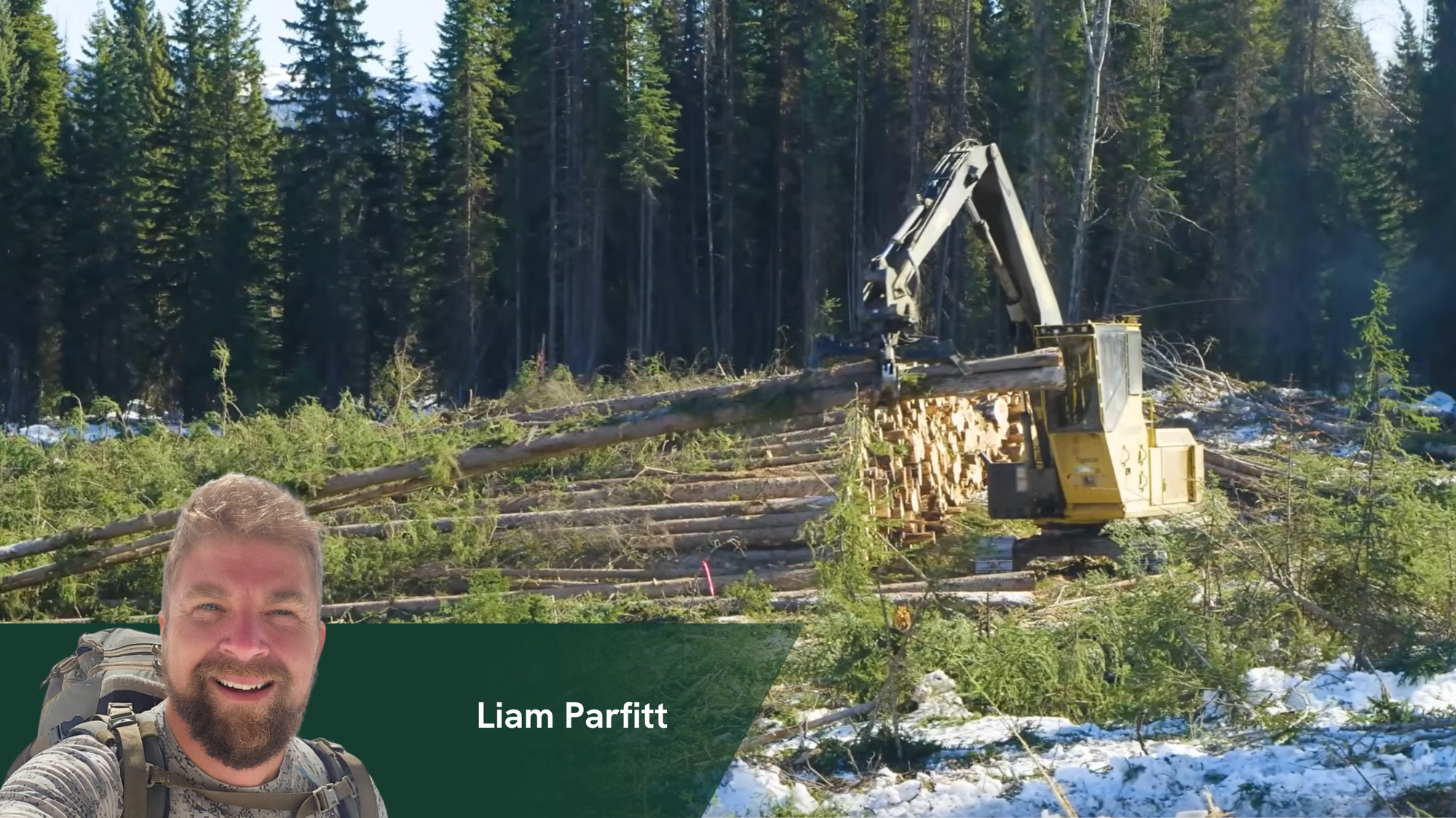
Liam Parfitt is the founder and partner at Freya logging. He is committed to positive and thought provoking forestry that takes real world practical experience to meet today’s big problems of climate stability, biodiversity, housing and economic growth.