

There is a clip from Saturday night's Conservative Party of BC leadership debate that every member of this party should watch twice.
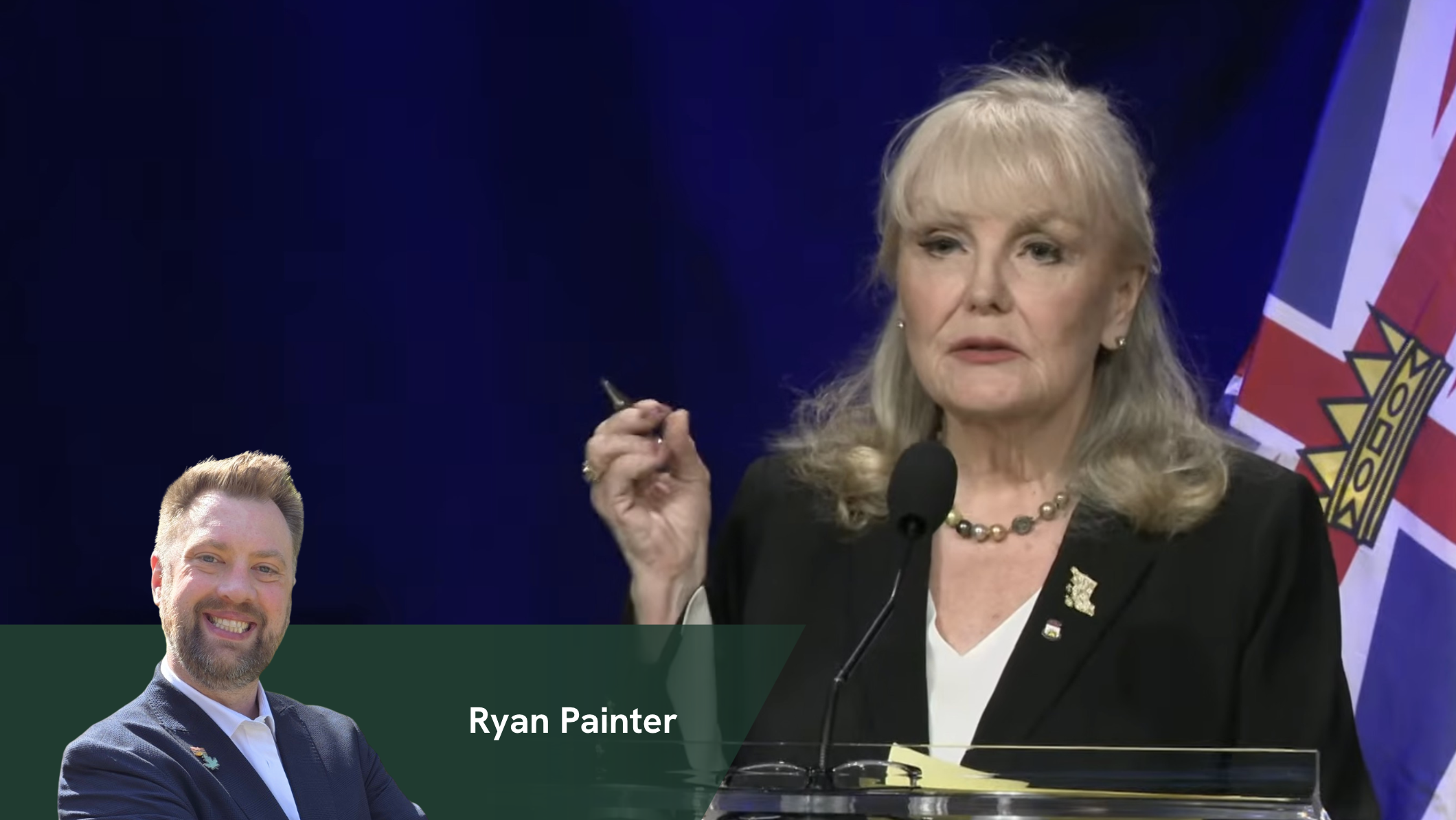
Kerry-Lynne Findlay turns to Peter Milobar and tells him, on camera, that he cannot lead this province because his wife is Indigenous.
She gestures at "the property rights issue." She warns Milobar he will not be able to "get around the conflict of interest rules." Milobar makes her say the quiet part out loud. "Just say it. My wife is Indigenous, so you think I'm in conflict of interest."
Findlay says it. "She also works for the Kamloops Indian Band."
Lianne Milobar's last shift was nine months ago. One day. Answering the phone.
That is the conflict of interest we're all supposed to be clutching our pearls about. That is what a candidate to lead this province put on the table a week and a half before ballots start coming in.
Let's deal with the law first, because someone has to. British Columbia's Members' Conflict of Interest Act defines a private interest in financial terms. It exempts anything that affects a member as part of a broad class of electors. Commissioner Ted Hughes ruled in 1991 that even direct spousal pecuniary interests in public-sector wages were not enough to require recusal. That precedent has stood unchallenged for thirty-five years.
Á'a:líya Warbus sits in the Conservative Party of BC caucus as House Leader and is Stó:lō. Ellis Ross is a Conservative MP and former chief councillor of the Haisla Nation. By Findlay's standard, neither of them should be allowed to speak on the files they were elected to lead. Strip away the legal costume, and what Findlay is really proposing is a disqualification based on race.
There is a textbook idea of conflict of interest that most of us carry around. It says that if a politician could conceivably benefit from a decision, they should step back. That is a fine instinct for an ethics class. It is not what the law says. If the rule were "anyone who might benefit must recuse," no MLA could ever vote on anything that touched their own life. Education. Health. Banking. Taxes. Housing. All of it would be off limits.
So the BC statute draws three lines. There has to be a real financial interest, not a feeling, an identity, or a family connection in the abstract. The MLA has to take an actual official action. And the action has to produce a direct benefit to that specific private interest, not a diffuse one shared with a broad class. Miss any of the three, and there is no conflict.
We saw this play out in BC over the last seven years, and the Conservative Party of BC's own predecessor party ran the same play Findlay is running now. In February 2019, the BC Liberals demanded NDP MLA Ravi Kahlon resign from a legislature committee on ride-hailing because his father held a taxi licence in Victoria. By Findlay's logic, that should have been an open-and-shut conflict. It looked like a conflict. It felt like a conflict. It was not a conflict.
Acting Commissioner Lynn Smith cleared Kahlon in August 2019, and her reasoning is the whole ball game. Kahlon's finances were "completely separate" from his father's. Ride-hailing affected a broad industry, not an individual entitlement to his father. The connection between Kahlon's committee work and his father's licence was, in Smith's words, "remote in the extreme." Kahlon had no financial stake of his own, took no action that directly benefited his father, and thus, there was no conflict.
Now look at Milobar against that test. His wife is not a litigant in the Cowichan case. The Shuswap Nation Tribal Council is not a contractor under any portfolio he holds. She is not lobbying him. She is not benefiting from any vote he casts. She answered the phone, one shift, nine months ago. If a taxi licence held by a sitting MLA's father is "remote in the extreme," what does that make a part-time receptionist shift held by a leadership candidate's wife?
That is the law. Now the harder question. Where does Findlay get the standing to lecture anyone at this party on conflict of interest?
In June 2012, as Parliamentary Secretary to the federal Justice Minister, Findlay wrote to Public Works Minister Rona Ambrose, urging the renewal of a federal lease for a constituent named Mike Salvatore. She added a handwritten endorsement. Weeks later, Salvatore donated to her riding association. Section 9 of the federal Conflict of Interest Act prohibits parliamentary secretaries from using their office to advance another person's private interests. Findlay disclosed the letter only after a journalist pulled it through Access to Information. That is a real conflict of interest, by the actual federal definition. That is Findlay's record.
There's more. Independent MLA Tara Armstrong stood in the legislature on April 23 and used the phrase "blood and soil" to attack a treaty bill. Premier Eby called it Nazi rhetoric in the chamber. Armstrong has endorsed Findlay for leader. Findlay has not rejected it. Iain Black raised that point in a post on X the night after the debate.
By the standard Findlay invented Saturday, the leader of this party cannot be married to a sitting member of its caucus. Her husband, Brent Chapman, is the Conservative MLA for Surrey South, whose 2015 Facebook posts about Palestinian children dogged the BC Conservatives through the 2024 election. That standard ends her candidacy before it touches Milobar's.
Federal Conservatives spent ten years building conflict cases that ran on exactly this test. The Aga Khan ruling required Trudeau to personally accept a gift from a person with federal business. The Dominic LeBlanc ruling required him to personally approve a licence for his wife's first cousin. If a wife's part-time shift were a conflict of interest, no MLA married to a teacher, EA, or principal could vote on education.
No MLA married to a doctor or a nurse could vote on health. The standard collapses the moment you try to apply it to anyone else, which is how you know it was never a standard. It was a racist smear dressed in legalese.
Inside the federal Conservative family, the reaction was immediate. Frank Caputo called the smear morally indefensible. Todd Doherty asked Findlay whether her own family ties should disqualify her. Ellis Ross said he is tired of getting smeared from both sides of this debate. These are not New Democrats. These are Conservatives on the record telling the candidate she is wrong.
Peter Milobar took nothing. Disclosed everything. Voted against DRIPA expansion on the record. Says it himself. "I've been voting against lots of Indigenous issues." A man with the conflict Findlay is alleging would have done the opposite.
What Findlay revealed on Saturday is not a flaw in Milobar's filing. It is a flaw in her own argument. When the conflict-of-interest cop has the record, who is she really policing?
Ryan Painter is the founder of Rhino Public Relations and Strategy, former Director of Communications for the Conservative Party of BC Caucus, and a former school trustee and board chair (2018–2022).