
British Columbians are waking up to a massive Conservative majority, the first in 100 years. Amidst a scattershot of policy announcements and confusion over duelling local elections, voters chose change. But what did they really vote for?
Most of all they voted to get rid of David Eby. First, the Premier wanted the election to be a referendum on Trump, then second, on the extremists in the Conservative caucus, but he ended up with a referendum on himself.
Turnout was down – preliminary figures show it was just 48.45%, a huge drop from 58.6% just two years ago. Even the 2020 COVID snap election netted 53.8%. Likely many usual NDP voters who couldn’t stomach the Greens or the Conservatives simply stayed home. The Conservatives scored their super majority with 50,000 fewer votes than they got in 2024, when they narrowly lost.
That narrow defeat two years ago was attributed to voters perceiving the Conservatives as too risky – the whacky elements of their Caucus too numerous and unruly to control. This time the voters that turned out (or stayed home) seemed satisfied that “Normie Lornie” would be able to do the job.
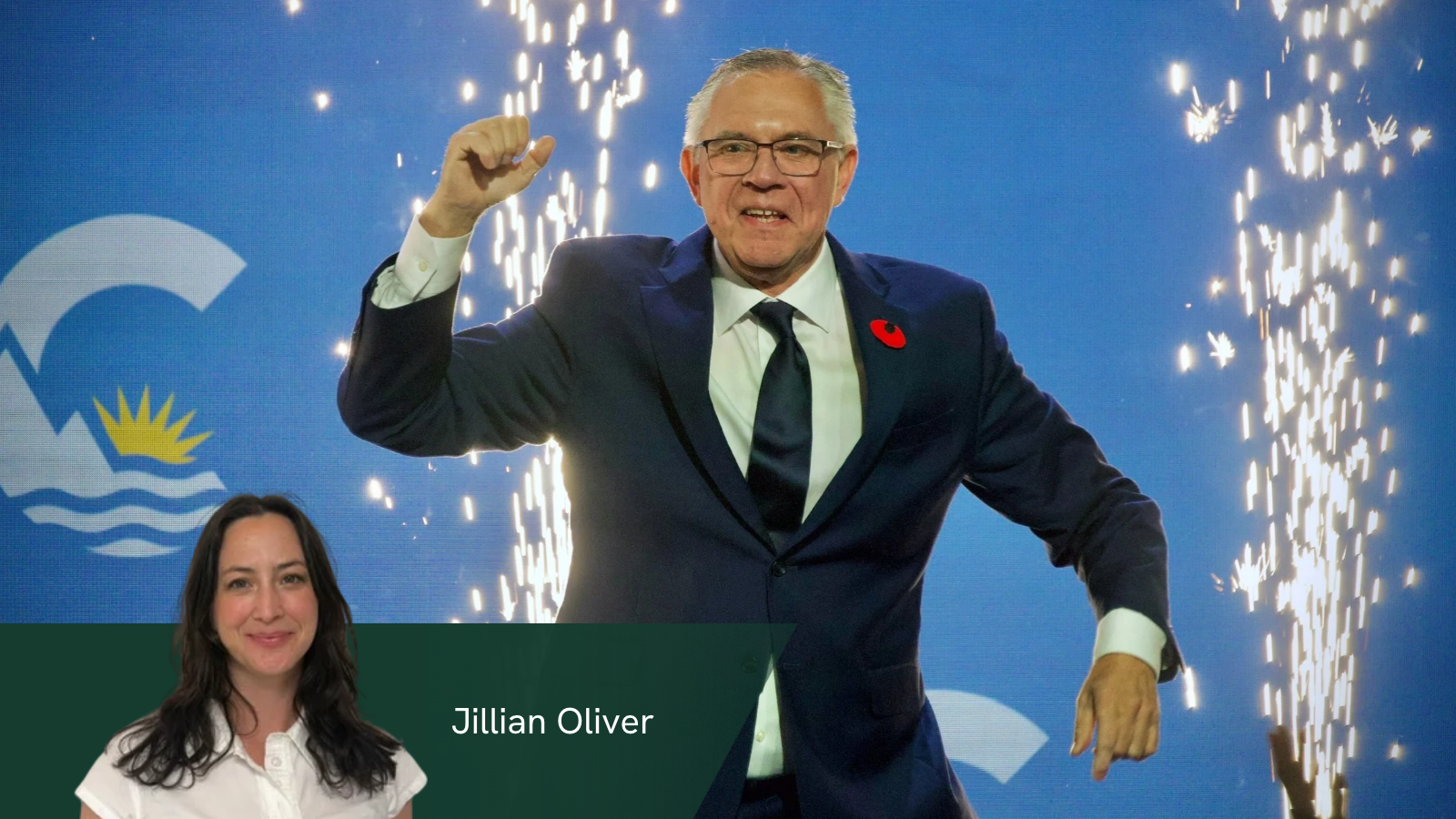
Doerkson seems to grasp this. He delivered a rousing speech focused on invigorating every city and town across the province. He wants to get our economy firing on all cylinders, echoing one of his most effective campaign lines: “David Eby sees an opportunity for himself, and I see an opportunity for you.”
There was no mention of the culture war issues more favoured by Kerry-Lynne Findlay. Indeed it was her ouster that likely gave many swing voters confidence that Doerkson’s Conservative Party would be on more of a fiscal conservative track.
But Doerkson has a large caucus of 63 MLAs, each with their own reasons for seeking power and influence. He must keep them busy without saddling his government with too much controversy early on. There are the ones who made headlines during the campaign – Heather Maahs with her despicable talk of the SOGI anti-bullying curriculum constituting “grooming” and Anna Kindy with her vaccine skepticism. Any cabinet posts for them will result in swift blowback.
But there are also ones who did not make headlines, including Caroline Elliot, the runner-up in the leadership contest against Findlay, has argued that traditional fiscal conservatism is outdated and that the Party can’t shy away from culture wars. She believes the BC NDP went too far in pushing identity politics and social justice ideology in schools, including criticizing efforts to teach anti-racism in schools.
Elliott is so respected by decision-makers in Doerkson's Conservative that she managed to boot MLA Lynne Block out of her safe West Vancouver-Capilano riding (Block was elected anyway after flipping the less safe North Vancouver-Seymour from the BC NDP). Will Elliott get her hands on the education file and start fights with teachers and school districts on their efforts to teach children about racism?
Or, will Elliott get the Indigenous Affairs file? She rose to prominence as a critic of DRIPA legislation and the government’s reconciliation efforts. The Conservatives have promised to repeal DRIPA and introduce a law to protect private property. But if not handled respectfully, Doerkson’s core promise of supercharging the economy could quickly be undercut.
First Nations have warned that these efforts could imperil resource development projects already underway. Even absent DRIPA, First Nations have constitutionally protected rights that make their cooperation essential to the timely completion of these projects, without which they may not be economically feasible. Will Doerkson choose a cabinet that will be able to deliver sensible assurance for private property holders, while also giving businesses and First Nations the certainty they need to keep projects on track?
As you go down the list of new Conservative MLAs there are still members whose remarks hint at the extremism that kept them out of government just two years ago. Bruce Banman thinks the government should ban certain books from school libraries, Sheldon Clare said that some local election candidates should be hung.
In the last Parliament, Conservative MLAs were ejected from Caucus for domestic violence charges and insensitive remarks about residential school survivors. Two others quit in solidarity and went on to be charged for sexual assault and make troubling remarks about Nazi ideology. These issues only came to light after the MLAs were elected. The BC NDP official opposition will now be focused full time on unearthing damaging information and driving wedges within the government Caucus.
Three quarters of his way through his jubilant speech, Doerkson seemed to glimpse the difficulties on the horizon. After making a string of promises to bring our province to glory, he acknowledged he won’t always do it “perfectly.” It was an early acknowledgement of the difficult decisions ahead for him after his brief moment of relief and excitement.
In the weeks ahead, British Columbians will see how he strikes the balance between economic conservatism and culture wars. Perfection isn’t possible, but British Columbians are expecting the serious leadership for serious times that he promised.
Jillian Oliver is a former BC Greens press secretary and co-director of the party's 2020 provincial election campaign. She is also a panelist on Political Capital.