
BC’s coastal communities are being pulled into a new governance model without clear rules, public consent, or accountable lines of authority.
As governments rely on ad hoc arrangements to shift stewardship and management functions to First Nations, residents are facing growing uncertainty over who controls access, use, maintenance, cost, and decision-making on public land.
Bowen Island Mayor Andrew Leonard’s recent letter to the Islands Trust Executive Committee shows the problem reaching local government. Leonard warned that staff appeared to be resisting a lawful resolution from elected officials directing them to prepare a cost estimate for years of forthcoming First Nations relationship-building.
Staff cited limited data, sensitivity around First Nations interests, and uncertain advocacy value. Leonard counters that staff can provide cautions, but elected officials decide whether the work is needed.
For a body that must engage with 26 First Nations while relying on roughly 33,000 property taxpayers, residents are left with no clear picture of the cost, scope, authority, or accountability structure being thrust upon them.
The Province’s 2025 Squamish Nation Land Use Planning Agreement shows how far this backroom approach has advanced. While the agreement does not create or define Aboriginal title, it states that the parties acknowledge Squamish “asserts aboriginal title and decision-making authority” over natural resource development and land use throughout its claimed territory, including much of Vancouver, Burrard Inlet, Howe Sound, and the North Shore, through Squamish and into the surrounding Coast Mountains. The results are predictable.
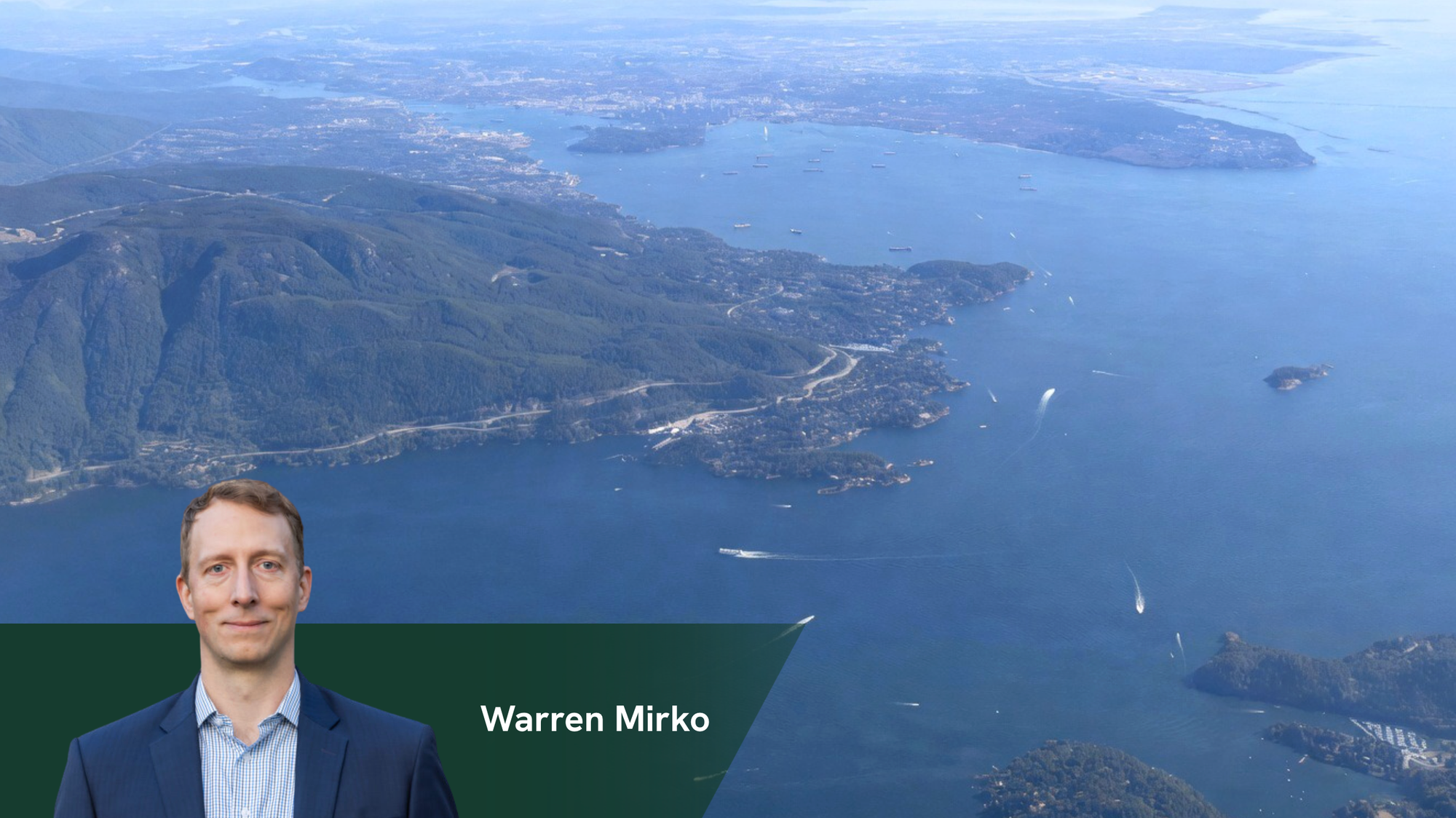
The agreement also contemplates areas of interest that include foreshore and water and commits the province to further negotiations with Squamish on marine use and permitting. These areas span Howe Sound and the Lower Mainland, including Lighthouse Park Marine, West Side Howe Sound, Defence Islands and other marine-related regions. Other listed areas closer to Vancouver include Stanley Park, First Narrows, Sen̓áḵw and Indian Arm-area sites.
Now the Province’s newest public review draft shows this process moving from agreement language into binding land-use rules. The proposed Squamish Nation Land Use Objectives Order would establish Land Act objectives for Crown land, including on Gambier Island. In some areas, the rule is simple: forest structure must be retained, including standing, dead and fallen trees, and debris.
That may sound like forestry language, but it matters wherever Crown land is also used for access, maintenance, or waterfront use. And the Province isn’t pretending it’s only about forestry when its stated objectives blur “improving forestry stewardship” and “protect Indigenous cultural values.” So much for a routine draft order.
This is a part of political agreement most British Columbians never had input into and is now being converted into legal operating rules for Crown land surrounding private property. The sequencing says plenty: the Squamish agreement was signed in June 2025, the legal objectives followed, and public comment closes July 20, 2026.
That may satisfy the Land Act process, but it is not meaningful public input if the core decisions were made first. And while the draft order may not regulate docks or vessels directly, it shows the same pattern: public lands and coastal communities reorganized through agreements most British Columbians never saw, with consultation offered only after the framework is in place.
The transfer of authority is not limited to the Government of BC. In February, Ottawa advanced a similar approach through its Musqueam Stewardship and Marine Management Agreement. It commits to advance incremental implementation of Musqueam’s rights and title by establishing “Collaborative Governance and Management” in stewardship and marine management within Musqueam claimed territory, which overlaps Squamish claimed territory and much of Metro Vancouver.
It further creates a framework for stewardship and marine emergency working groups to implement “compliance and enforcement.”
Worth noting is that the agreement does not actually create or define Musqueam’s rights and title. Meanwhile, Squamish has vowed to defend its own rights and title, which is not a threat to ignore in a region where overlapping claims now reach across Metro Vancouver, Howe Sound, federal marine jurisdiction, public infrastructure, and more.
The problem is governments creating parallel governance arrangements without explaining authority, overlap, enforcement, liability, public access or accountability.
While Ottawa is entering into governance arrangements with Musqueam, the Province is hammering out marine-foreshore and land-use arrangements with Squamish, apparently with neither speaking to each other. Or the public.
The consequences are already appearing on navigable waters. Last April, Parks Canada prohibited camping on Cabbage Island, a key safety stop for kayakers crossing from the Lower Mainland to the southern Gulf Islands, citing the protection of Indigenous cultural heritage.
Parks Canada later said future decisions would be shaped by conversations with First Nations partners and the “shared responsibility for Cabbage Island,” showing how access decisions can quickly affect where people can land, rest, and travel safely.
As governments parcel out authority through piecemeal agreements, dock owners, kayakers, anglers, guides and coastal residents are left asking: who is in charge?
Until governments establish clear, lawful, and transparent frameworks, they are not advancing reconciliation or stewardship. They are creating confusion, conflict, and risk on the water.
Warren Mirko is executive director of the Public Land Use Society and has more than 15 years of experience in public relations and regulatory risk management across provincial and federal agencies.