
"In this present crisis, government is not the solution to our problem; government is the problem."
Ronald Reagan said it at his first inauguration in 1981, and politicians have been quoting it ever since. There is something honourable in the sentiment. Governments waste money, grow when no one is watching, and too often treat the taxpayer's dollar as their own.
Yet in the same speech, Reagan said he had no intention of doing away with government. His goal was to make it work.
We form governments because some things can't be done alone, and some things the market can't do well: courts, policing, roads, sewers. Taxes are how a free people agree to pay for them. When we refuse to pay, the cost doesn't disappear; it simply moves.
Underfunding a public service doesn't abolish a tax; it swaps a visible, predictable tax for a hidden one that is usually larger, and that falls hardest on those who can least avoid it.
Public transit is one of those things. Nearly every city in the developed world funds it publicly. The few places where it turns a profit, like Hong Kong or Tokyo's private railways, make driving deliberately expensive.
Transit pays us back. It connects workers to jobs, because a labour market is only as large as the area people can reach on time. It gets people without a car to work and to the doctor on their own. That is self-reliance, not dependency. And every full bus is dozens of cars that aren't in front of you on the Port Mann Bridge.
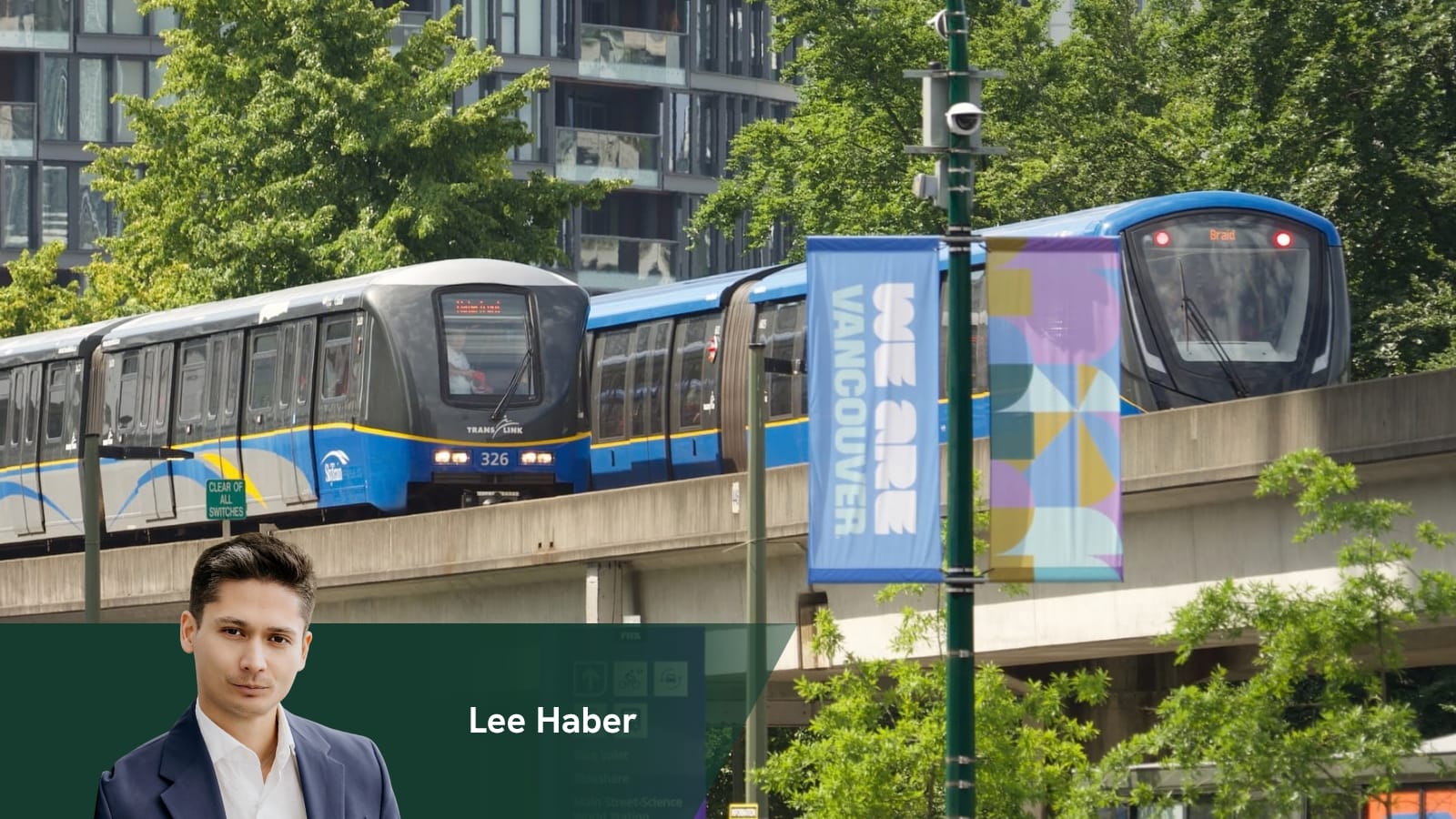
In 2025, Metro Vancouver came within months of losing up to half its bus service. The province put in $312 million over three years, and the mayors raised fares and property taxes to cover the rest. That deal runs out at the end of 2027, and TransLink needs at least $112 million a year in new revenue starting in 2028.
Both the BC NDP and BC Conservatives have ruled out imposing a vehicle levy of $100 to $150 per year. But if not this, what? Doing nothing is not free.
Transit planners call what comes next the death spiral. Service gets cut. Riders with any other option stop riding. Fare revenue falls, the gap grows, and service gets cut again, until what remains is a skeleton network serving only those with no alternative.
For a preview, look three hundred kilometres south. Portland's TriMet, facing a $300 million annual gap, made the largest service cut in its 57-year history in August, reworking or eliminating 33 bus lines, cutting a light rail line short and shedding over 400 jobs. It still faces a $158 million deficit. TriMet's own spokesperson admits that "we can't cut our way out of this crisis."
We're in a stronger position: our ridership has almost fully recovered, and buses in Surrey are passing people by because they're full. Letting a death spiral happen now would waste all our previous good work and could take a decade — at least — to recover from.
So what would it cost? MovementYVR, the region's transit riders' association, puts it at roughly $15,000 a year for every household forced to add a second or third car. That's a hundred times the aforementioned levy. Even spreading TransLink's entire $112 million need across the region works out to about $40 per resident per year.
Keep in mind, that's before hundreds of thousands of new drivers clog the roads that carry the region's goods and workers. Employers would struggle to find staff and those who can't afford a car would be left stranded. None of that shows up on a tax bill, but it is a tax all the same: the largest, least fair and least avoidable one on offer. Both parties have vowed to make life more affordable; nothing makes life more expensive than being forced to buy a car.
Don't assume the vehicle levy is the only option out there. Propose something better: a regional sales tax, road pricing, a dedicated share of an existing revenue stream. Put a real number beside a real source, and insist on an audit while you're at it. But "no new taxes" is not a transit plan. It is a decision to let the cost fall on families, one car payment at a time.
The ridings where that cost would land hardest will likely decide this election. Surrey-Guildford was won by 22 votes, Maple Ridge East by 97, and Surrey City Centre by 236. Voters there know what a full bus passing them by feels like.
Reagan didn't want to abolish government. He wanted it to work. In Metro Vancouver, a government that works keeps the buses and trains running. Fund it properly, or the province's economic engine will pay a far steeper tax than anything that's been proposed so far.
Lee Haber is the Director of Strategy and Partnerships and Mountain Valley Institute, a non-profit organization advancing mass transit in BC.