


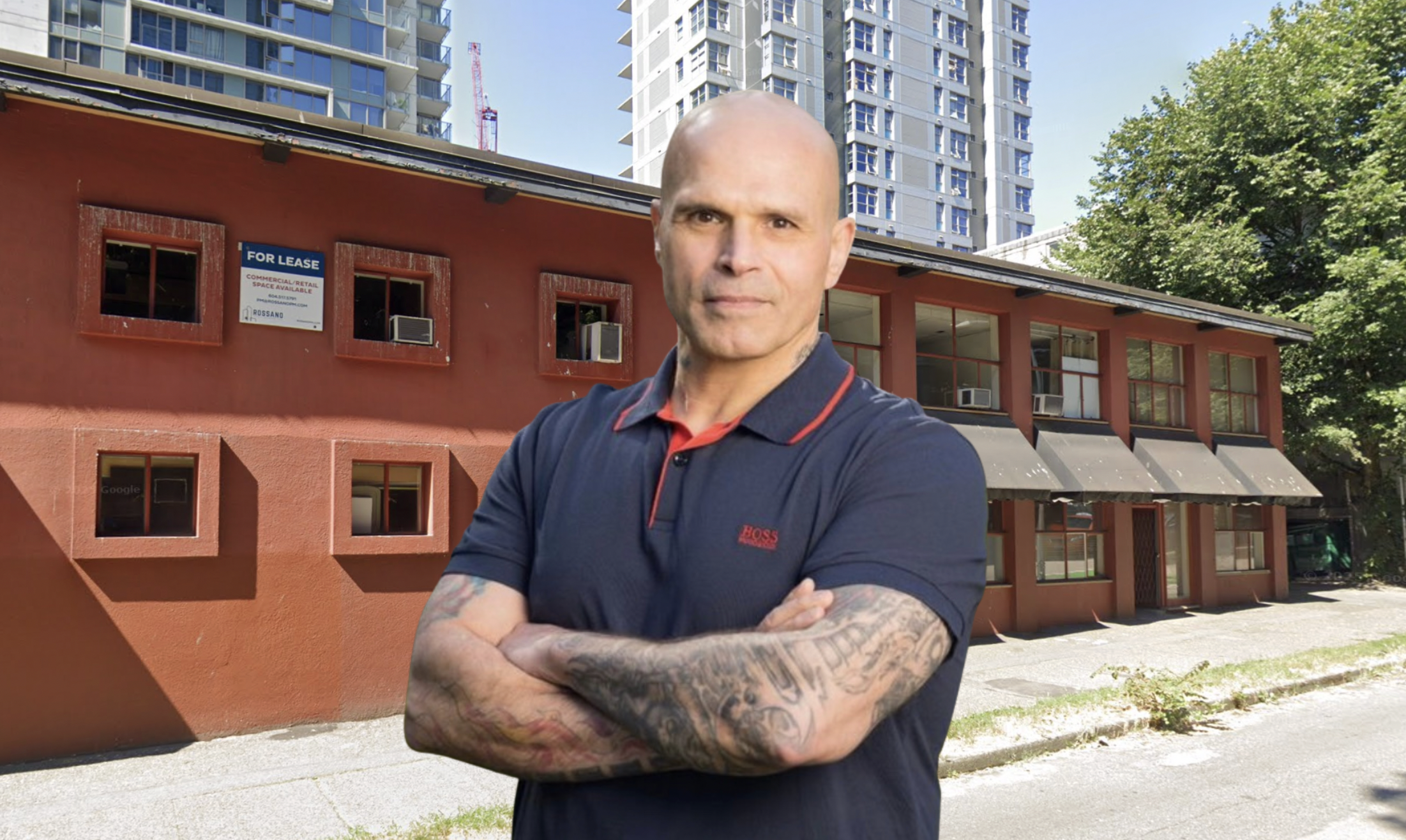

Shortly after Vancouver Coastal Health revealed that it had secured a location for a new overdose prevention site downtown, Mayor Ken Sim and his fellow ABC councillors announced their intention to "use every tool in the toolbox" to prevent it from opening.
The city's move was criticized by many, including harm reduction advocate Guy Felicella.
"It's disappointing," he told Sitka Media. "This is a chronic relapsing condition, and with the drug supply — especially as toxic as it is — to not have those sites, does that stop drug use? No, that just means there's unsafe drug use in a community."
Felicella admitted that overdose prevention sites are not a "silver bullet" to eliminate public consumption, but argued that they do help "reduce" it.
"You're not allowed, technically, to use drugs in the public, and the city has the by-laws in place, right?" he continued. "But here we are — if we don't have supervised consumption, people are going to use, so I find there's a little political theatre going on."
The original Thomus Donaghy Overdose Prevention Site was shut down in January after nearly five years in operation as the only such public facility in the downtown core. During that time, it responded to 480 overdoses and recorded 149,603 visits.
It's new location will be 900 Helmcken Street, just across the street from the Sheraton Wall Centre Hotel. The lease term is set to begin June 1, 2026, with services opening shortly afterwards.
"The new location offers dedicated outdoor space for observed inhalation, which is the most common mode of drug consumption, as well as ample indoor space for observed injection and respite, which helps ensure site safety and reduces potential outdoor congregation of clients," Vancouver Coastal Health wrote in a statement. "As street-based consumption is a recognized concern in this neighbourhood, the ability to offer a safe and private space for individuals to access services is an important feature of this site."
Most of the city's opposition has been centred around the impact the facility could have on residents and nearby businesses.
"Vancouver will not support solutions that fail both those who are struggling and the communities around them," Sim said. "We have seen the disastrous impact when OPS sites are introduced without the right planning, oversight, and accountability."
He drew attention to concerns raised by those living and working in the area surrounding the now-closed overdose prevention sites at 1060 Howe Street and 1101 Seymour Street.
"Vancouver is ready to be part of real solutions that connect people to care, improve public safety, and rebuild trust with communities," Sim added. "Vancouverites deserve better. Unfortunately, until we see a significant shift from the Province and VCH, we're going to continue facing the same issues over and over again."
Same lack of consultation with residents and businesses.
— Peter Meiszner (@PeterMeiszner) May 5, 2026
Same lack of focus on getting people into treatment now for the addictions that are destroying their lives.
We do whatever is needed to prevent another disastrous site in the heart of downtown Vancouver. #vanpoli
His sentiments were shared by Councillor Peter Meiszner, who pointed out that the new facility is operated by the same non-profit that oversaw similar sites that were "shut down due to street disorder and chaos."
"Same lack of consultation with residents and businesses," he lamented. "Same lack of focus on getting people into treatment now for the addictions that are destroying their lives. We do whatever is needed to prevent another disastrous site in the heart of downtown Vancouver."
When asked about such concerns, Felicella pointed out that while public safety is a legitimate issue, the location is nonetheless ideal. He noted that the Murray Hotel — a single room occupancy building — already exists right next door, and St. Paul's Hospital is just a block away.
"To say that it's not a good spot because of the nice hotel — that would kind of go against everything that was provided in that area," he said.
Sim and his colleagues have also called on the provincial government to fulfill its promise to deliver mandatory care beds to the city.
Felicella accused the mayor of trying to "shift the blame," saying of the drug crisis, "it's right in your backyard, pal, and you need to step up."
He concluded by explaining that while overdose prevention sites are a place for people to use drugs, they also "bridge the gap between harm reduction and recovery."
"The challenge that we face right now is that most of the people are using in pockets throughout the area, and you really have to go give a lot of outreach to find people," Felicella said. "Then you're tracking people down when they're transient. It's really hard. At least this is a service that they come to daily ... and get connected to other services."
On Monday afternoon, Sim introduced an urgent motion to direct city staff to "take all lawful steps available" to prevent the site from opening. It passed along party lines, with Councillors Sean Orr, Lucy Maloney, Pete Fry, and Rebecca Bligh voting against.
Vancouver Coastal Health has not yet publicly responded.