


A new poll from Leger documents British Columbians' concerns over artificial intelligence data centres in their province.
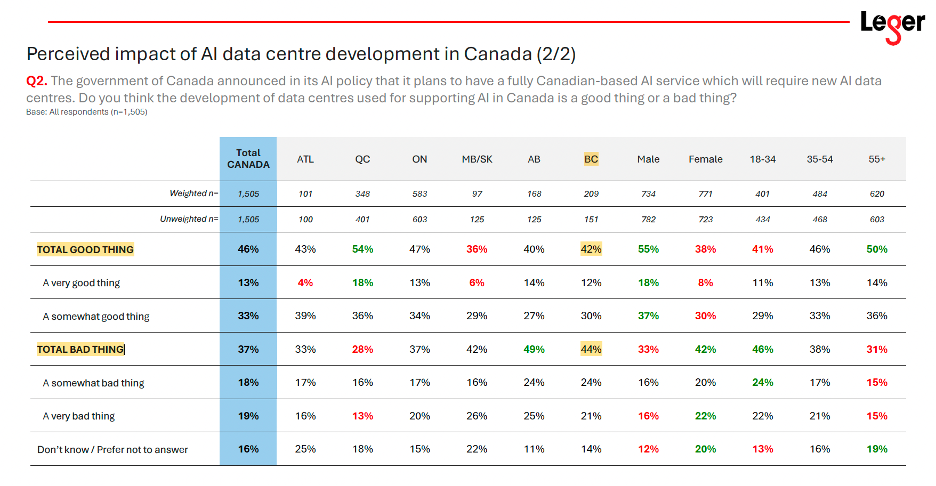
British Columbians are evenly split on whether building AI data centres in Canada is a "good thing" or a "bad thing," 42% vs 44% respectively. Yet national figures do not tell the whole story.
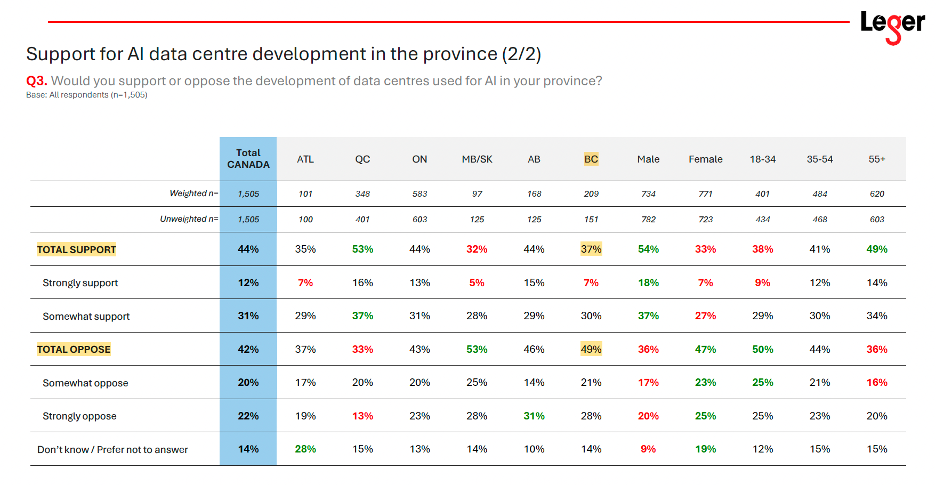
While British Columbian might support data centres elsewhere in Canada, a strong plurality of 49% oppose the development of data centres in BC itself, while 37% support.
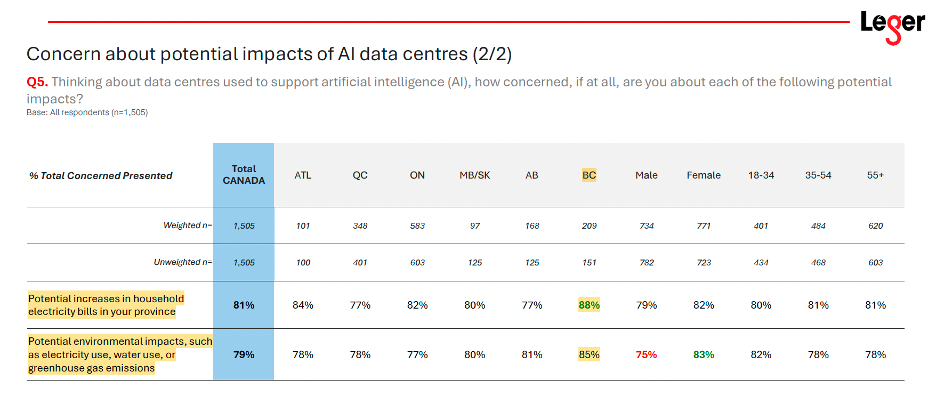
When asked specifically about the concerns over AI data centres, the reasons for local opposition becomes much clearer. A full 88% of British Columbians say they are concerned data centres will increase their home electricity costs, while 85% cite concern over environmental impacts such as water use and greenhouse gas emissions.
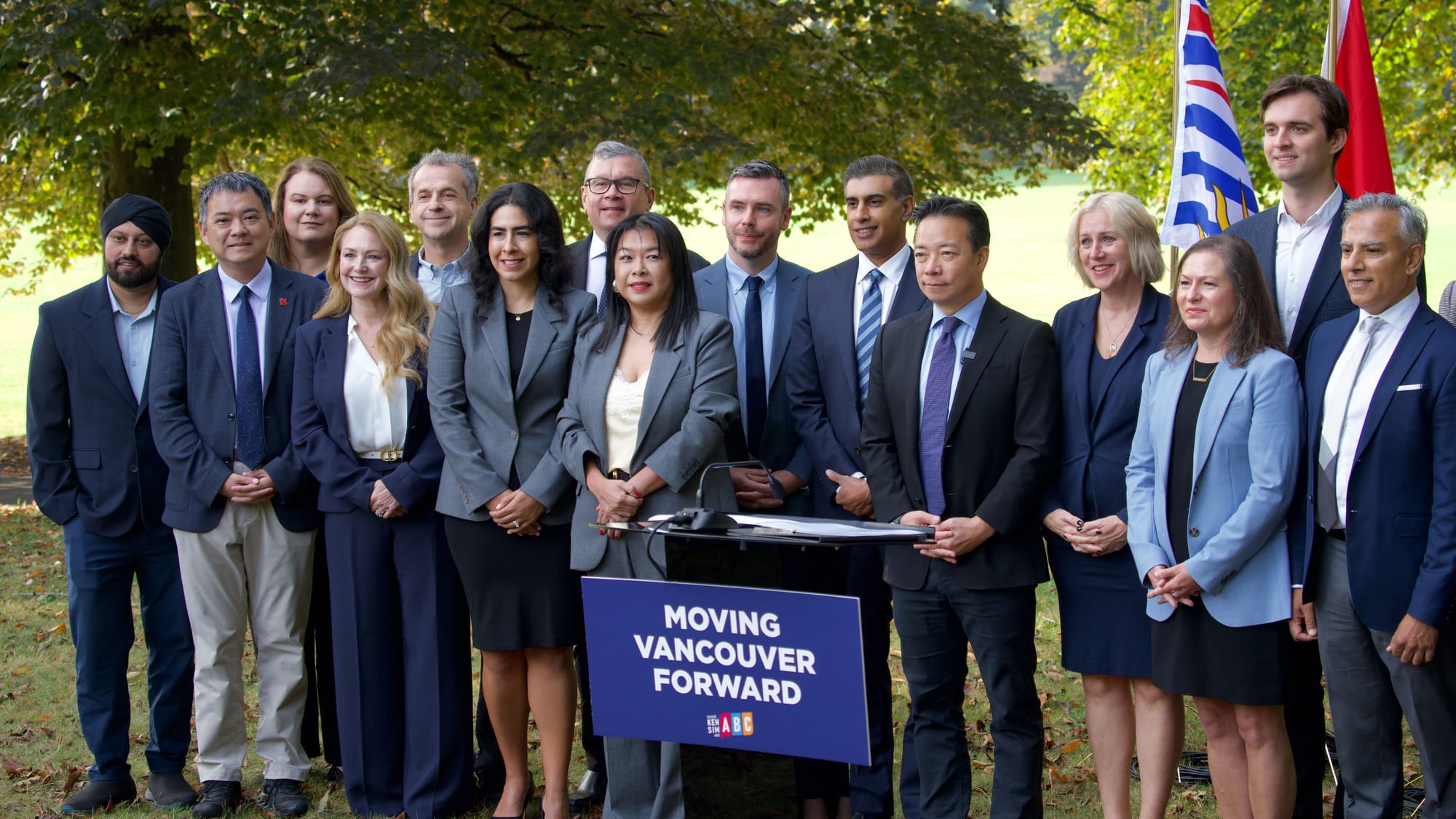
In May, Telus announced two new data centres to be built in Vancouver.
 Jarryd Jäger
The city has also witnessed street protests against data centre development.
 Jarryd Jäger
BC Green Party Leader Emily Lowan has specifically called for a moratorium on data centre development.
 Jarryd Jäger
Methodology: Leger’s study is based on an online survey of 1,505 Canadian residents aged 18 and older, conducted from July 10 to 13, 2026, using Leger’s LEO online panel. Results were weighted according to age, gender, mother tongue, region, education, and presence of children in the household to ensure a representative sample of the Canadian population. A margin of error cannot be associated with a non-probability sample, but for comparison, a probability sample of this size would have a margin of error of ±2.53%, 19 times out of 20.