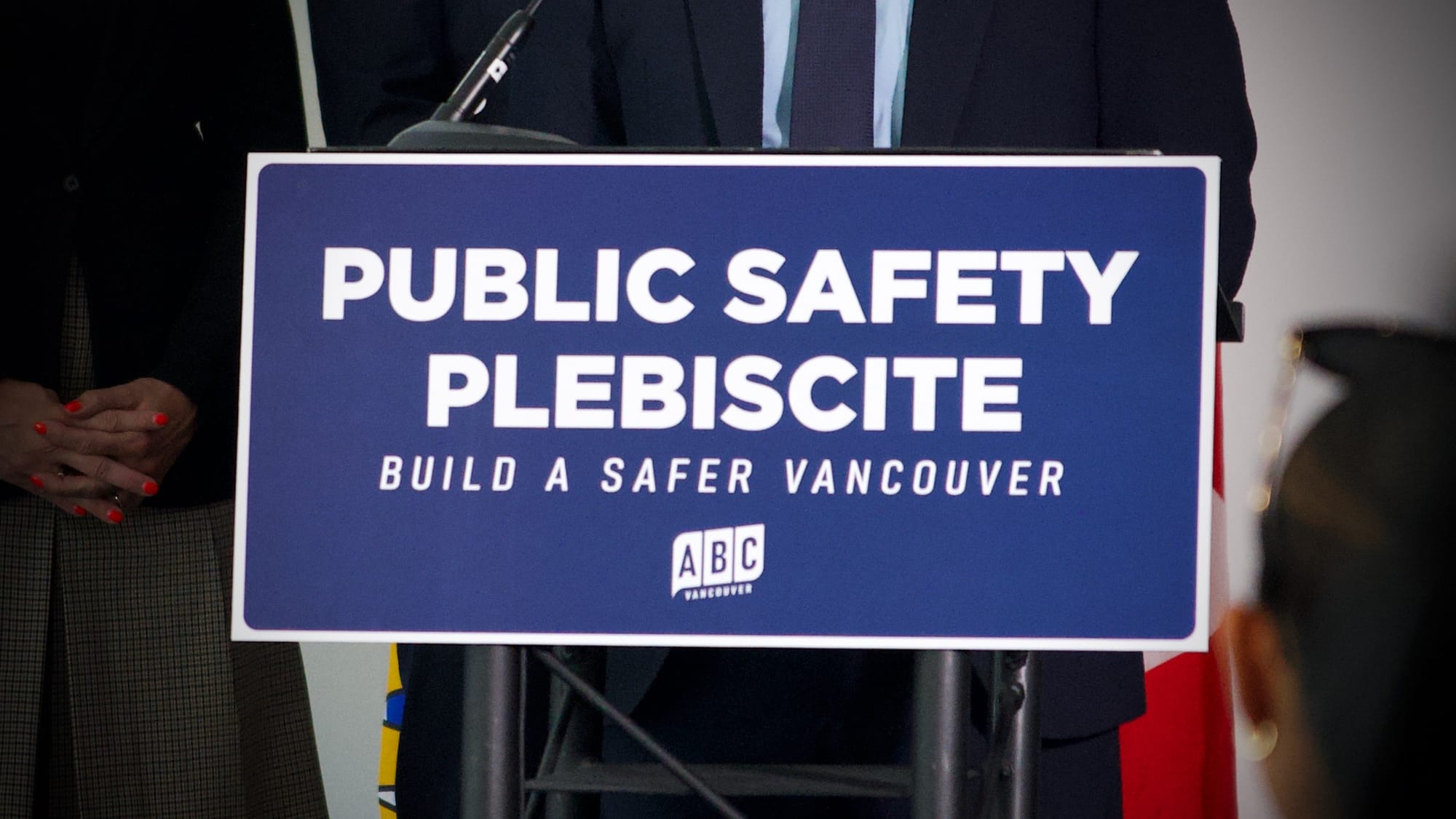


When Vancouverites head to the polls on October 17, they will not only cast their votes in the municipal election, but submit their answers to two plebiscite questions as well.
They'll be asked whether they're in favour of the city "strengthening its laws to forbid open-air hard drug (Heroin, Meth, Fentanyl, and Crack) use in public spaces," and whether the city should ask the province to "convert portions of the old St. Paul’s Hospital, or another similar site, into a secure medical facility that provides acute voluntary and 100-plus involuntary care beds."
Among those who have pondered the implications of the plebiscite is Kevin Sabet, former White House drug policy advisor and CEO of the Policy Rountable on Substance Prevention, Education, and Recovery.
At the third annual PROSPER Symposium on October 1, he released a policy paper that dove into the data and the implications of the non-binding plebiscite.
According to the 2024 Harm Reduction Client Survey, 85.7% of drug users admitted to using in public spaces in the past 30 days — 44.1% said it was a daily occurrence. In the Vancouver Coastal Health authority region, the percentage of outdoors overdose deaths rose from 18% in 2023 to 23% in 2025. In the first six months of 2026, that rose again to 24%.
At present, Vancouver does not have a city-wide ordinance banning public drug use — though there is a law on the books prohibiting smoking within six metres of a building entrance. Following the conclusion of BC's decriminalization experiment in January 2026, federal laws against the possession of drugs came back into effect, however.
A new city bylaw would give local law enforcement officers the ability to ticket public drug users. Mayor Ken Sim has suggested the move, if supported, is less about generating revenue via ticketing and more about "re-establishing social norms."
"Enforcement is one leg of the stool," Sabet told Sitka Media. "We've basically completely abandoned enforcement if you look at the trajectory over the last 30 years, and it's gotten us into this mess because when you look at people with active addictions, active mental health crises, they are much more likely to commit crime."
Sabet argued that while recovery is the ultimate goal, "there have to be some consequences for criminal behaviour." He cited the fact that 80% of the problems are committed by 20% of the people, and that most are known to the system.
"They don't have to be severe," he said of the punishments, "but if we actually want to deter crime and change the culture, it has to be a balance of carrot and sticks, so to speak."
Entering the criminal justice system can make it harder to find work and receive services once on the other side.
"Well, they're gonna have criminal baggage because they're committing crimes," Sabet said, "so the way to address that is to make sure we have proper re-entry programs when people are released into the community, that we have sober living facilities, not SROs that have injection sites on every floor and drug dealers running the books, which is our current situation."
He made it clear that he believed people should be given a "second chance," but that laws and policies must include both consequences for their actions and the ability to start over.
"Many countries are done it; it's not rocket science," Sabet said. "That's the thing we forget about here in Vancouver. We're so immune to the problems on the Downtown Eastside, there's nothing we can d — in reality, places have changed that quickly around the world, whether it's San Francisco, Stockholm, or Lisbon. There are ways to do that."
Sabet said enforcement must go hand-in-hand with treatment and recovery, arguing that sometimes those struggling with addiction and/or severe mental illness must be involuntarily committed.
"The reality is, most people with an addiction don't want to get help on their own," he pointed out. "Why would you? You're using drugs and they feel very good — your brain is telling you everything is great when your world is falling down around you and there's obviously lots of problems."
Sabet noted that "it's very easy to not see that when you're under active addiction," adding that it should be "mandatory that we have involuntary care."
"It's very difficult for people in their own addiction to even make that realization," he continued, "so we need that nudge, we need that environmental, external force getting people to go on the right track, especially those people — and this is what we're talking about in Vancouver — who are a threat to the community from a safety point of view. There's absolutely justification that we cannot wait around for them to realize they have a problem because we're going to be waiting forever."
Public safety and street disorder have been top of mind for all municipal parties, though they've differed in how best to address the crises. Voters will have the final say as to which direction the city should go.