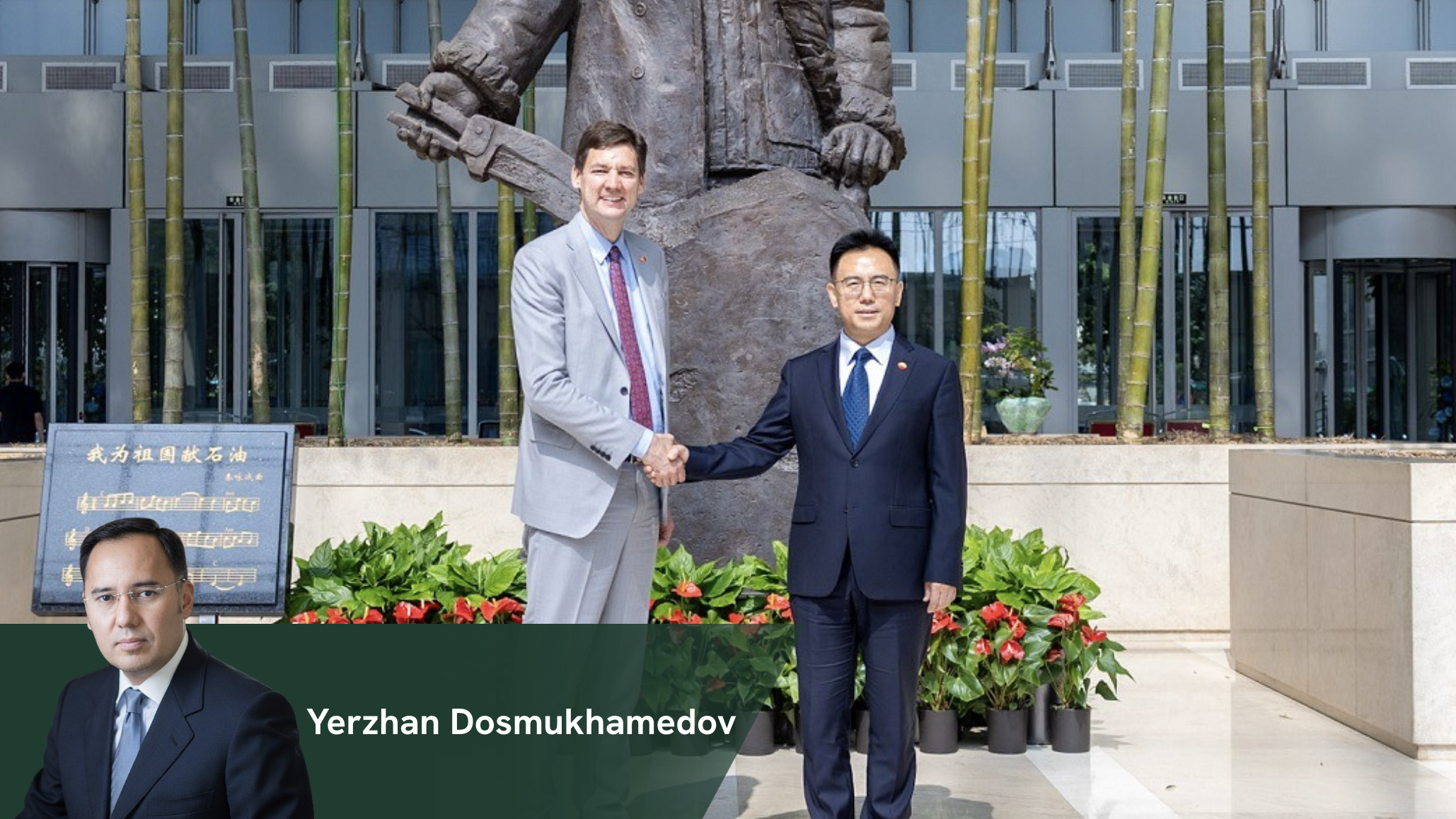

Premier David Eby recently spent six days in China pitching LNG contracts, forestry exports, and tourism deals.
He speaks about China freely when the subject is trade. His silence on everything else is therefore not an inability to speak — it is a choice about what’s worth speaking about.
Public records show no statement in which he has raised Xinjiang, or the treatment of Uyghurs and ethnic Kazakhs there — some 12 million people combined, over twice British Columbia’s own population, hundreds of thousands to low millions of them held in camps.
Leaked government documents and firsthand accounts point to a campaign of coerced sterilization targeting Uyghur women — Beijing disputes it, but can’t explain away the sudden, documented collapse in birth rates across Xinjiang’s Uyghur regions. UN investigators found in 2022 that the scale of the detention, torture, and forced labour there may amount to crimes against humanity.
Even Ottawa has said more; Prime Minister Mark Carney called China’s treatment of Uyghurs “rightly called out.” A single hedged sentence from Ottawa still outpaces Eby’s entire public record.
When Chinese tariffs hit BC seafood and agriculture last year, Eby criticized Ottawa’s trade strategy but said nothing about why Beijing was retaliating. Independent MLA Tara Armstrong asked him directly: “when will the premier get off Team China and join Team Canada?” Housing Minister Ravi Kahlon dismissed the question as “absurd” rather than answering it. A premier who wants that accusation to go away has a simple remedy: say something substantive enough that it can’t stick.
The likely defence is that a premier’s job is the economy, not foreign policy. Fair enough — provinces don’t conduct foreign policy under Canada’s constitution. But acknowledging a trading partner’s documented abuses isn’t diplomacy. It’s a statement of values — the kind premiers routinely make outside their formal jurisdiction. BC doesn’t need a foreign policy to say what it thinks of mass detention camps. It needs a premier willing to say it.
That defence also requires Eby to attend to human rights in his own backyard — and there, the record is just as thin. BC's Office of the Information and Privacy Commissioner doesn’t collect ethnicity or demographic data on complainants, so no one can say whether Indigenous or racialized complainants are treated differently.
That’s not standard practice — it’s an outlier. The Human Rights Tribunal and the Ombudsperson both collect demographic information from complainants. The OIPC doesn’t. It’s an independent officer, not Eby’s to command — but his government writes the rules it operates under, and has committed BC, through DRIPA, to align its institutions with Indigenous rights. A premier who means that has every standing to ask why one of his own watchdogs still can’t answer the most basic question about who it serves fairly.
The two silences aren’t separate failures. They’re the same, aimed in two directions: abroad, commerce outweighs atrocity; at home, comfort outweighs measurement. Either way, the thing that would create accountability — a statement, a dataset — simply doesn’t exist.
The silence abroad isn’t costless. It’s a purchase. Six days of talks on LNG, lumber, and tourism go smoother when nobody in the room has to name forced labour in the supply chain, or people held in camps, or a birth-control campaign Beijing can’t fully deny. A delegation chasing jobs and export numbers doesn’t have to look at what its host is doing to its own citizens. Calculation or convenience — the effect is identical: contracts, chosen over acknowledgment, trip after trip.
What separated colonial-era power from the kind a premier is supposed to hold today was never wealth, or trade, or even armies. It was accountability — a willingness to measure and answer for the human cost of the deals being made, something the administrators of empire never had to do and never volunteered to do.
A nineteenth-century governor could sign a trade agreement and never once ask who paid for it. A twenty-first-century premier is supposed to know better, and to say so when he does. Judged by that one standard, Eby’s silence doesn’t read as modern statecraft. It reads like a holdover — and one writer from that older, harder world already said what a holdover costs.
Dostoevsky wrote, in the darkest years of the nineteenth century, that no higher purpose is worth the tears of one tortured child. He never asked the child’s nationality. A tear doesn’t carry a passport, and it doesn’t come with an export tariff attached — whether that child is in Kashgar or Bella Coola.
British Columbia doesn’t need Eby to become a foreign-policy commentator. It needs one sentence that distinguishes trade from complicity, and one question about whether his own government serves all its citizens fairly. So far, on both counts, the answer has been silence — and silence, repeated often enough, is itself a position.
Yerzhan Dosmukhamedov holds a doctoral degree in law from the University of Oxford and is a former senior associate member of the University of Oxford. He specializes in constitutional and international law and writes on governance and accountability in British Columbia.