
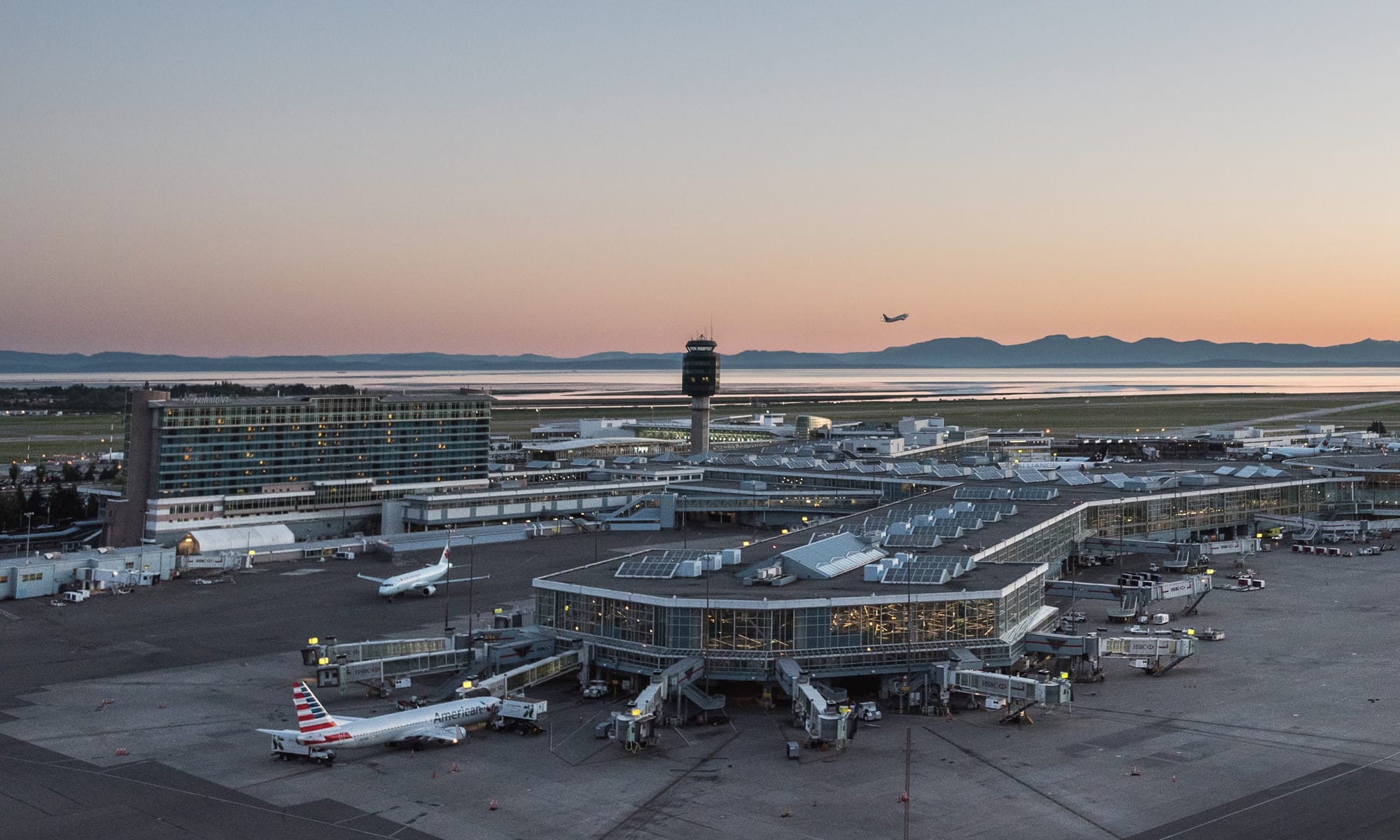

Since 2020, a massive 2,000 stall parkade at Vancouver International Airport has sat half-finished.
It now appears as though it will never see completion.
According to YVR President and CEO Tamara Vrooman, the project is set to be axed and the building demolished to make way for facilities that better serve the needs of the airport and its passengers.
YVR CEO Tamara Vrooman says it no longer makes sense to complete the massive unfinished parkade, and that it will be demolished to make way for:
— Jarryd Jäger (@JarrydJaeger) April 10, 2026
a) Integrated ground transportation hub
or
b) Expanded terminal with more food/shops pic.twitter.com/RRk5hqNhkg
During an event hosted by the Greater Vancouver Board of Trade, Vrooman explained that while there was enough demand to justify the construction of a new parkade when the project kicked off in 2017, times had changed.
"We've seen the emergence of Lyft and Uber, a fundamental change to the taxi industry that come as a result of ride-hailing, and a total rebalancing of the way employees come to and depart our airport," she said, adding that recent analysis has shown that more parking is "not required."
Vrooman noted that there are "better things" on which YVR can spend the $200 million that had been set aside to complete the building.
"What we see in other world-class airports is better-integrated ground transportation," she said when asked about potential alternatives. "At the moment, it's not exactly intuitive where you should go. Things that make our terminal work really well from a passenger point of view … make it very difficult from a curb-access point of view."
Vrooman went on to suggest that with the parkade gone, the main terminal could be expanded outwards.
"It's very high-value real estate," she said, "so we're also looking at options where we might expand the terminal towards the inner area, re-do the curb … which would allow a lot more room post-security for food, for beverage, for services, but also for those vital infrastructure services that allow the movement of goods."