




A new poll from the Angus Reid Institute raised the prospect of some of those who voted Liberal in the 2025 federal election moving to the NDP over climate change concerns.
The news comes as Prime Minister Mark Carney’s Liberals have been accused of abandoning environmental concerns in favour of natural resource extraction, including a new oil pipeline to Canada’s southern Pacific coast.
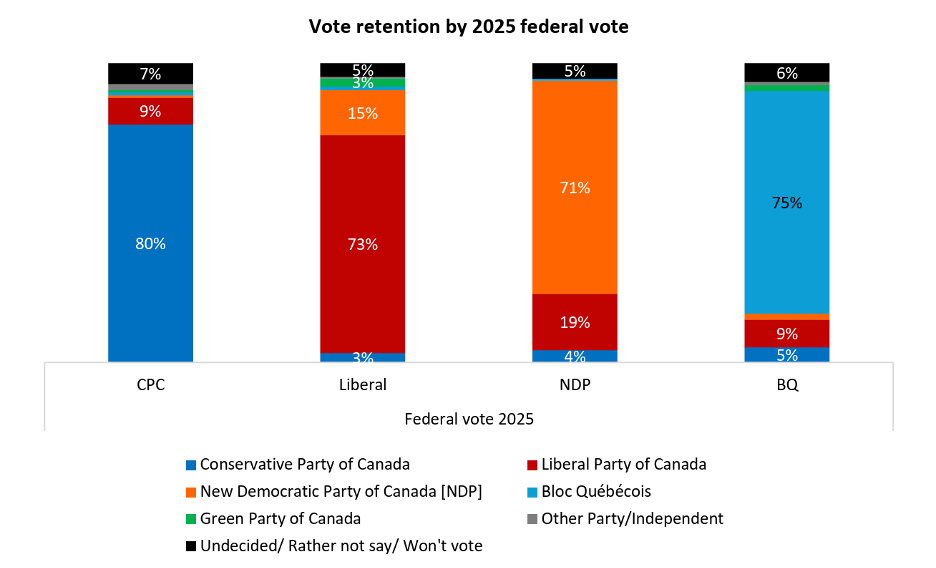
According to Angus Reid, one in six (15%) past Liberal voters say they would vote NDP today if there were an election, with an additional three per cent going to the Green Party.
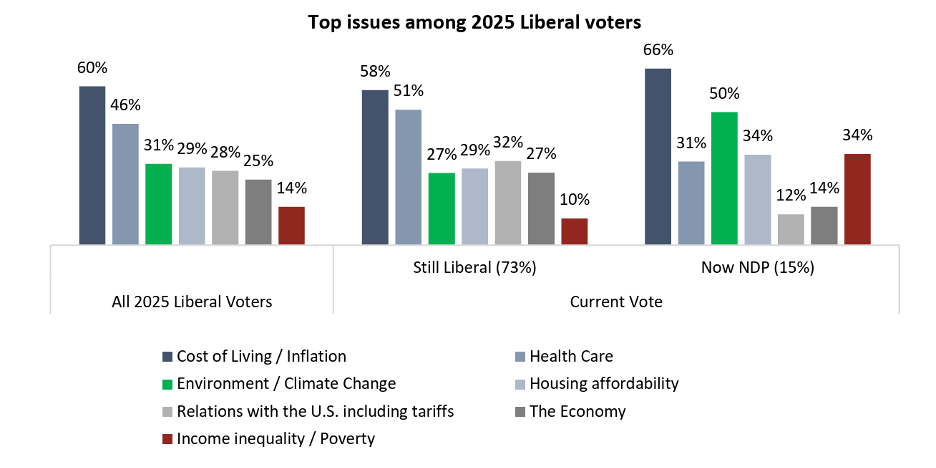
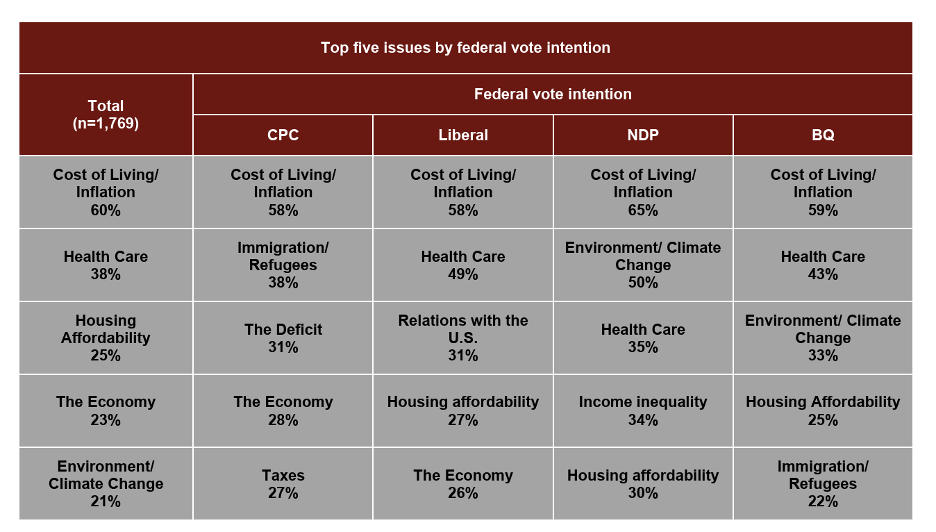
And among those 15 per cent of Liberal-to-NDP switchers, fully 50 per cent rank climate change and environment as their top issue.
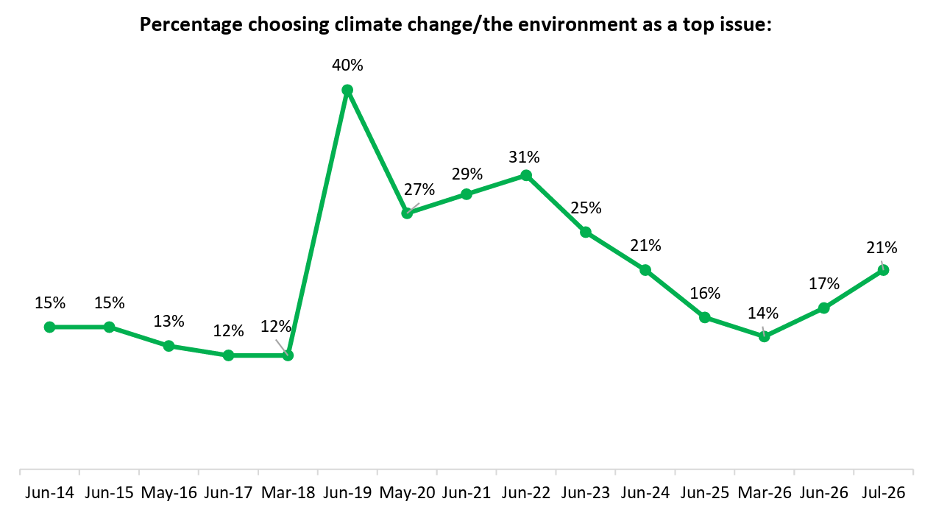
Overall, those choosing climate change as their top issue has rebounded somewhat in recent months, from 14 per cent to 21 per cent.
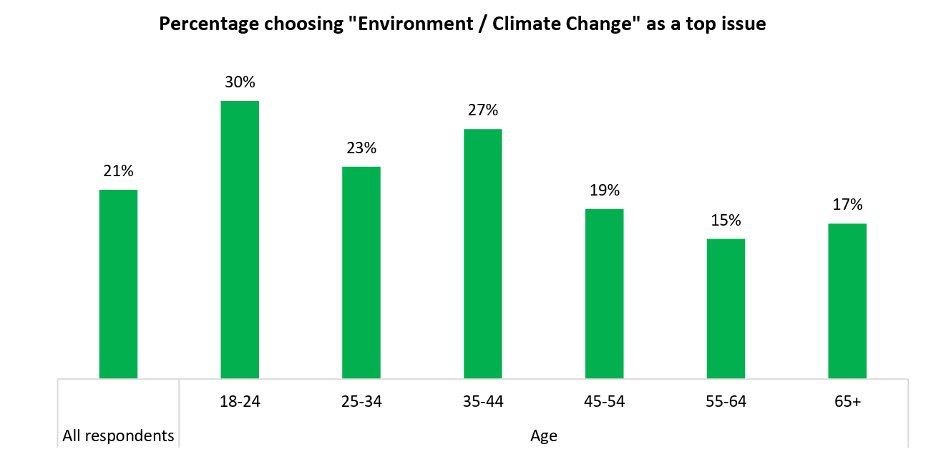
To little surprise, the 21 per cent that list climate change and the environment as their top issue tend to skew towards younger voter groups.
Overall, economic issues still dominate voter concerns, along with healthcare.
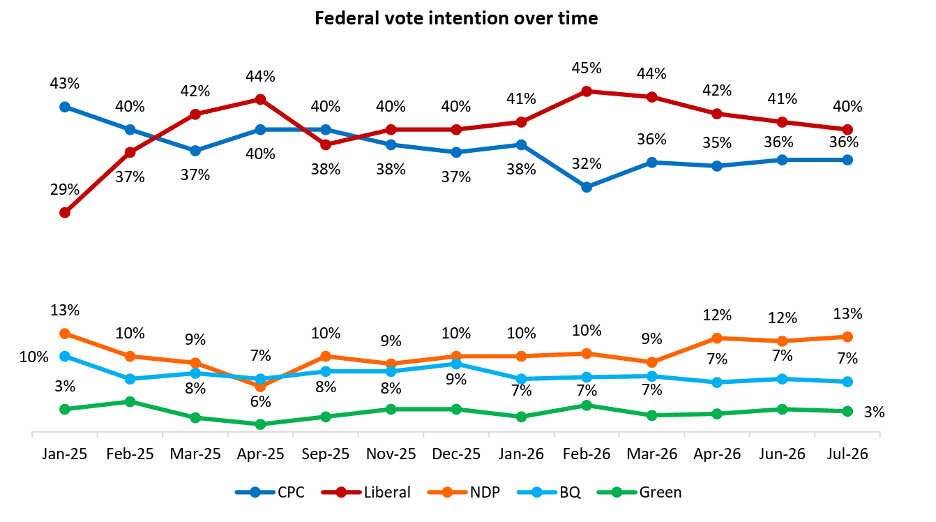
Nationally, the Liberals’ lead over the Conservatives has narrowed to just four points (40% to 36%) as the NDP’s numbers have modestly improved to 13 per cent.
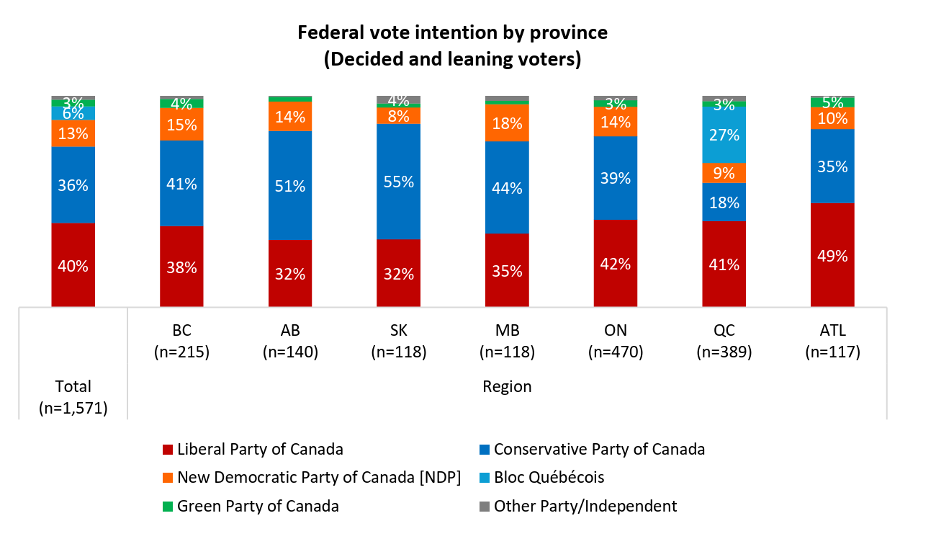
In BC, the Conservatives lead the Liberals 41 per cent to 38 per cent, although the Liberals’ leads in both Ontario and Quebec would still result in a strong electoral showing for the Liberals.
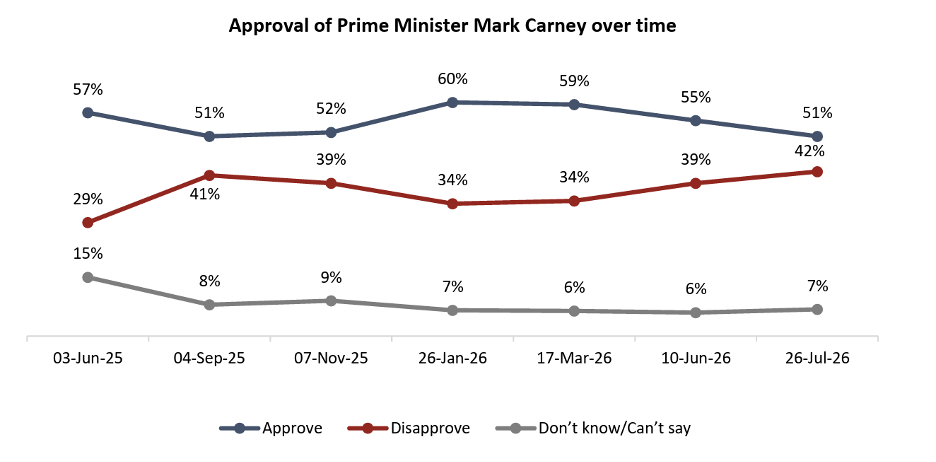
While Mark Carney still has approval of half of Canadians, his numbers have softened since the start of this year.
Methodology: The Angus Reid Institute conducted an online survey from July 25–27, 2026, among a randomized sample of 1,770 Canadian adults. Respondents are drawn from the Angus Reid Forum, a large-scale online panel developed to include Canadian residents in each of the 343 federal ridings in Canada and representative of the Canadian population by age, gender, family income, ethnic status and education. The sample was weighted to be representative of adults nationwide according to region, gender, age, household income, and education, based on the Canadian census. For comparison purposes only, a probability sample of this size would carry a margin of error of +/– 2 percentage points, 19 times out of 20. Discrepancies in or between totals are due to rounding. The survey was self-commissioned and paid for by ARI.