



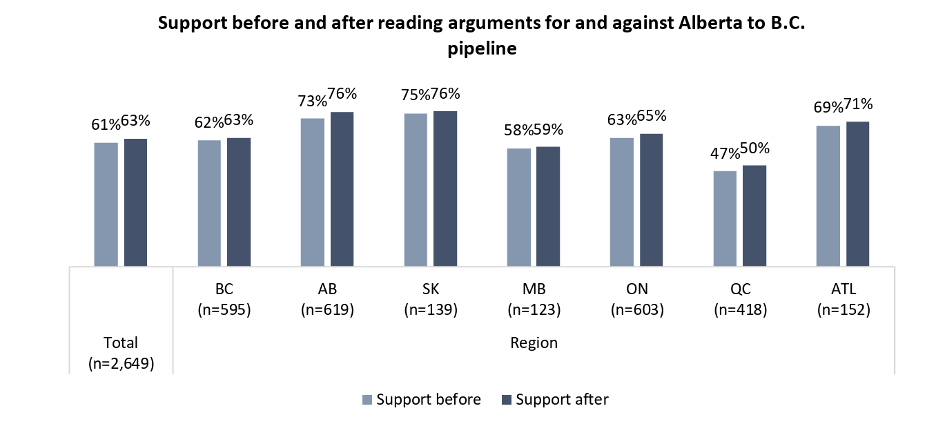
Weeks after Prime Minister Mark Carney announced the intention to build a new oil pipeline from Alberta to British Columbia’s southern coast, a new poll from the Angus Reid Institute finds that 63% of Canadians support the proposal, including 62% of British Columbians.
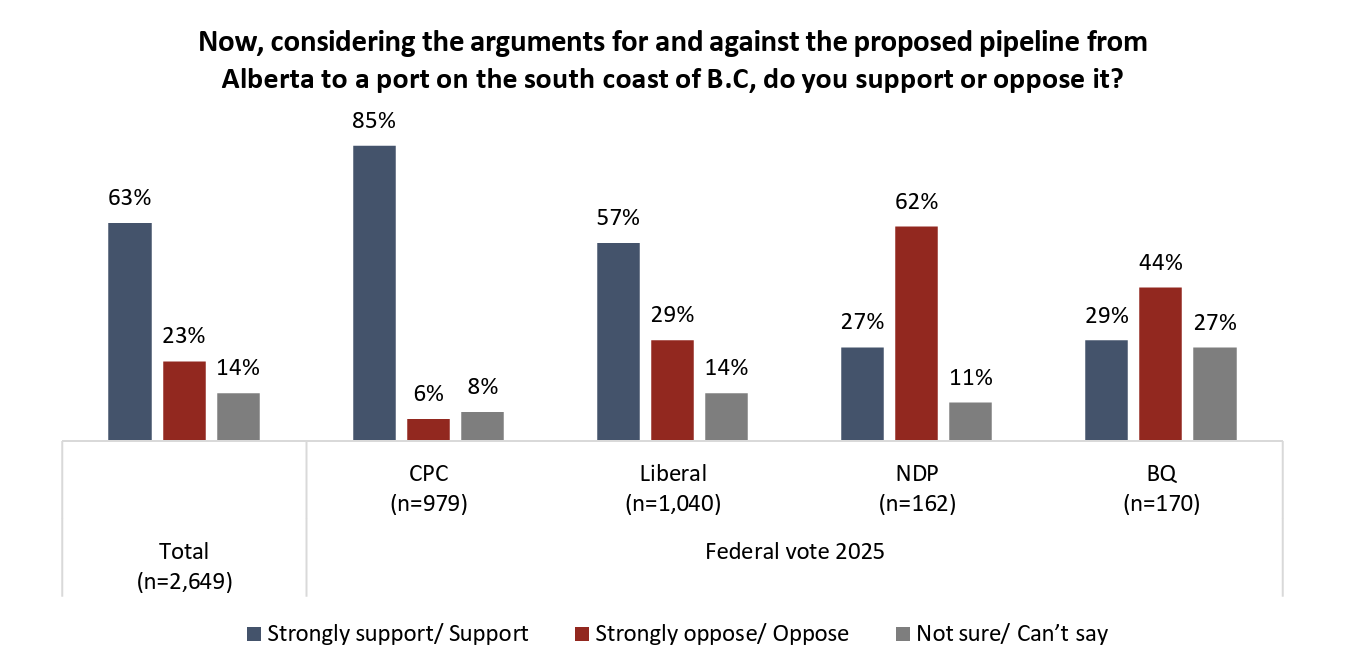
While support is strong, fully 62% of NDP supporters oppose the project — perhaps indicating future problems for BC NDP Premier David Eby.
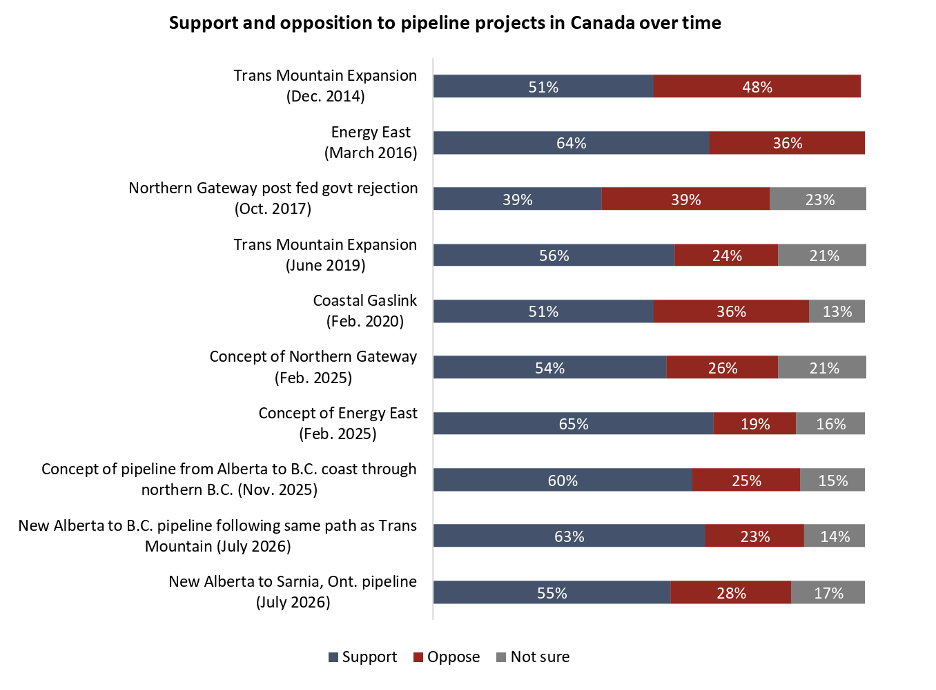
Support for the new pipeline is notably higher than for the cancelled Northern Gateway pipeline, when respondents were asked in both 2017 (39%) and 2025 (54%), and higher than for the Trans Mountain expansion when asked in 2019 (56%).
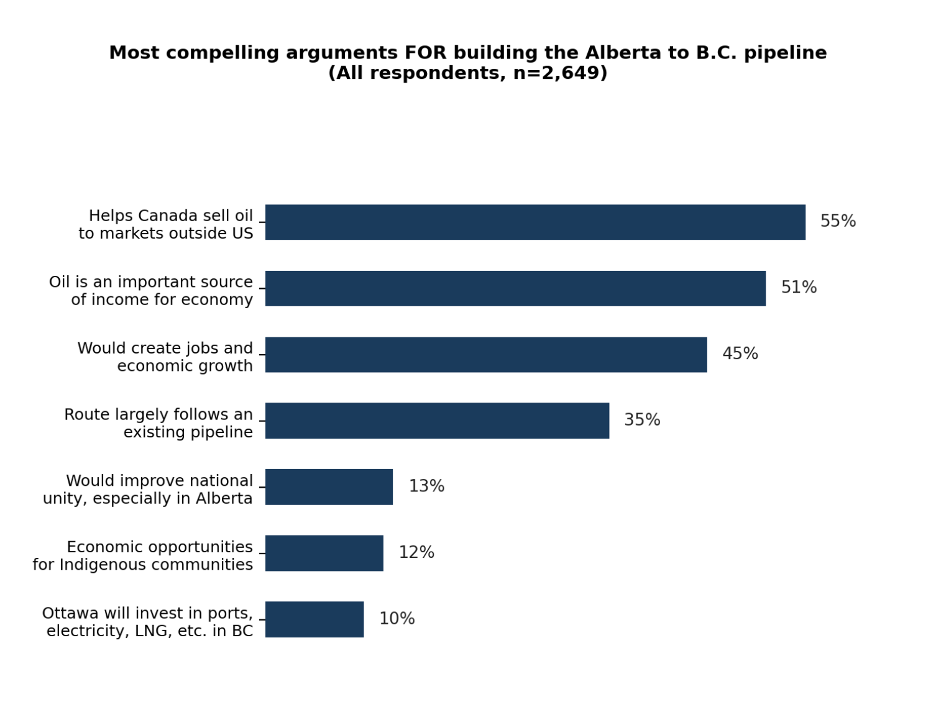
To little surprise, economic concerns are the most compelling arguments for building a new pipeline, led by a desire to move away from US market dependence.
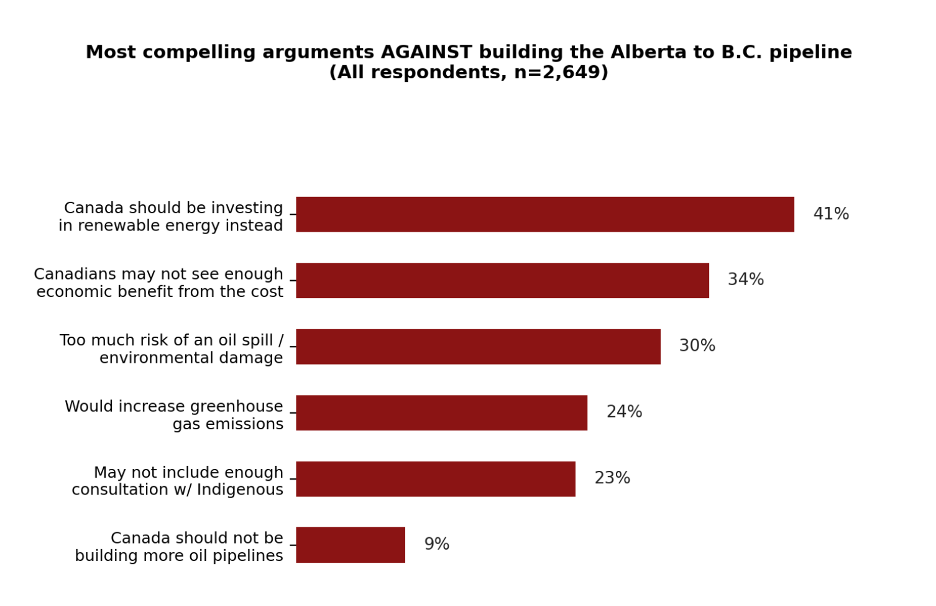
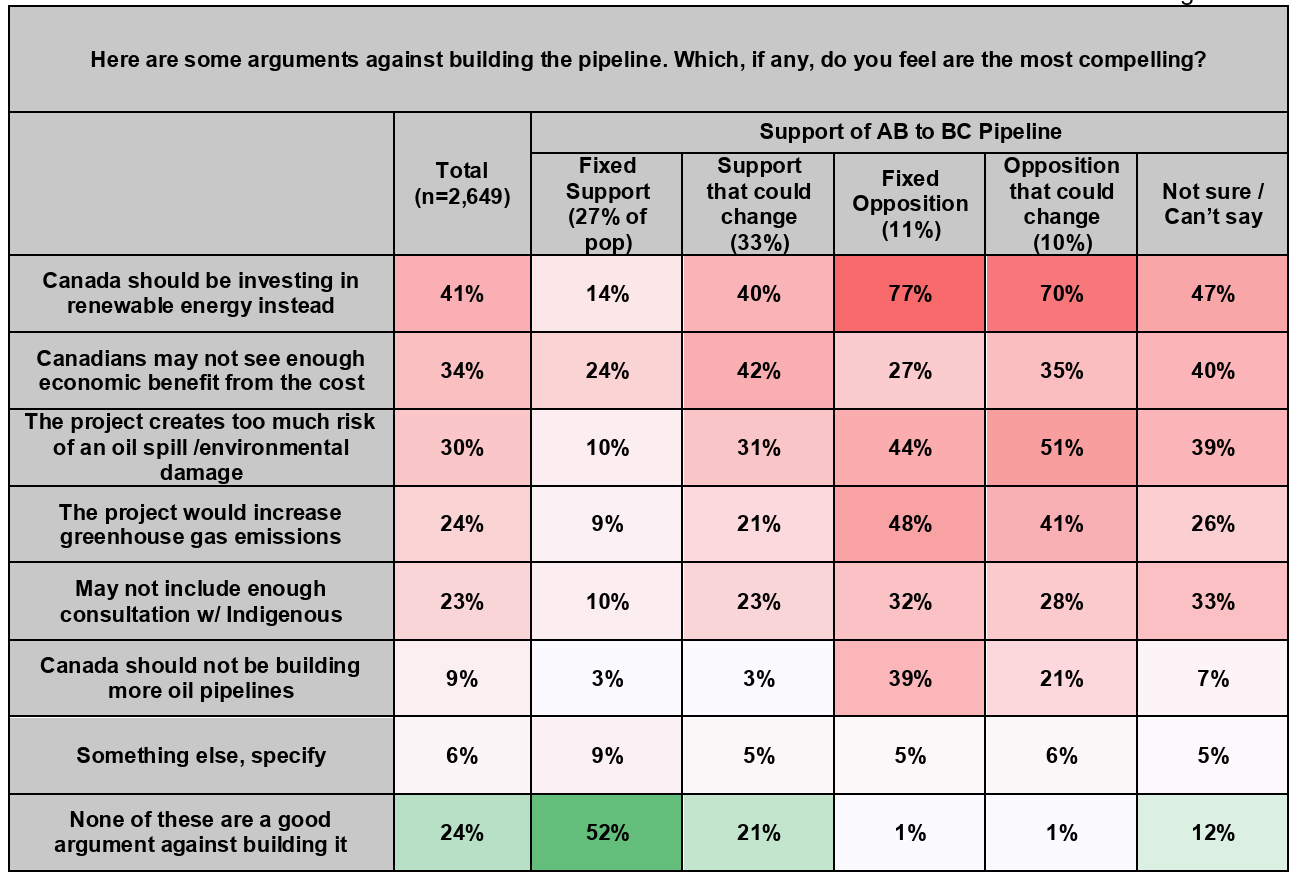
For those opposed to the project, environmental concerns feature prominently.
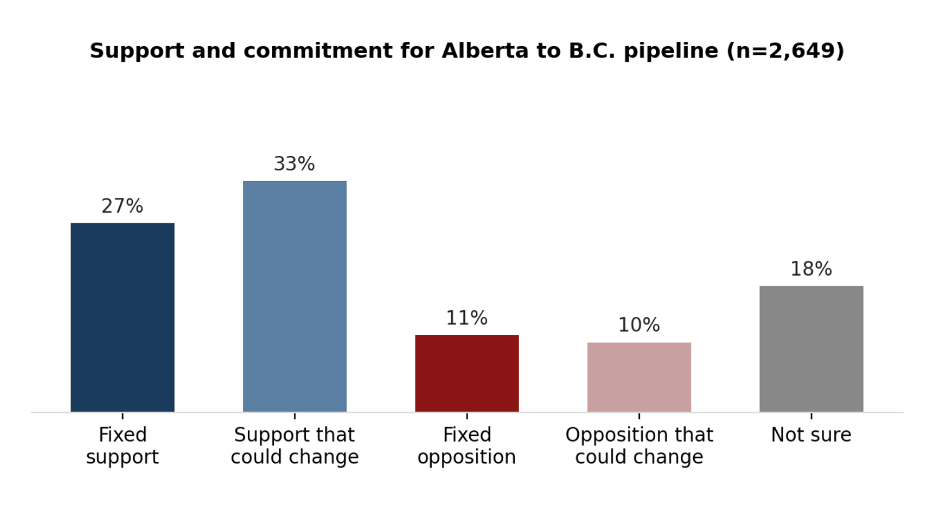
While support for the new proposed pipeline is strong, 53% say they could still change their minds. Among supporters, 33% say they are open to changing their position.
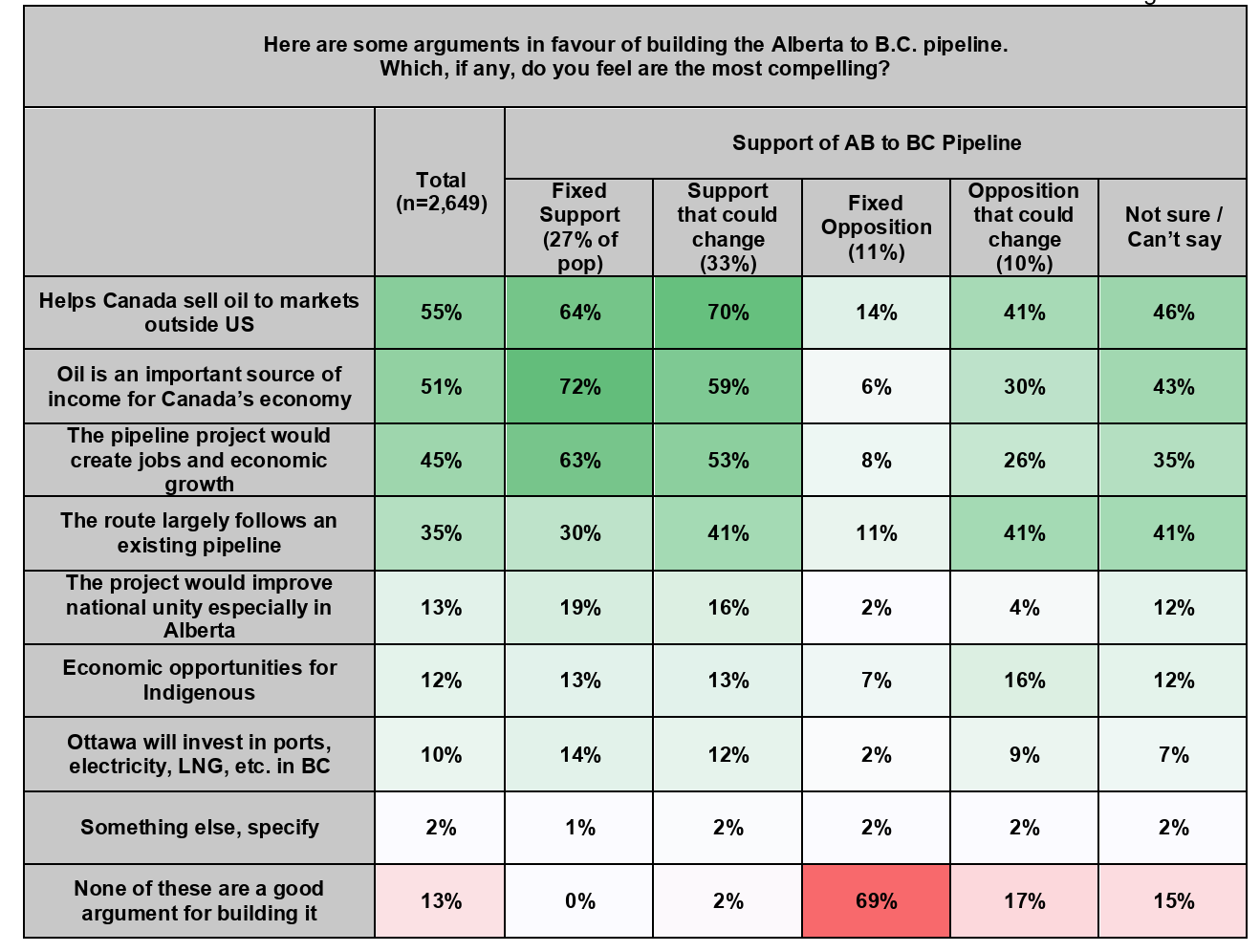
For softer supporters, diversifying away from the American economic dependence is particularly compelling, along with the fact that the new pipeline will use a preexisting pipeline route.
For those in softer opposition, arguments for focussing on renewable energy instead of fossil fuels are particularly persuasive.
Methodology: The Angus Reid Institute conducted an online survey from July 10 - 14, 2026, among a randomized sample of 2,649 Canadian adults. Respondents are drawn from the Angus Reid Forum, a large-scale online panel developed to include Canadian residents in each of the 343 federal ridings in Canada and representative of the Canadian population by age, gender, family income, ethnic status and education. The sample was weighted to be representative of adults nationwide according to region, gender, age, household income, and education, based on the Canadian census. For comparison purposes only, a probability sample of this size would carry a margin of error of +/- 2 percentage points, 19 times out of 20. Discrepancies in or between totals are due to rounding. The survey was self-commissioned and paid for by ARI. Detailed tables are found at the end of this release.