

Unlike other major Canadian cities, Vancouver chooses its mayor and city council via at-large elections where everyone votes for the same candidates and the victors represent the entire population.
Toronto, Montreal, Calgary, Ottawa, Edmonton, Mississauga, and Winnipeg — to name a few — use the ward system; the town is divided into districts, each with its own representative(s) at City Hall.
Vancouverites last seriously considered shifting over in 2004, however a plebiscite on the issue failed with 54% voting against. In 2022, however, a poll found that support for the ward system had grown to 58%.
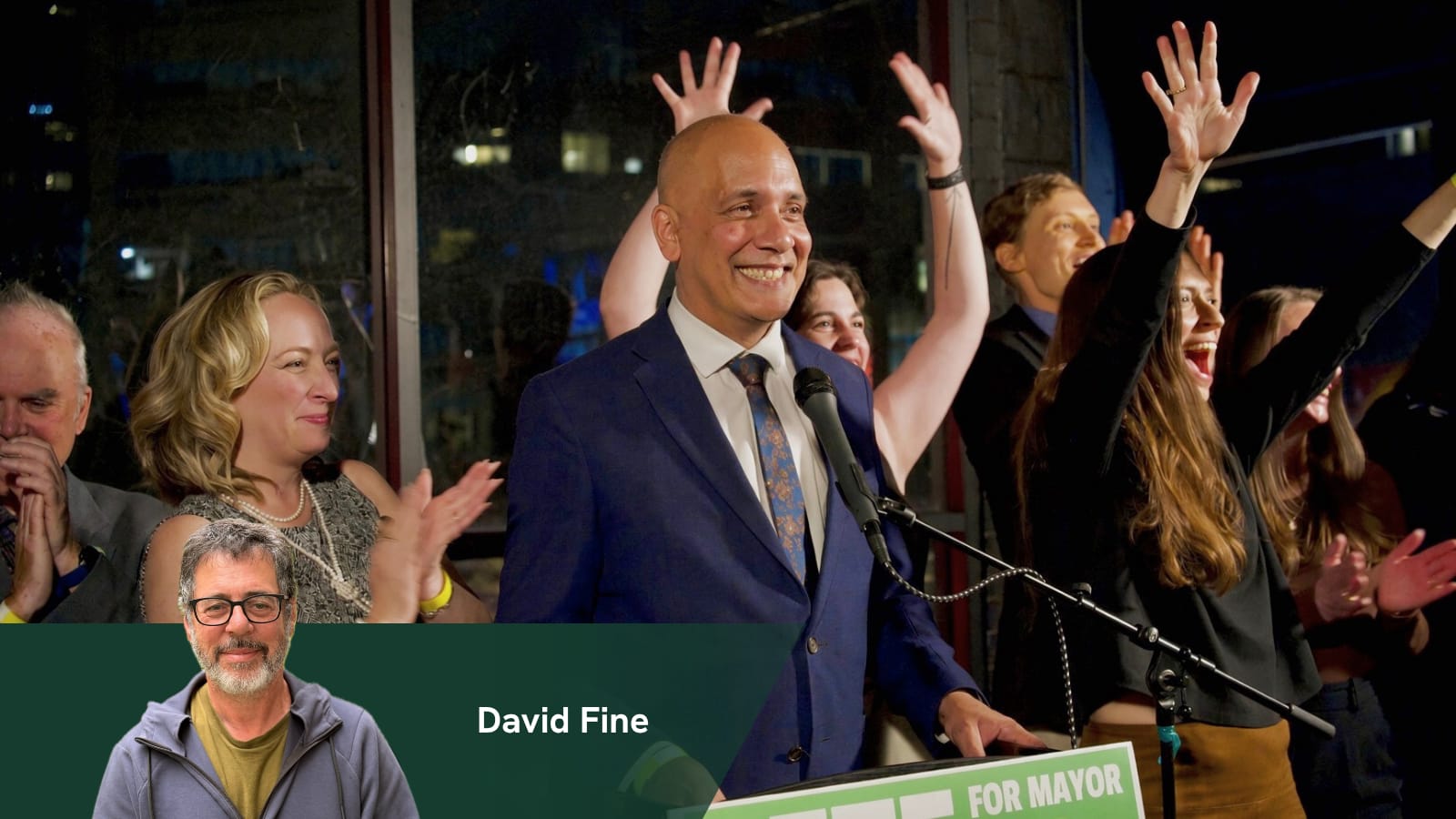
Four years later, as the city heads into municipal election season, Vancouver Liberals mayoral candidate Kareem Allam has re-opened that discussion, vowing to put together a citizens assembly to explore the issue if elected. That, he added, could lead to a plebiscite during the 2030 election.
"Councillors at majority parties have tended historically in Vancouver to divide up by file, not by geography," Allam told Sitka Media. "So you get an issue like the lack of a community centre in the River District — we don't have any councillors from the River District, so who's going out there and fighting for that for that debacle? Nobody."
He argued that in the current system, there's "no accountability," and citizens with problems are often unsure who to contact in search of answers.
"Your MLA is responsive, your MP is responsive, and they require being responsive to get re-elected," Allam added.
He went on to note that Vancouver has also had underrepresentation in City Hall — geographic and otherwise — noting that the east side and south side of town receive comparatively less resources than other districts.
"We're not getting equitable distribution and equitable representation, and it's leading to inequity in budget and outcomes," Allam lamented.
He also drew attention to the fact that under the current system, parties can "draw up a pretty base and win an election on 30 or 35%, and argued that "a ward system ensures a more thoughtful, broader approach to governing."
When asked how he would split the city up, Allam said he personally would prefer wards based on population rather than area size. He made it clear, however, that voters must have the final say.
"That's the reason for the citizen assembly," he explained. "We would give them a scope and a timeframe, then they would draft ballot questions. I'm open to a range of things; two wards per district or per constituency or per riding, I'm open to some element of STV or proportional representation, but I'd leave that to the citizens assembly to wrestle with."
The Vancouver Liberals are not the only party to suggest moving to the ward system. It has long been a part of Coalition of Progressive Electors' platform, however COPE has vowed to implement it immediately via provisions in the Vancouver Charter.
When asked why he would rather go through the lengthy process outlined above, Allam said he believes "elected officials should not be designing and crafting the way that they get elected."
"I think that responsibility belongs to the electorate," he added. "So it's definitely a logical difference between between COPE and I. I generally don't think, in the long ark of history, having politicians go out and determine their system for getting elected leads to the best outcomes. It leads to gamesmanship, it leads to self-interested in political parties."
Municipal elections will be held in Vancouver on October 17.