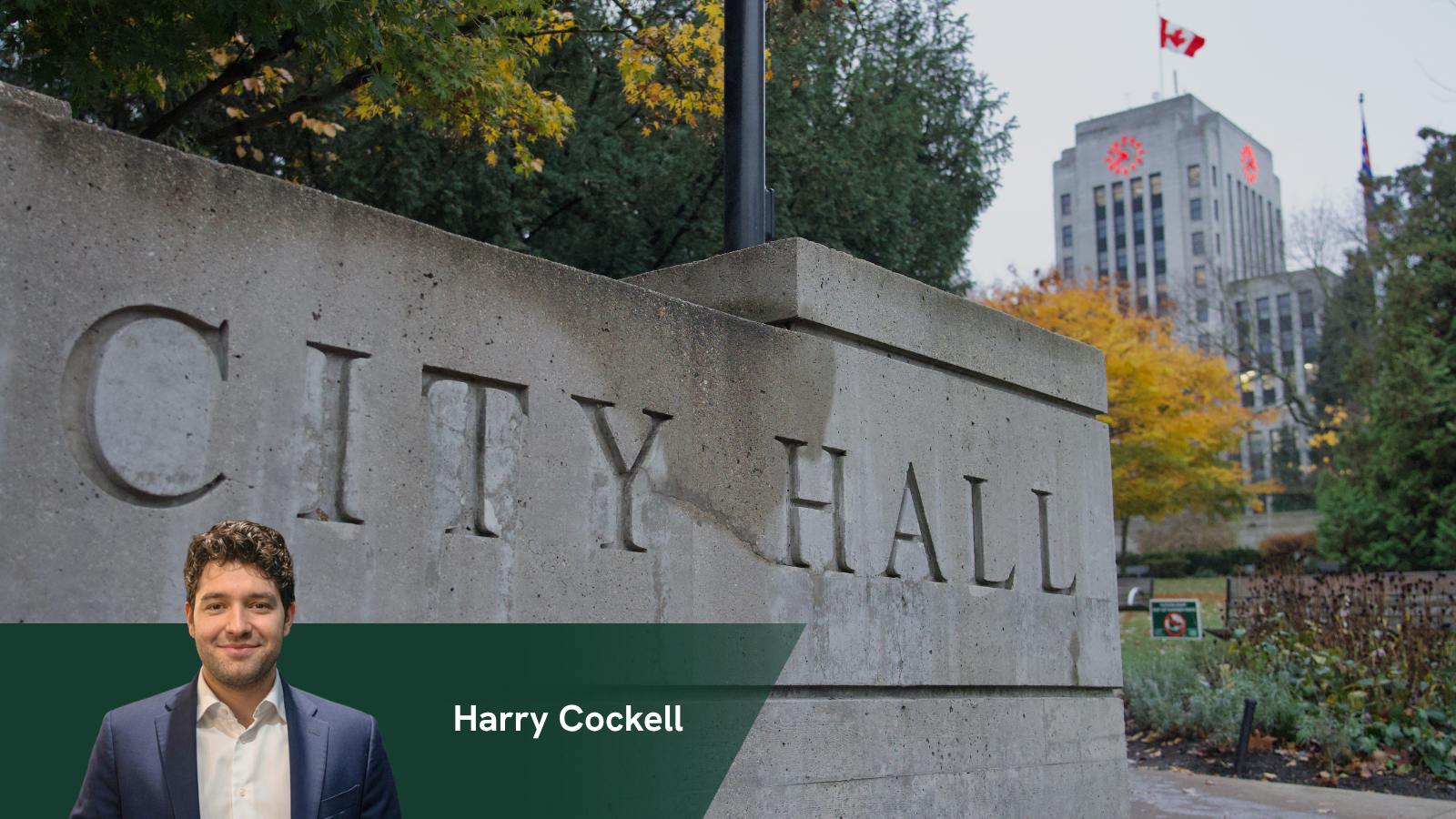

In a city that used to pride itself on civic participation, something fundamental has shifted at Vancouver City Hall over the last few years.
Transparency has thinned, public engagement has narrowed, and decisions with sweeping consequences are increasingly made through processes that sideline community input.
While local politicians often frame these changes as necessary for efficiency, especially amid a housing crisis, the cumulative effect has been a troubling erosion of local democracy. The most visible change has been the restructuring, and in some cases elimination, of meaningful public hearings.
Amendments to the Vancouver Charter in 2024 allowed rezonings that align with an Official Development Plan to proceed without a public hearing if they meet certain criteria. This seemingly technical change has profound implications: it removes one of the last formal venues where residents can directly address council before decisions are made.
Most notably through the Broadway Plan and its associated zoning changes in October 2025, Vancouver City Council approved “city-initiated rezoning” across large swaths of the Broadway corridor. These changes allow developers to bypass individual rezoning applications entirely and move directly to development permits. In practical terms, entire neighbourhoods are pre-zoned for density increases without case by case public scrutiny.
Even when public hearings are held, their influence appears increasingly limited. Consider the September 16, 2025 public hearing on standardized zoning changes for the Broadway and Cambie plans. Council heard from speakers and received hundreds of submissions, 217 in opposition versus 61 in support.
Yet the process concluded without a vote that evening, and the matter was deferred and ultimately approved in early October of that year. The imbalance between public opposition and final outcome raises a familiar question among participants: what weight, if any, does public input still carry in Vancouver?
Many would argue that such hearings have become procedural rather than substantive. Community advocates and other groups have described them as performative exercises, where decisions appear effectively predetermined. Whether or not one accepts that characterization, the perception itself is damaging. Public trust depends not just on being heard, but on believing that input can influence outcomes.
There is also a growing disconnect between accessibility and participation. Citizens used to be able to head up to 12th and Cambie to watch proceedings in person; I myself did this on many occasions. Now if you try, you are instead directed to a side room and allowed only to view proceedings on a TV, and they don’t even offer you snacks.
Only after being pre-vetted by city staff are you allowed to speak to council or even sit in the chamber anymore, and this feels fundamentally wrong. Transparency is not just about availability of information, it is about the ease with which the public can engage with it.
The broader trend is clear: decision-making is becoming more centralized and less participatory.
The move toward city-wide or area-wide plans, such as the Broadway Plan, effectively shifts authority from individual rezoning debates to overarching policy frameworks. Once those frameworks are approved, subsequent decisions become administrative rather than political. This may streamline development, but it also reduces opportunities for localized input.
Supporters of these changes argue that Vancouver’s housing crisis demands speed and decisiveness. They are not wrong to highlight the urgency. But efficiency should not come at the expense of legitimacy. A faster process that excludes meaningful public participation risks deepening public cynicism and resistance, ironically making implementation more difficult in the long run.
Democracy at the municipal level is inherently local. It depends on residents believing that their voices matter in shaping the neighbourhoods in which they live. When public hearings are curtailed, when opposition is acknowledged but overridden without clear justification and when large-scale rezonings proceed without granular input, that belief begins to erode.
Vancouver is not alone in facing these tensions. Cities across North America are grappling with how to balance growth, affordability and governance. But Vancouver’s recent trajectory suggests a cautionary tale: in the pursuit of expediency, the city may be sacrificing the very civic engagement that has long been one of its strengths.
Restoring that balance will require more than procedural tweaks. It will require a renewed commitment to transparency from current and future councillors, not just in making information available, but in ensuring that public participation is meaningful, timely and consequential.
Without that, City Hall risks becoming more efficient, but far less democratic.
Harry Cockell is a local businessman, former NPA board member, and Conservative Party of Canada candidate of record in Vancouver Centre.