

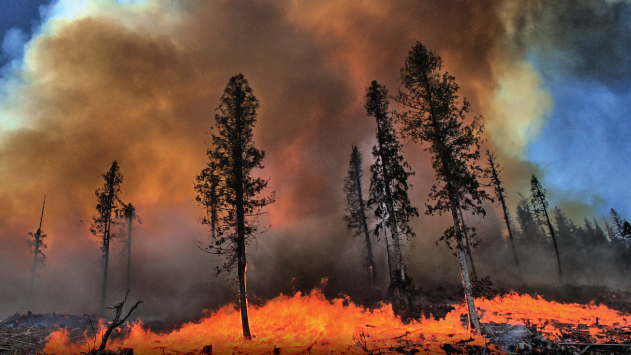
Even as Canadians express concern about wildfires, Canadians belief in man-made climate change has declined in recent years according to a new poll from the Angus Reid Institute.
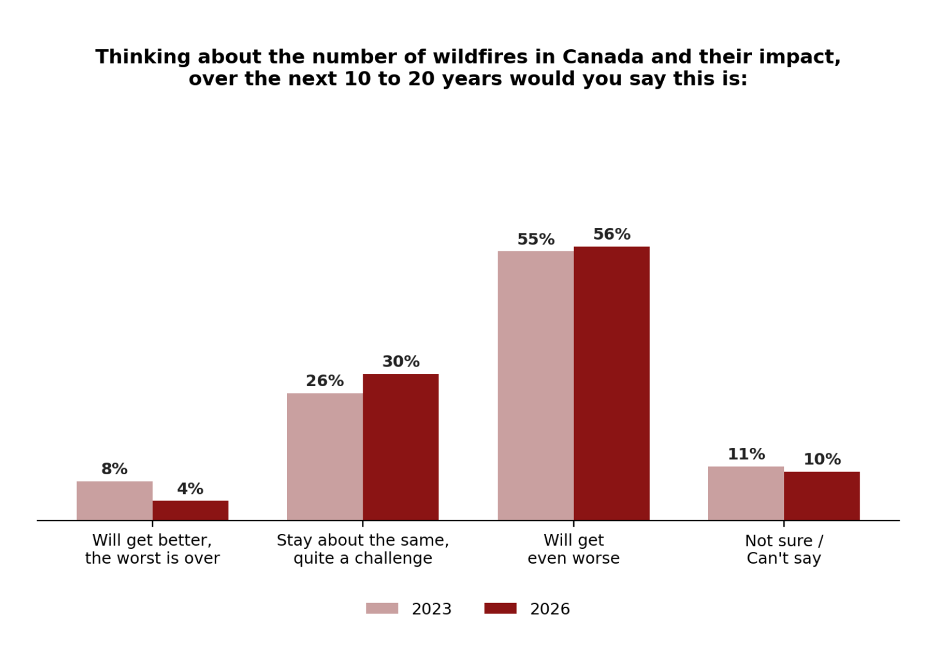
Fully 56% of Canadians think wildfires will get worse, while another 30% say they will remain a consistent challenge.
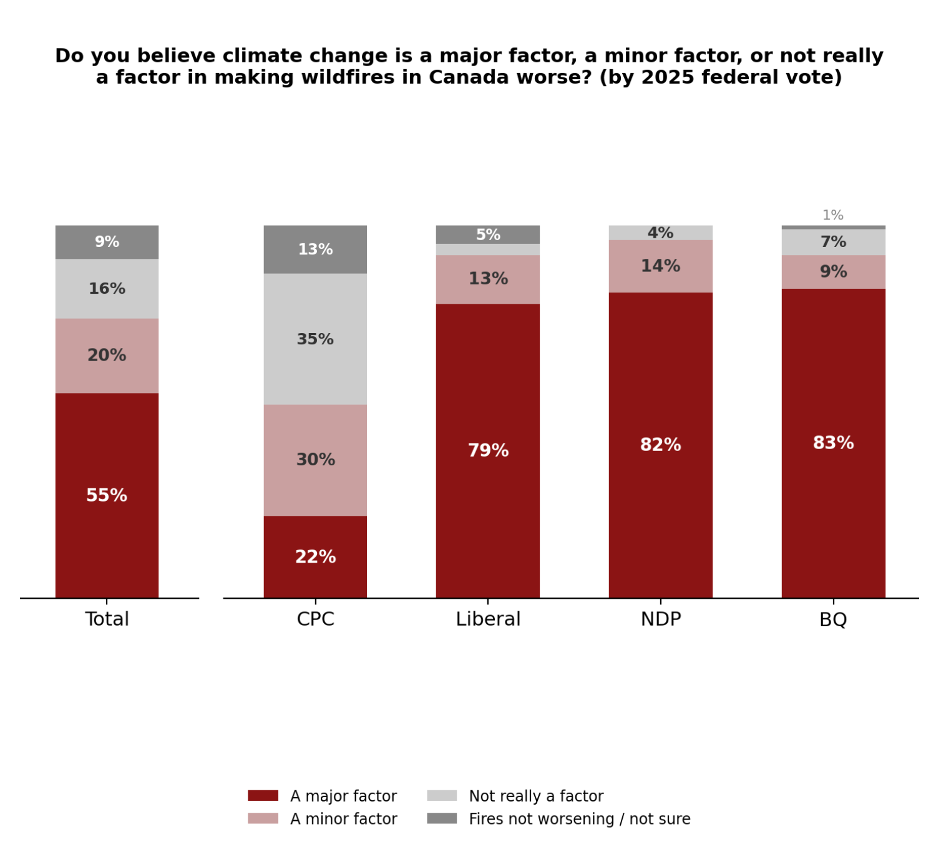
And 75% of Canadians believe that climate change is either a major or minor factor in making wildfires worse.
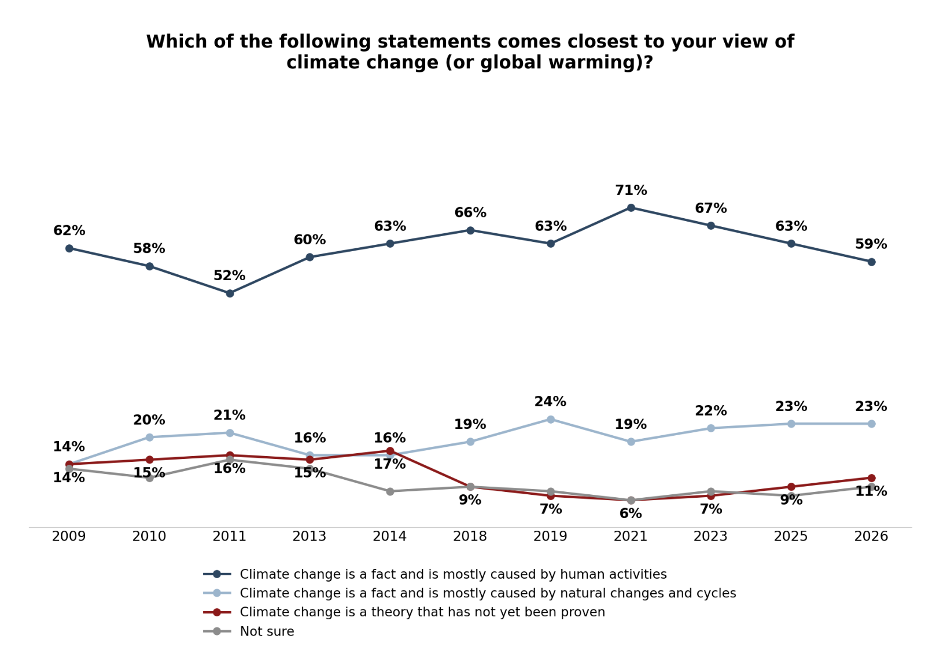
Yet at the same time, belief in man-made climate change has declined significantly in recent years. Nearly 60% of Canadians believe that climate change is mostly caused by humans, down twelve points from 2021.
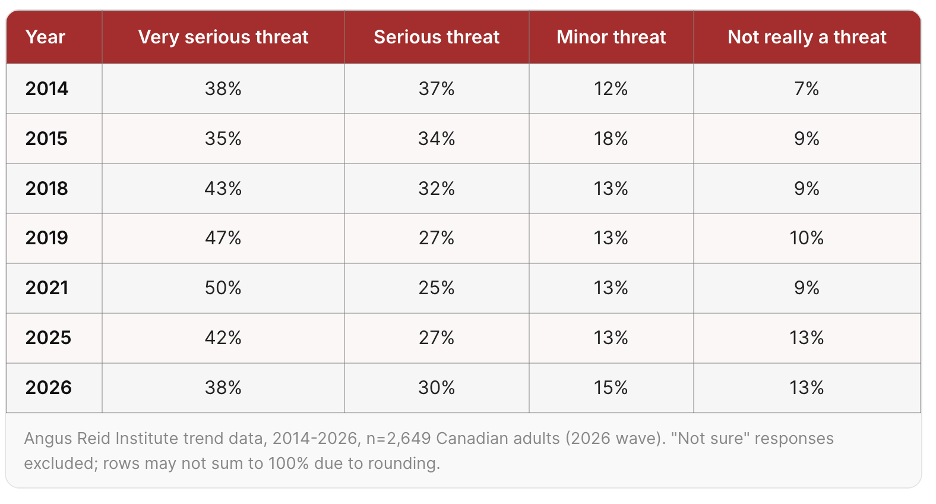
There has also been a precipitous drop in those who believe climate change is a ‘serious threat,’ from 50% in 2021 to 38% today.
Local Wildfire Response
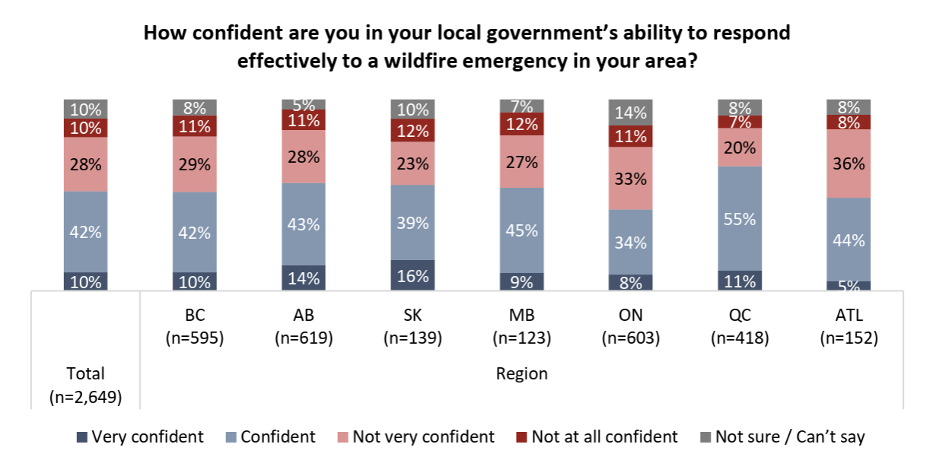
Fifty-two percent of British Columbians have confidence in their local government’s ability to respond to wildfires, in line with the national average.
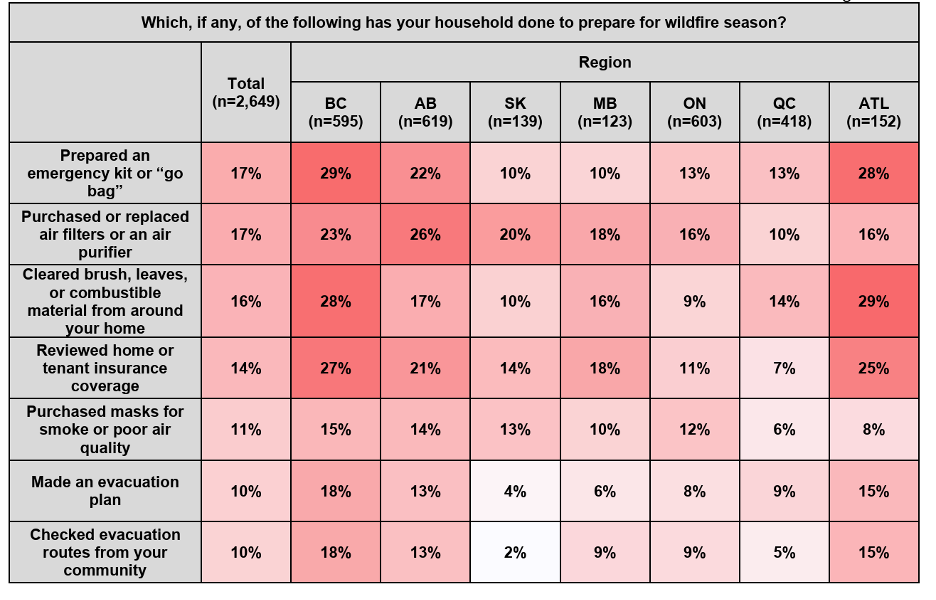
At the same time, British Columbians said they have done amongst the most personally to prepare for a wildfire, including packing an emergency kit, clearing brush, and reviewing home insurance.
Methodology: The Angus Reid Institute conducted an online survey from July 10-14, 2026, among a randomized sample of 2,649 Canadian adults. Respondents are drawn from the Angus Reid Forum, a large-scale online panel developed to include Canadian residents in each of the 343 federal ridings in Canada and representative of the Canadian population by age, gender, family income, ethnic status and education. The sample was weighted to be representative of adults nationwide according to region, gender, age, household income, and education, based on the Canadian census. For comparison purposes only, a probability sample of this size would carry a margin of error of +/- 2 percentage points, 19 times out of 20. Discrepancies in or between totals are due to rounding. The survey was self-commissioned and paid for by ARI.