

The BC government is expanding a program that targets repeat property offenders as it responds to rising concerns over retail theft, vandalism and street disorder across the Lower Mainland.
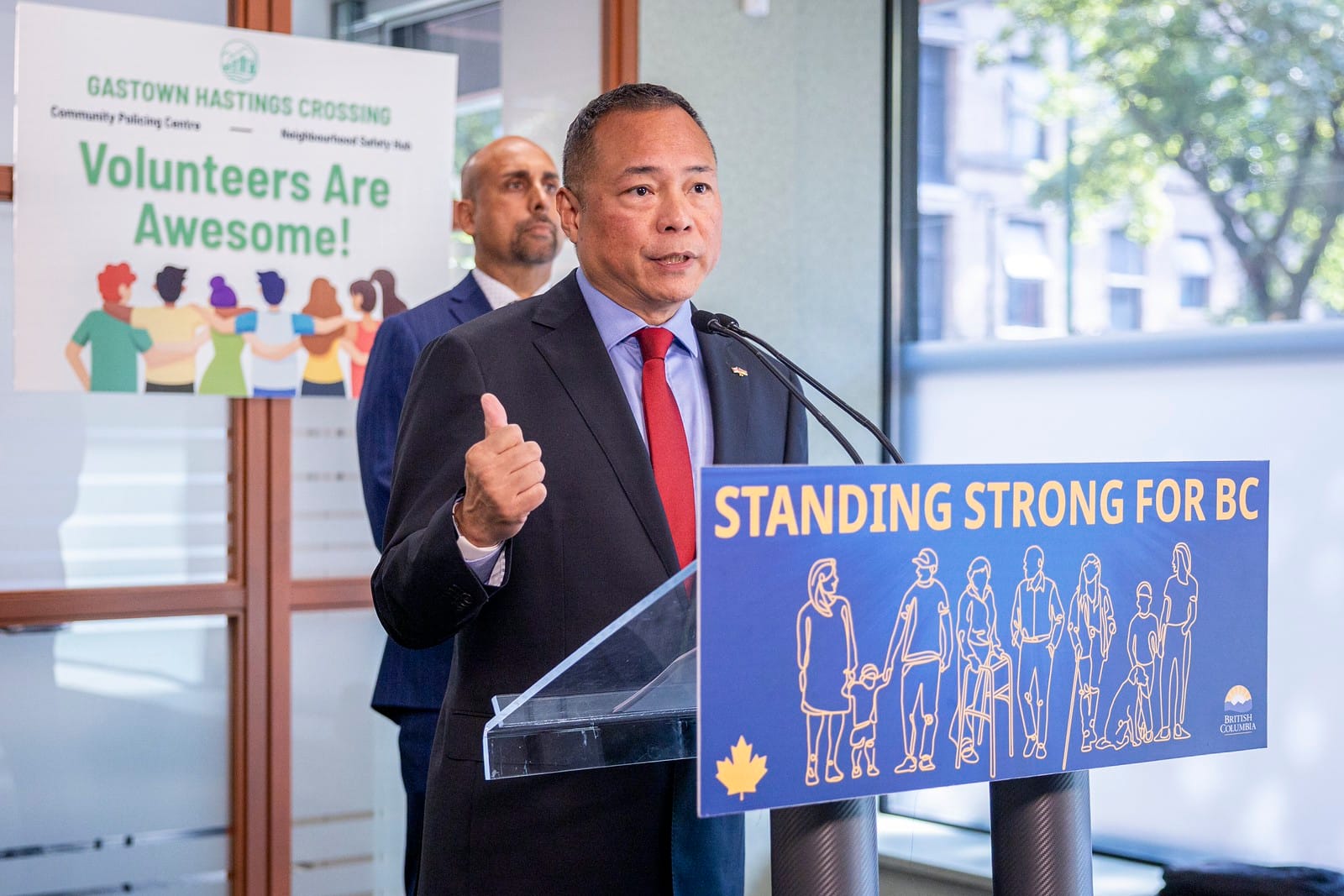
Minister of State for Community Safety and Integrated Services Terry Yung announced Thursday that the province will invest $16 million over two years to expand the Chronic Property Offending Intervention Initiative (C-POII) program. The initiative brings together police, Crown prosecutors, probation and corrections officers, health professionals and social service providers to focus on repeat property offenders.
The expansion will establish 25 regional hubs serving communities across British Columbia and is expected to monitor up to 865 prolific offenders. The province says the program builds on its repeat violent offender initiative and aims to reduce repeat property crime while connecting offenders with services that address the factors contributing to their behaviour.
Yung said a relatively small number of offenders are responsible for a significant share of property crime, creating ongoing challenges for businesses and workers.
"Far too often, businesses have to contend with vandalism, shoplifting [and] street disorder," he said. "We're here today to say this is no longer acceptable."
He said the province is taking a coordinated approach because enforcement alone will not solve the problem.
"We cannot just arrest our way out of this," Yung said.
When asked by Sitka Media what he believes is driving the repeat offending crisis, Yung said there is no single root cause.
"Sometimes they have addiction, mental health, sometimes they have recurring ways to make a living," he said. "It's really difficult."
Yung, a former Vancouver police officer, said many people repeatedly entering the justice system also struggle with untreated mental illness, addiction and unstable housing.
"I ask those questions, why?" he said. "Hopefully, with coordination of different agencies and policing, we actually find those answers, and more importantly, we find the resources to help people who sometimes cannot help themselves."
Acting Insp. Shiv Gill of the Vancouver Police Department said repeat shoplifting and property crime continue to affect businesses across Vancouver. He said the expanded program will improve information sharing between police, probation officers and prosecutors while strengthening connections to housing, mental health and substance use services for offenders.
Among those who welcomed the announcement was Sarah McIntosh, CEO of Atira Women's Resource Society, who said the move recognizes that public safety requires a broader response than policing alone.
"Communities deserve to feel safe, and this announcement recognizes that addressing street disorder requires more than enforcement alone," said McIntosh. "Street disorder is where multiple public systems intersect, and the opportunity now is to coordinate those systems around better outcomes, rather than expecting any one of them to solve the problem alone."
The province says the expanded program is already underway and will operate in communities across British Columbia, including Vancouver and other Lower Mainland municipalities.