


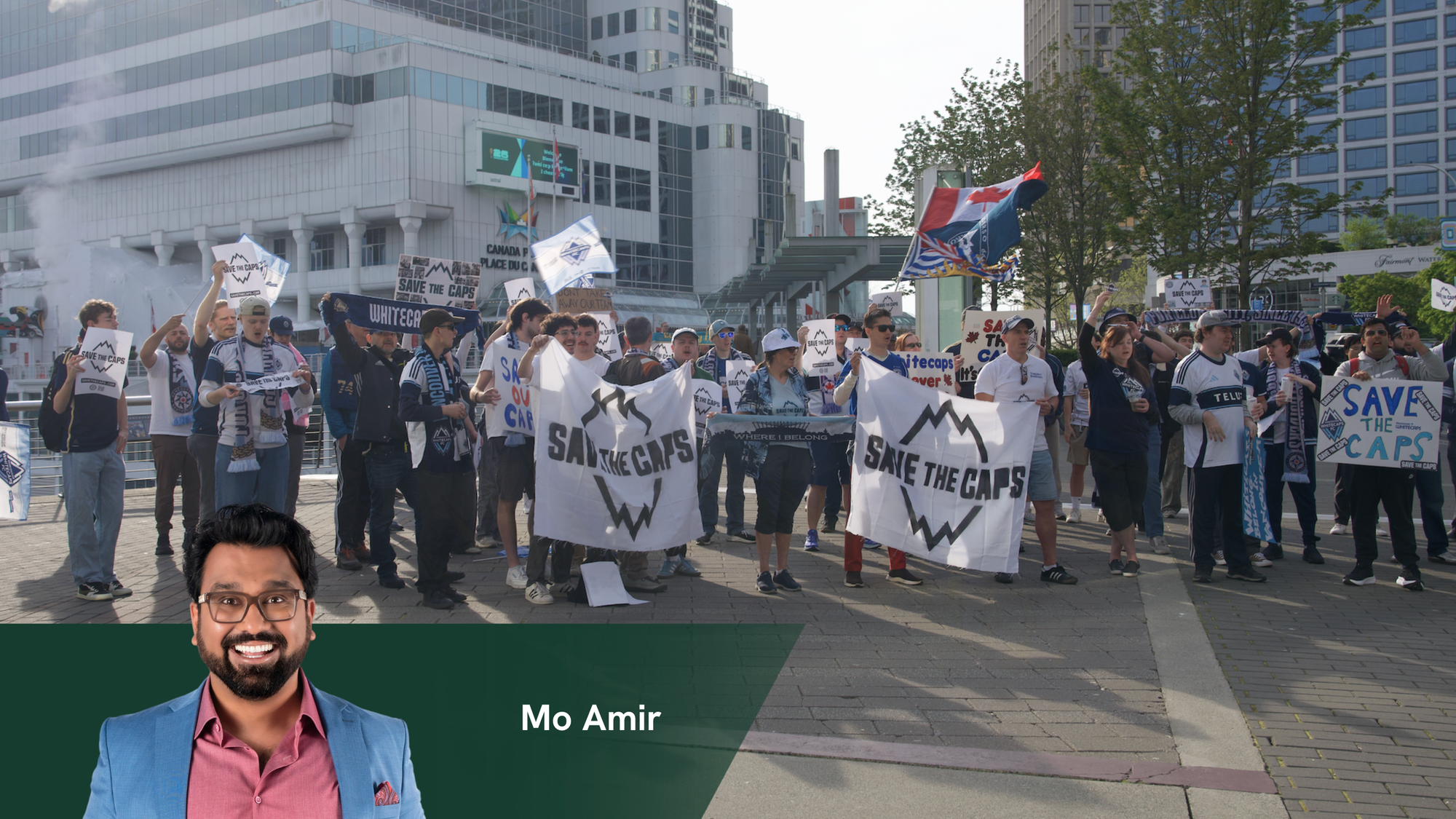

It’s too late. The Vancouver Whitecaps are effectively in escrow for Las Vegas.
For a team that reached the MLS Cup last year, attracts global talent like Thomas Müller, and packs BC Place for a playoff match, the reluctance of fans to accept reality is understandable.
As a matter of modern economics for major league sports franchises, however, it was inevitable. Now, the clock has run out.
In December 2024, the current Whitecaps ownership group, headed by majority owner and software entrepreneur Greg Kerfoot, put the team up for sale.
Reportedly approaching US$300 million in accumulated losses, the Whitecaps have the lowest annual revenue in MLS. In contrast, the club’s US$445 million valuation — still ranked 29th out of 30 teams — is not a reflection of its current operations, but its potential.
Sports franchises increasingly depend on the ownership of modern stadiums that collect revenue from a large inventory of premium suites and club seats — and sponsorship of those hospitality sections — as well as naming rights, and other events like big-ticket concerts. Those franchises are further supported with ownership in the real estate development of entertainment districts and high-end condominium buildings surrounding the stadiums.
Professional sports leagues, like MLS, increasingly operate as entertainment real-estate businesses.
The Vancouver Whitecaps, unfortunately, were never that business. More so, there never seemed to be serious urgency from any level of government to cultivate an environment where the team could become that business.
In BC Place, with the provincial Crown corporation BC Pavilion Corporation as its landlord, the Whitecaps operated as a relic of a bygone era of professional sports. The club was heavily dependent on ticket sales, without nearly enough premium seating to sufficiently monetize affluent fans and corporate clientele, while PavCo collected a lot of the concession and stadium sponsorship revenue.
Without a stake in the stadium, the Whitecaps were locked out of the broader real-estate and entertainment revenues that have increasingly become central to modern sports-franchise economics.
For example, Inter Miami CF’s ownership group developed a state-of-the-art stadium at Miami Freedom Park for its club as the centrepiece of a real-estate ecosystem of hotels, restaurants, entertainment, office space, and retail shopping that it also owns.
All major North American sports leagues reward this model because big league professional sports have largely become a business of franchise valuations. Vertically integrated real-estate and entertainment assets — with the sports team as the anchor tenant — supercharge franchise values across a league, to the benefit of all franchise owners.
Higher franchise valuations allow MLS to charge ever-larger fees for new expansion teams, which creates lucrative paydays for existing owners — while even driving up their franchise valuations even higher in the process.
The NBA, NHL, MLB, and NFL were largely built on blockbuster television contracts and generations of fan loyalty. As a comparatively young league, MLS was designed around centralized economic coordination and aggressive franchise growth.
This design creates a strong financial incentive for MLS to approve the relocation of the Whitecaps from their economically constrained position in Vancouver to a high-growth, high-revenue market like Las Vegas. So when a formal offer to purchase the Whitecaps and relocate them to Sin City was submitted to MLS by an investor group, led by billionaire Grant Gustavson, it was effectively game over.
Las Vegas offers destination-event tourism in a deep-pocketed resort city that has quickly legitimized itself as a major sports market with the relatively recent additions of the NHL’s Golden Knights, NFL’s Raiders, and (soon) MLB’s Athletics teams. While the details of the offer are not public, Gustavson has reportedly committed to building a new stadium, with local political and business leaders enthusiastically embracing the development of new stadium-centred entertainment districts.
Meanwhile, Vancouver Mayor Ken Sim and BC Premier David Eby scramble to assemble investors and buy time with MLS in an effort to “Save the ‘Caps” that will undoubtedly prove to be too little, too late. Last-ditch attempts to dust off long-dead plans for a Gastown waterfront stadium or pursue a fantasy proposal at Hastings Park feel more performative than serious. This is the kind of work that should have started ten years ago, especially considering the glacial pace at which Vancouver moves on major projects like these.
Sim and Eby both took their respective offices within days of one another in November 2022. If keeping the Whitecaps in Vancouver had truly been a priority, they had ample time to begin pursuing the kind of stadium-centered sports and entertainment development model that MLS increasingly demands. It was the type of long-term vision that owner Greg Kerfoot had advocated for two decades ago.
Make no mistake: Vancouver is a soccer town with passionate supporters, including one of MLS’ oldest and most fervent fan cultures in the Vancouver Southsiders. The city has repeatedly proven its appetite for the sport with strong attendance at Whitecaps games, international friendlies, and national team games, in addition to its selection as a host city for the 2026 FIFA World Cup.
The people of Vancouver deserve the Whitecaps.
Unfortunately, political leadership across multiple levels of government failed, over many years, to position Vancouver to seriously compete in the modern business of professional soccer.
The province's most bleeped political commentator, Mo Amir is the host of This is VANCOLOUR, British Columbia’s bonafide TV talk show, now in its fifth season, Thursday nights at 9pm on CHEK.